Even after the statute of limitations has expired, the court must impose a sentence – Supreme Court













If a person is found guilty of committing a criminal offense, the statute of limitations for which has expired at the time of the verdict, the court shall impose a sentence on the convicted person according to the general principles provided by Article 65 of the Criminal Code of Ukraine, and simultaneously exempt them from serving this sentence – Joint Panel of the Supreme Court's Criminal Cassation Court.
In the event the statute of limitations expires during the appeal stage, the appellate court, if upholding the conviction, must amend the verdict and exempt the convicted person from the punishment imposed by the court of first instance.
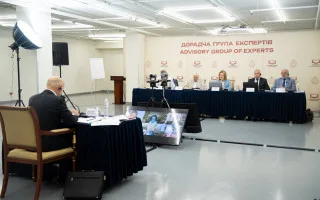
These conclusions were reached by the Joint Panel of the Criminal Cassation Court of the Supreme Court following the review of case No. 214/43/19.
In this criminal proceeding, the lower courts found the accused guilty and sentenced her under Part 2 of Article 382 of the Criminal Code of Ukraine to a fine of 17,000 UAH with deprivation of the right to hold positions related to organizational, administrative, and economic functions for a period of 3 years. According to Part 5 of Article 74 of the Criminal Code of Ukraine, she was exempted from the imposed sentence based on paragraph 3 of Part 1 of Article 49 of the Criminal Code of Ukraine due to the expiration of the statute of limitations for criminal prosecution. In the cassation appeal, the prosecution party considered it necessary to exclude references to the imposition of punishment on the accused from the court decisions and insisted that if the statute of limitations for the incriminated crime has expired, the court, in accordance with Articles 49 and 74 of the Criminal Code of Ukraine, should not impose a sentence.
Evaluating these cassation claims, the Joint Panel of the Criminal Cassation Court of the Supreme Court noted that Part 3 of Article 88 of the Criminal Code of Ukraine clearly distinguishes between sentencing "without imposing punishment" and sentencing "with exemption from punishment," which provides strong grounds to believe that "exemption from punishment" means exemption from an already imposed measure of punishment. If the legislator intended a complete refusal to individualize the sanction when applying Article 49 of the Criminal Code of Ukraine, it would have used the formula "without imposing punishment."
The general procedure indicated in Part 8 of Article 284 of the Criminal Procedure Code of Ukraine obliges the court, upon finding a person guilty, to specify in the operative part of the verdict the punishment imposed for each of the charges proven by the court and the final measure of punishment chosen by the court. If the accused is exempted from serving the punishment, the court notes this in the operative part of the verdict (paragraph 2 of Part 4 of Article 374 of the Criminal Procedure Code of Ukraine). Thus, the procedural order for exemption from criminal liability based on the expiration of the statute of limitations involves imposing punishment for the crime for which the person is convicted and simultaneously exempting them from serving it.
The ruling of the Joint Panel of the Criminal Cassation Court of the Supreme Court dated May 18, 2026, in case No. 214/43/19 (proceeding No. 51-1650kmo21) has not yet been published in the Unified State Register of Court Decisions.
Subscribe to our Telegram channel t.me/sudua and to Google News SUD.UA, as well as to our VIBER and WhatsApp, Facebook page Facebook and Instagram to stay updated on the most important events.