A father of three children wanted to establish the fact of support for deferment from mobilization but lost the case in the Supreme Court


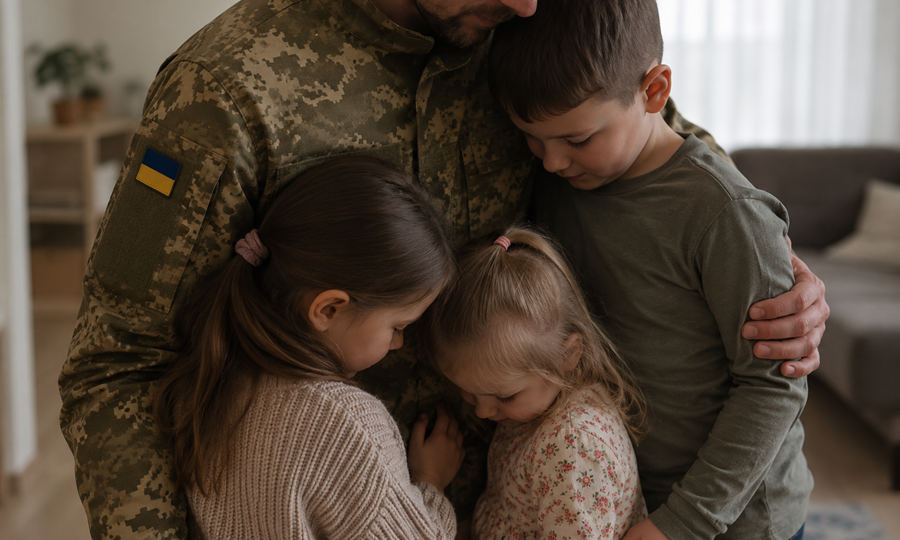










The Supreme Court, composed of judges of the First Judicial Panel of the Cassation Civil Court, considered a case regarding the establishment of the fact of support for three minor children, which the applicant tried to confirm to obtain a legal basis for deferment from mobilization and periodic crossing of the state border during martial law. As a result of the cassation review, the court left unchanged the decisions of the lower courts refusing to satisfy the application.
Case summary
The applicant filed a lawsuit to establish facts of legal significance, in particular the fact that three minor children were dependent on him.
He justified his claims by stating that after the divorce he continued to support his daughter from the previous marriage and paid alimony for her according to the court decision. He also lived as one family with a woman who had a minor son from previous relationships and claimed that he actually provided for his maintenance and upbringing. Additionally, the couple had a common child, and the mother was on maternity leave to care for the child until she reached three years old. According to the applicant, he was the one who provided financial support for all three children.
The applicant noted that establishing the relevant legal fact was necessary to confirm the presence of three minor children dependent on him and to exercise rights related to mobilization legislation.
Decisions of the courts of first and appellate instances
The Cherkasy District Court denied the application. The court concluded that regarding the daughter from the previous marriage, the applicant only confirmed the fact of alimony payments in the amount determined by the court decision. At the same time, no evidence was provided that such assistance was the child's primary and permanent source of livelihood.
Regarding the woman's son, the court noted that the applicant is not his father and did not provide proper evidence of providing material support to the child as understood by law. There was also no evidence that other persons legally obliged to support the child could not fulfill this duty.
Regarding the common daughter, the court stated that even establishing the fact of her support alone would not create the legal consequences for the applicant that he sought in court, since supporting one child is not grounds for obtaining a deferment from mobilization.
The Cherkasy Appellate Court agreed with these conclusions and left the local court's decision unchanged.
Legal conclusions of the Supreme Court
In case No. 707/1353/24, the Supreme Court noted that cases to establish facts of legal significance may be considered in separate proceedings only if the establishment of such a fact affects the emergence, change, or termination of a person's rights, there is no dispute over the right, and the law does not provide another procedure for confirming the relevant circumstances.
The court emphasized that individuals, in this case children, can be considered dependent on the applicant only when they are actually fully supported by him or receive assistance from him that is their permanent and main source of livelihood.
To confirm dependency, proper and admissible evidence must be provided that allows establishing the actual nature of material support. Such evidence may include documents of cohabitation, income certificates, bank statements, receipts, payment slips for education, medical treatment, or other child needs, as well as other evidence indicating real support.
Regarding the woman's child with whom the applicant lived as one family, the Supreme Court agreed with the lower courts' conclusions about the lack of proper evidence that this child was fully supported by the applicant. The mere fact of cohabitation and some material assistance is insufficient to establish dependency under Article 23 of the Law of Ukraine "On Mobilization Preparation and Mobilization."
Regarding the common daughter, the Supreme Court agreed that establishing the fact of her support separately would not achieve the legal purpose the applicant indicated in his application, namely obtaining the right to periodically cross the state border during martial law.
At the same time, the Supreme Court separately noted that the lower courts' conclusion about the lack of evidence of support for the daughter from the previous marriage was erroneous. However, this error did not affect the correctness of the final decision, as the applicant's claims remained generally unproven.
The cassation court emphasized that the applicant did not prove with proper and admissible evidence the fact of support for three minor children, and therefore there are no grounds to satisfy the application.
Additionally, the Supreme Court drew attention to its own practice, according to which cases to establish the fact of children being dependent generally should not be considered in separate proceedings, since such establishment directly affects the rights and interests of the other parent. However, in this case, the procedural form error did not become a basis for overturning substantively correct court decisions.
As a result, the Supreme Court dismissed the cassation appeal and left the decisions of the lower courts unchanged.
The cassation court's ruling comes into legal force from the moment of its adoption, is final, and not subject to appeal.
Subscribe to our Telegram channel t.me/sudua, Google News SUD.UA Google News SUD.UA, as well as our VIBER and WhatsApp, Facebook Facebook and Instagram Instagram pages to stay informed about the most important events.