A Chernobyl Victim Challenged the Termination of Utility Benefits Due to Family Income — What the Court Decided













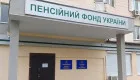
The Zhytomyr District Administrative Court considered an administrative case filed by a Category I victim of the Chernobyl disaster against the Main Department of the Pension Fund of Ukraine in Zhytomyr region, seeking to recognize as unlawful the actions regarding the termination of accrual and payment of the utility payment benefit and to oblige the restoration of its provision.
The court concluded that the termination of the 50% utility payment benefit due to exceeding the average monthly total family income per person does not comply with the law, since the Law of Ukraine "On the Status and Social Protection of Citizens Affected by the Chernobyl Disaster" does not establish such a condition for Category I persons.
Case Circumstances
The plaintiff is a Category I victim of the Chernobyl disaster, registered with the Main Department of the Pension Fund of Ukraine in Zhytomyr region and receives a pension.
Until May 1, 2025, he was granted a guaranteed 50% discount on utility payments under paragraph 11 of part one of article 20 of the Law of Ukraine "On the Status and Social Protection of Citizens Affected by the Chernobyl Disaster."
After the benefit was terminated, the citizen applied to the Pension Fund requesting reasons for the decision and restoration of the benefit.
In response, the Main Department of the Pension Fund of Ukraine in Zhytomyr region informed that the benefit was terminated from May 1, 2025, because the average monthly total family income per person exceeded the income threshold granting the right to a tax social benefit. The respondent referred to the Cabinet of Ministers of Ukraine Resolution No. 389 dated June 4, 2015, as amended by Resolution No. 1553 dated December 31, 2024.
Disagreeing with these actions, the plaintiff appealed to the administrative court. He noted that the special Law of Ukraine "On the Status and Social Protection of Citizens Affected by the Chernobyl Disaster" does not provide an income criterion as a condition for receiving this benefit for Category I persons. Moreover, he was not sent a decision about the termination of the benefit.
The respondent did not submit a response within the timeframe established by the Code of Administrative Procedure of Ukraine, so the case was considered in written proceedings based on available materials.
Court's Position and Conclusions
After examining case materials No. 240/18016/26, the court first noted that Article 46 of the Constitution of Ukraine guarantees citizens the right to social protection, and the special law defining the scope of social guarantees for persons affected by the Chernobyl disaster is the Law of Ukraine No. 796-XII "On the Status and Social Protection of Citizens Affected by the Chernobyl Disaster."
The court stated that according to part one of article 20 of this law, compensations and benefits for persons classified as Category I are guaranteed by the state. Paragraph 11 of part one of article 20 provides the right of such persons to a 50% discount on housing and utility payments within the limits established by law.
The court noted that in 2015, Law No. 76-VIII amended article 22 of Law No. 796-XII, introducing a condition that certain benefits, including those under paragraph 11 of part one of article 20, were granted only if the average monthly total family income did not exceed a set threshold.
However, these provisions were declared unconstitutional by the Constitutional Court of Ukraine in Decision No. 6-r/2018 dated July 17, 2018. Consequently, after this decision, Law No. 796-XII no longer contains norms linking the right of Category I persons to utility payment benefits to family income level.
At the same time, the court analyzed legislation regulating the appointment and payment of housing benefits by the Pension Fund of Ukraine, including Cabinet of Ministers Resolutions No. 1041 dated September 16, 2022, No. 373 dated April 17, 2019, and No. 389 dated June 4, 2015.
The court noted that the Pension Fund justified its actions by referring to paragraph 7 of the Final Provisions of the Law of Ukraine "On the State Budget of Ukraine for 2025," which provides for the application of an income criterion when granting certain benefits to Chernobyl victims, as well as to the Procedure approved by Cabinet Resolution No. 389.
Evaluating these arguments, the court cited legal positions of the Constitutional Court of Ukraine expressed in decisions dated July 9, 2007, No. 6-rp/2007 and May 22, 2008, No. 10-rp/2008, according to which the budget law cannot change or limit rights, benefits, compensations, and guarantees established by other laws, nor introduce additional legal regulation in social protection.
The court emphasized that paragraph 7 of the Final Provisions of the Law "On the State Budget of Ukraine for 2025" essentially repeats a norm already declared unconstitutional by the Constitutional Court in 2018. Moreover, these provisions do not directly relate to the budget execution process but effectively restrict a right guaranteed by a special law. The court found this contradicts Articles 95–98 of the Constitution of Ukraine and Article 38 of the Budget Code of Ukraine.
The court also paid special attention to Cabinet Resolution No. 389. It noted that even a literal analysis of paragraph 2 of this Procedure shows that it applies to certain categories of persons entitled to social benefits but does not apply to persons entitled to benefits under paragraph 11 of part one of article 20 of Law No. 796-XII.
Furthermore, the court stressed that the plaintiff is a Category I victim of the Chernobyl disaster, whereas the Procedure No. 389 does not list Category I persons among those whose rights depend on income. According to the court, the Pension Fund's application of the income criterion to such persons violates the principle of the law's priority over subordinate normative acts and contradicts the content of Procedure No. 389 itself.
The court also highlighted that according to Article 8 of the Constitution of Ukraine, the rule of law prevails in Ukraine, the Constitution has the highest legal force, and laws and other normative acts must comply with it.
Additionally, the court referred to paragraphs 1 and 6 of part one of Article 92 of the Constitution of Ukraine, which state that only laws of Ukraine define human rights and freedoms, guarantees of these rights, and the foundations of social protection. Part one of Article 20 of Law No. 796-XII explicitly establishes that compensations and benefits for Category I persons are guaranteed by the state.
The court also applied part three of Article 7 of the Code of Administrative Procedure of Ukraine, which requires applying a higher legal act in case of inconsistency of a normative act with the Constitution or law.
The court cited the Supreme Court's legal position from the ruling dated March 10, 2020, in case No. 160/1088/19, emphasizing that courts should not apply normative acts contradicting the Constitution or laws of Ukraine, even if such acts are in force and have not been separately challenged. Therefore, the provisions of Law No. 796-XII, not the subordinate Procedure No. 389 that narrows the scope of rights guaranteed by law, must be applied in resolving the dispute.
The court paid special attention to analyzing Procedure No. 389 itself. It noted that even a literal reading of paragraph 2 shows that the Procedure applies only to certain categories of persons, including some Category III Chernobyl victims, their family members, and other specifically listed beneficiaries.
At the same time, Category I Chernobyl victims are not listed. Thus, the Pension Fund's application of the income criterion to the plaintiff violates the principle of the law's priority over subordinate acts and contradicts the content of Procedure No. 389, which the respondent cited.
Assessing the evidence, the court noted that under Article 77 of the Code of Administrative Procedure of Ukraine, the burden of proving the lawfulness of decisions and actions lies with the authority. However, the Main Department of the Pension Fund of Ukraine in Zhytomyr region failed to prove the lawfulness of terminating the benefit.
As a result, the court fully satisfied the claim. It recognized the actions of the Main Department of the Pension Fund of Ukraine in Zhytomyr region regarding the termination of accrual and payment of the utility payment benefit as unlawful and obliged the Pension Fund to resume the accrual and payment of the 50% benefit in accordance with paragraph 11 of part one of article 20 of the Law of Ukraine "On the Status and Social Protection of Citizens Affected by the Chernobyl Disaster."
Subscribe to our Telegram channel t.me/sudua and to Google News SUD.UA, as well as to our VIBER and WhatsApp, and follow us on Facebook and Instagram to stay updated on the most important events.