Inheritance or Criminal Case: Why You Cannot Withdraw Money from a Deceased Relative's Card












After the start of the full-scale war, inheriting bank funds has become particularly relevant. The deaths of military personnel, victims of missile strikes, civilians dying due to hostilities, or natural causes often leave relatives facing a difficult dilemma: what to do if there is money left on the bank card of a deceased person?
Many mistakenly believe that if they know the PIN code or have the card in hand, they can freely withdraw funds. In reality, after the account holder’s death, the money ceases to be subject to free use even for close relatives. The law considers it part of the inheritance, and unauthorised withdrawal of funds may have not only civil but also criminal consequences.
What happens to funds after a person’s death
From a legal point of view, a person’s death automatically opens the inheritance. From that moment, all rights and property belonging to the deceased that have not ceased due to death become part of the inheritance. According to Article 1218 of the Civil Code of Ukraine, the inheritance includes all rights and obligations that belonged to the testator at the time of opening the inheritance and did not cease due to their death.
According to Article 1220 of the Civil Code of Ukraine, the day of opening the inheritance is the day of the person’s death or the day they are declared dead. The legislator has separately regulated the issue of bank accounts. Article 1228 of the Civil Code of Ukraine explicitly states that the right to a deposit (funds in the account) is part of the inheritance regardless of whether the owner left a will or made a testamentary disposition at the bank. In other words, after the owner’s death, the bank card does not become an instrument that family members can use. It is only a means of access to property that already belongs to the inheritance estate.
Does knowing the PIN code mean the right to use the card?
The PIN code, the bank’s mobile app, or physical possession of the card do not create any property rights to the funds. In fact, after the owner’s death, any use of their bank card is no longer by the account holder’s will. That is why it is necessary to immediately notify the bank about the client’s death to prevent any unauthorised transactions.
The bank does not always learn about the client’s death instantly. If the information has not yet been received from state registration authorities or a notary, the account may technically remain active. However, this does not mean that any withdrawal of funds becomes legal.
The right to use the account is determined not by the technical ability to perform a transaction but by the requirements of civil law.
Who can receive the money
After the account holder’s death, the right to the funds arises only for the heirs. If there is a will, the funds go to the persons designated by the testator. If there is no will, the inheritance passes to heirs by law in order of priority according to Articles 1261–1265 of the Civil Code of Ukraine.
However, even having heir status does not automatically grant the right to manage the account. For this, it is necessary to:
-
apply to a notary with a statement of acceptance of the inheritance,
-
wait for the completion of the six-month period for accepting the inheritance,
-
obtain a certificate of inheritance rights,
-
only after that contact the bank to receive funds or re-register the account.
This procedure is the lawful way to obtain money from the deceased’s account.
Should the bank block the account after the client’s death?
It is a common belief that the bank automatically blocks all accounts immediately after a person’s death. The bank does not receive information about the client’s death in real time. Usually, it becomes aware after heirs, a notary, or state registries notify it during the inheritance process.
After receiving confirmation of the client’s death, the bank can no longer issue funds to anyone solely based on the bank card or knowledge of the PIN code. Further actions regarding the account are carried out according to the Civil Code of Ukraine, the Law of Ukraine "On Banks and Banking Activities," and the Procedure for Notarial Acts by Notaries of Ukraine.
The notary, upon opening the inheritance case, has the right to request from the bank information about the presence of accounts, balances, and other property of the deceased. This information is used to form the inheritance estate.
Most common myths
Practice shows that most problems arise precisely due to legal mistakes.
Myth #1. If I am the wife or husband, I can use the card. Marriage itself does not grant the right to manage the deceased’s funds after the account holder’s death. This right arises only after accepting the inheritance or determining the share in the joint marital property according to the law.
Myth #2. If I know the PIN code, it means the owner allowed me to use the money. Permission to use the card that existed during the person’s life ends with their death. After the inheritance opens, the funds belong to the inheritance estate.
Myth #3. If the bank did not block the card, it means money can be withdrawn. This is one of the most dangerous mistakes. The technical ability to perform a transaction does not mean its legality. If it is later established that the funds were obtained without proper legal grounds, the person may be required to return them and, under certain circumstances, face criminal liability.
What the Supreme Court says
A telling example is the Supreme Court ruling dated January 29, 2025, in case No. 761/25536/22-c. In this case, after the account owner’s death, the bank issued funds to a person who did not have confirmed inheritance rights. The heir went to court, believing their inheritance rights were violated.
The Supreme Court emphasised that the funds in the account are part of the inheritance according to Articles 1218 and 1228 of the Civil Code of Ukraine, and the bank has no right to dispose of them contrary to the law. The court concluded that illegal disbursement of funds does not deprive the heir of the right to demand their return, and the financial institution must bear responsibility for violating the established procedure.
This decision once again confirmed: after the client’s death, the bank must act with maximum caution, and any transactions on the account without proper legal grounds may become the subject of litigation.
When withdrawing money from a deceased person’s card becomes a criminal offence
After the account holder’s death, any use of their bank card may have not only civil but also criminal consequences. If a person is aware that the account owner is deceased but still withdraws or transfers funds, their actions may be qualified as a crime depending on the circumstances. Most often, this concerns: theft (Article 185 of the Criminal Code of Ukraine), if funds were secretly appropriated; fraud (Article 190 of the Criminal Code of Ukraine), if money was obtained by deception or abuse of trust, for example, by concealing the owner’s death.
Thus, even if the person is a close relative of the deceased, this alone does not exempt them from liability.
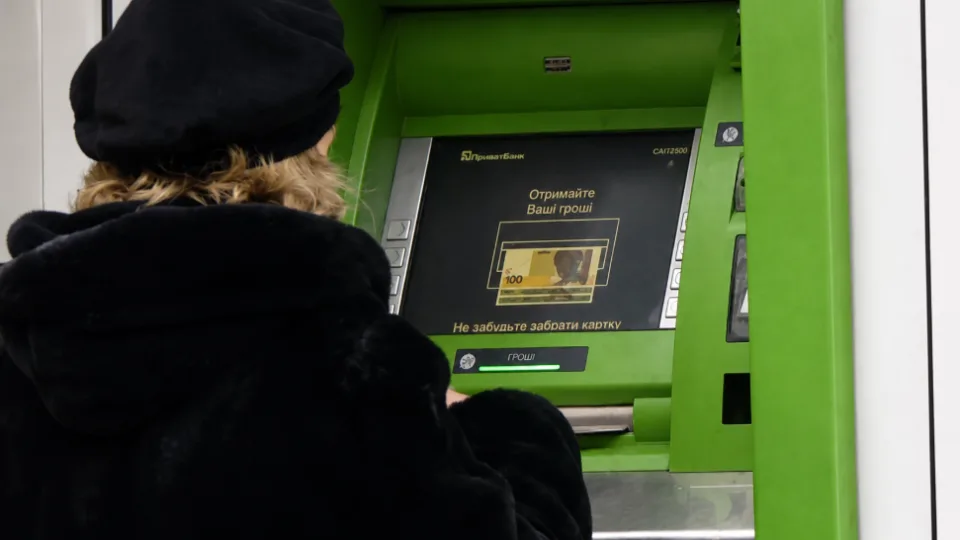
A telling case was considered by the Vasylkiv City District Court of Kyiv region (case No. 362/2826/18). After the bank card owner’s death, her grandson received the card from his father. He knew the PIN code and was fully aware that his grandmother had died. Despite this, the man used the ATM several times and withdrew 4200 hryvnias from the account.
The court established that he had no rights to these funds, and the inheritance had not yet been formalised. The court concluded that the accused intentionally took someone else’s property, so his actions were qualified as theft.
Effectively, the court confirmed the fundamental position: even if the card is with a relative and the PIN code is known, this does not create the right to manage the money after the owner’s death.
How heirs should act
Heirs should not rush to use the deceased’s bank card even when the family urgently needs money. The action algorithm is as follows:
-
obtain a death certificate,
-
within six months apply to a notary with a statement of acceptance of the inheritance,
-
inform the notary about the presence of the deceased’s bank accounts,
-
after the expiration of the inheritance acceptance period, obtain a certificate of inheritance rights,
-
contact the bank with this document to receive funds or re-register the account.
This path is lawful and protects heirs from possible litigation or criminal prosecution.
Subscribe to our Telegram channel t.me/sudua, follow SUD.UA on Google News , and join us on VIBER, WhatsApp, Facebook and on Instagram to stay informed about the important events.