Oncology during hostilities: the court explained when the disease should be recognized as related to the defense of the Fatherland


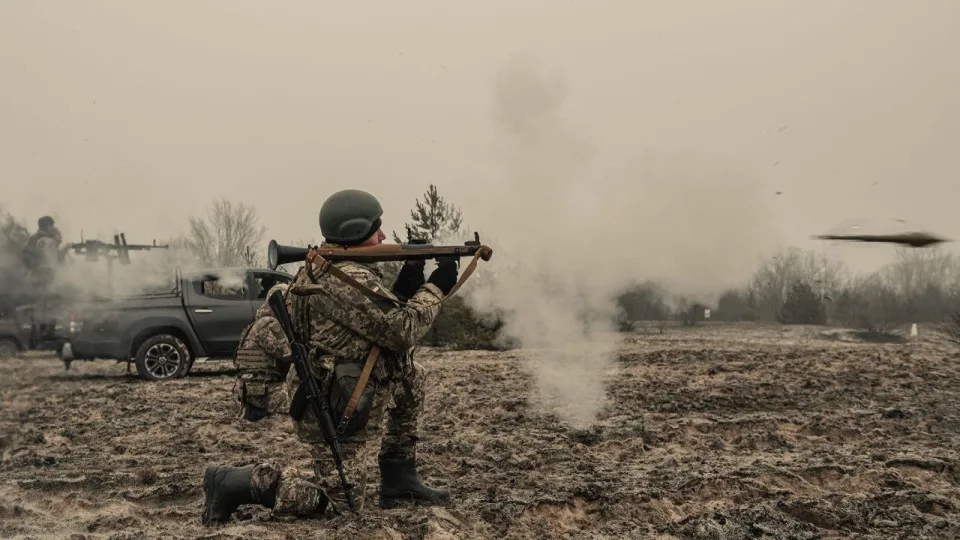










During military service or combat missions, defenders may suffer not only wounds or injuries but also serious illnesses, including oncological diseases. At the same time, the legal status of such a disease and the further exercise of the serviceman's rights provided by law depend on the causal link of the disease determined by the military medical commission.
A notable case in this context was considered by the Kyiv District Administrative Court. A serviceman who was diagnosed with an oncological disease during his direct participation in hostilities applied to the court.
He disagreed with the conclusion of the military medical commission, which determined that the disease was only related to military service, and requested to recognize it as related to the defense of the Fatherland.
Essence of the case
The Kyiv District Administrative Court considered the claim of a serviceman against the Central Military Medical Commission of the Armed Forces of Ukraine regarding the determination of the causal link of an oncological disease.
The plaintiff served during martial law and directly participated in activities necessary to ensure the defense of Ukraine, protect the safety of the population, and the interests of the state in connection with the armed aggression of the Russian Federation. In particular, he carried out combat missions in the Donetsk region and held the status of a combatant.
During his military service, the serviceman's health sharply deteriorated. After medical examination, doctors diagnosed a malignant neoplasm of the mucous membrane of the right cheek. Subsequently, he underwent surgery, a course of radiation therapy, and other specialized treatment at an oncology facility. The medical-social expert commission assigned him the second disability group and determined an 80 percent loss of professional working capacity, and he was discharged from military service due to health reasons.
During the military medical examination, the off-staff military medical commission repeatedly established a causal link of the disease with the wording "disease indeed related to military service." Disagreeing with this conclusion, the serviceman applied to the Central Military Medical Commission with a request to review the decision and asked to establish a different wording — "disease indeed related to the defense of the Fatherland."
The plaintiff believed that the causal link of the disease should be established precisely with the wording "disease indeed related to the defense of the Fatherland," as this corresponds to the requirements of Regulation No. 402 and the actual circumstances of his military service.
The Central Military Medical Commission refused to satisfy the request. As a result of the review, it left unchanged the decision of the off-staff military medical commission and concluded that there were no grounds to establish the causal link of the disease with the wording "related to the defense of the Fatherland."
Considering this decision unlawful, the serviceman appealed to the administrative court. In his claim, he requested to cancel the decision of the Central Military Medical Commission refusing to review the decision, to oblige a repeated review of his application, to cancel the military medical commission's decision with the wording "related to military service" and to adopt a new decision establishing the causal link of the disease with the wording "disease indeed related to the defense of the Fatherland."
During the case consideration, the defendant did not submit a response to the claim nor provided explanations regarding the grounds for the contested decision. The third party also did not provide explanations on the merits of the dispute but submitted documents requested by the court necessary for examining the circumstances of the case.
Position and motives of the court
Evaluating the disputed legal relations, the court first noted that according to Article 19 of the Constitution of Ukraine, state authorities and their officials are obliged to act only on the basis, within the powers, and in the manner defined by the Constitution and laws of Ukraine. This means that decisions of authorities must comply with legal requirements and be based on proper and sufficient evidence.
The court also pointed out that according to Article 65 of the Constitution of Ukraine, the defense of the Fatherland, independence, and territorial integrity of Ukraine is a constitutional duty of citizens, and military service is carried out according to the law.
During the case, it was established that the plaintiff was conscripted during mobilization, served under martial law conditions, and repeatedly directly participated in activities necessary to ensure the defense of Ukraine, protect the safety of the population, and the interests of the state in connection with the armed aggression of the Russian Federation. These circumstances were confirmed by military unit certificates, service documents, and a combatant's ID.
The court noted that the legal regulation of military medical examination is carried out by the Law of Ukraine "On Military Duty and Military Service" and the Regulation on Military Medical Examination in the Armed Forces of Ukraine, approved by the Ministry of Defense Order No. 402.
According to this Regulation, the military medical examination determines the fitness of servicemen for military service and establishes the causal link of diseases, injuries, wounds, concussions, and disabilities with military service or the defense of the Fatherland.
The court noted that Chapter 21 of Regulation No. 402 provides different formulations of the causal link of the disease depending on the circumstances of its occurrence.
In particular, the wording "disease indeed related to the defense of the Fatherland" is applied in cases where the disease arose during the serviceman's direct participation in activities to ensure the defense of Ukraine, protect its independence, sovereignty, and territorial integrity, or when a previously existing disease during this period progressed to such an extent that it led to limited fitness or unfitness for military service.
At the same time, Regulation No. 402 explicitly provides for the possibility of applying this wording also to chronic slowly progressing diseases if medical documents allow establishing or confirming the onset of the disease development precisely during the serviceman's participation in hostilities.
Conversely, the wording "disease indeed related to military service" is applied only when the disease arose during military service but is not related to the periods of service and circumstances defined by subparagraph "g" of paragraph 21.5 of Regulation No. 402.
Examining medical documents, the court established that the oncological disease was diagnosed in November 2023 after appropriate examinations. At the same time, the case materials confirmed that at that time the plaintiff was directly participating in activities to ensure the defense of Ukraine and performing combat missions, as confirmed by military unit documents.
Under these circumstances, the court concluded that the established factual circumstances indicate grounds for applying subparagraph "g" of paragraph 21.5 of Regulation No. 402.
The court noted that the certificate of the off-staff military medical commission dated April 10, 2024, No. 209 contains an incorrect formulation of the causal link of the disease, as the circumstances established in the case indicate grounds for applying the wording "disease indeed related to the defense of the Fatherland."
Furthermore, the court noted that according to Regulation No. 402, the Central Military Medical Commission has the authority to review, cancel, and amend decisions of any military medical commission if they are found to be inconsistent with the law.
Since during the review of the plaintiff's application the Central Military Medical Commission did not eliminate the violation and unjustifiably refused to change the wording of the causal link of the disease, the court concluded that the decision to refuse the review was made contrary to legal requirements and is unlawful.
Conclusions of the court
Summarizing the consideration of case No. 483/332/26, the court noted that the case materials confirm the plaintiff's direct participation in activities necessary to ensure the defense of Ukraine, protect the safety of the population, and the interests of the state in connection with the armed aggression of the Russian Federation. It was during this period that he was diagnosed with an oncological disease, which became the basis for prolonged treatment, disability determination, and discharge from military service due to health reasons.
The court concluded that under the established circumstances, the plaintiff's disease falls under subparagraph "g" of paragraph 21.5 of Chapter 21 of Section II of Regulation No. 402, which provides for adopting a decision with the wording "Disease indeed related to the defense of the Fatherland." At the same time, the use of the wording "Disease indeed related to military service" in this case did not comply with the requirements of the mentioned Regulation.
The court found that the certificate of the off-staff military medical commission dated April 10, 2024, No. 209 contained an incorrect formulation of the causal link of the disease. Despite this, the Central Military Medical Commission, having reviewed the application for reconsideration, did not eliminate the violation and unjustifiably refused to cancel it and adopt a new decision.
Since the Central Military Medical Commission did not prove the legality of its decision, and the circumstances established by the court indicated incorrect application of Regulation No. 402, the court recognized the decision to refuse the review of the military medical commission's decision as unlawful and subject to cancellation.
Accordingly, the court fully satisfied the administrative claim. The decision of the Central Military Medical Commission of the Armed Forces of Ukraine to refuse to cancel the military medical commission's decision and to establish the causal link of the disease with the wording "Disease indeed related to the defense of the Fatherland" was recognized as unlawful and canceled.
Moreover, the court obliged the Central Military Medical Commission to reconsider the plaintiff's application, cancel the military medical commission's decision documented by the certificate dated April 10, 2024, No. 209, in part of the wording "Disease indeed related to military service," and adopt a new decision with the wording "Disease indeed related to the defense of the Fatherland."
The court also noted that the court fee is subject to recovery in favor of the plaintiff in accordance with Article 139 of the Code of Administrative Procedure of Ukraine.
Subscribe to our Telegram channel t.me/sudua and to Google News SUD.UA, as well as to our VIBER and WhatsApp, our page on Facebook and on Instagram to stay informed about the most important events.