The Commercial Court of Cassation of the Supreme Court Defined the Limits of Subsidiary Liability of Persons Who Illegally Acquired the Debtor's Property as a Result of Fraudulent Transactions


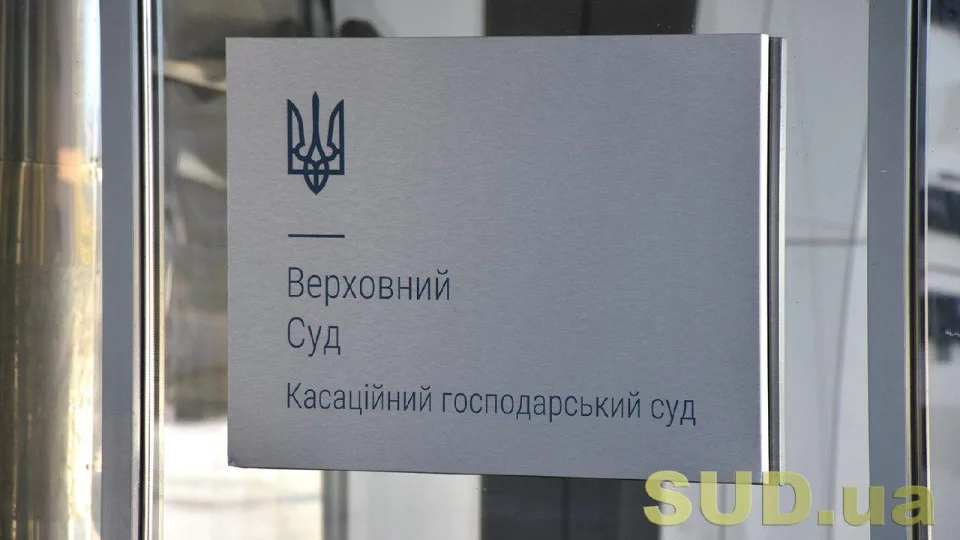










Persons who illegally acquired the debtor’s property or obtained property benefits as a result of transactions or property actions, as defined in Article 42 of the Law on Bankruptcy Procedures (KUzPB), are subject to subsidiary liability under Part 5 of Article 42 of this Code, limited to the damages caused to the debtor. Furthermore, Part 5 of Article 42 KUzPB establishes a special procedure for determining the limits of subsidiary liability, specifically, within the amount of damages caused to the debtor.
The Commercial Court of Cassation of the Supreme Court reviewed a cassation appeal filed by the debtor, represented by the insolvency manager, in a case considered within bankruptcy proceedings. The appeal concerned a claim to invalidate a vehicle sale contract (under Article 42 KUzPB) and to jointly recover damages from the property’s acquirer, the commissioner, and the debtor’s founder.
The subject of the cassation review, in this instance, was the legality of holding the debtor’s founder (participant) subsidiarily liable under Part 5 of Article 42 KUzPB. Additionally, it addressed the recovery of inflation losses and 3% annual interest under Article 625 of the Civil Code of Ukraine in relation to the disputed transaction.
The Commercial Court, in a decision upheld by the appellate court, partially granted the claim: it declared the vehicle sale contract fraudulent and ordered the buyer (an individual) to pay the debtor the market value of the property. However, the claim against the debtor’s founder for joint recovery of funds, as well as the claim for 3% annual interest and inflation losses, were denied. The courts reasoned that the founder was an improper defendant because the alienation was carried out by order of the enterprise director long after the general meeting’s decision, and the obligation to pay under Part 3 of Article 42 KUzPB only arises from the moment the court decision becomes final.
COURT’S ASSESSMENT
The Commercial Court of Cassation of the Supreme Court noted that the Law of Ukraine No. 2971-IX, dated 20 March 2023, supplemented Article 42 KUzPB with Part 5, which introduced specific legal regulation for the liability of persons who conducted or consented to transactions or property actions, as defined in Parts 1 and 2 of this article, that caused harm to the debtor.
According to this provision, such persons bear subsidiary liability for the debtor’s obligations, limited to the amount of damages caused to the debtor.
Considering the principle lex specialis derogat legi generali, if it is established that harm to the debtor was caused by transactions or property actions provided for in Article 42 KUzPB, then Part 5 of this article, as a special norm, applies. It establishes a specific procedure for determining the limits of subsidiary liability – within the amount of damages caused to the debtor – unlike the general rule of Part 2 of Article 61 KUzPB (where the amount is determined as the difference between the creditors' claims and the liquidation estate).
The Commercial Court of Cassation concluded that persons who illegally acquired the debtor’s property or obtained property benefits as a result of transactions or property actions, as defined in Article 42 KUzPB, are subject to subsidiary liability under Part 5 of Article 42 of this Code, limited to the damages caused to the debtor.
The court found that in this case, the lower courts established that the decision of the general meeting of participants, signed by the founder to deregister the vehicle, was made in violation of corporate procedure. At the same time, the actual alienation of the property at a reduced price was carried out based on a separate order of the general director issued after a significant time lapse, which did not refer to the minutes of the general meeting as the legal basis for its issuance.
The Commercial Court of Cassation concurred with the lower courts' conclusions that the mere fact of the founder chairing the meeting, without evidence of further unlawful actions regarding the disposal of the property, does not indicate a direct causal link to the damage caused to the debtor. Therefore, the lower courts correctly established the absence (due to the plaintiff’s failure to provide) of any proper and admissible evidence of unlawful action or inaction by the person related to the subject of the dispute and concluded that the person is not a proper defendant regarding the claims for joint recovery of funds.
Regarding the claims for recovery of 3% annual interest and inflation losses under Article 625 of the Civil Code of Ukraine, the panel of judges noted that the obligation to return funds (compensation of the property’s value in monetary terms due to impossibility of return in kind according to Part 3 of Article 42 KUzPB) under the disputed transaction arises from the moment the court decision declaring the transaction invalid becomes final, since until that moment the presumption of its legality applies (Article 204 of the Civil Code of Ukraine). As there was no delay in fulfilling the monetary obligation before the court decision, the Commercial Court of Cassation also upheld the contested court decisions refusing the claim against the person and denying recovery of inflation losses and 3% annual interest.
More details on the text of the Commercial Court of Cassation decision dated 19 May 2026 in case No. 902/90/21(902/643/25) can be found at this link.
Subscribe to our Telegram channel t.me/sudua, follow SUD.UA on Google News , and join us on VIBER, WhatsApp, Facebook and on Instagram to stay informed about the important events.