Soldier Died from Poisoning by an Unknown Substance: Court Overturned Ministry of Defence's Refusal to Pay Mother


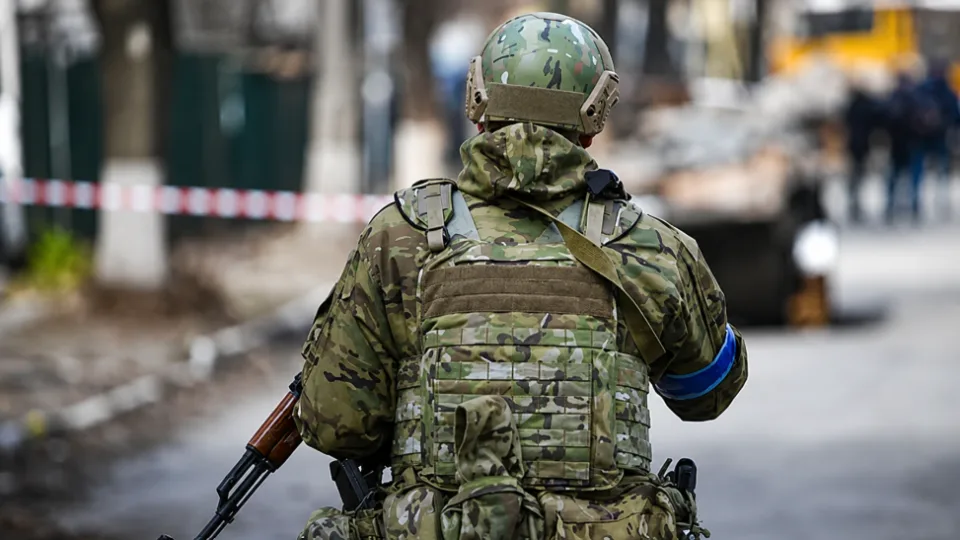










A serviceman died from acute poisoning by an unidentified substance. Although experts could not determine the exact substance that caused the death, and the military medical commission recognised the case as related to military service, the Ministry of Defence refused the deceased’s mother a one-off financial aid payment. The Ministry concluded that the soldier had intentionally harmed his health. However, the Second Administrative Court of Appeal found that this conclusion was based only on assumptions, and the Ministry of Defence did not provide sufficient evidence to justify the refusal of payment.
Circumstances of the case
The serviceman’s mother appealed to the court after the Ministry of Defence denied her the one-off financial aid following her son’s death.
As established by the courts, the serviceman served in the Armed Forces of Ukraine, carried out combat missions in the Zaporizhzhia region, and took direct part in measures to defend Ukraine. While in the area of temporary deployment, he died from acute poisoning by an unidentified substance.
The regular military medical commission determined that the injury, in the form of acute poisoning by an unidentified substance, was the result of an accident that led to the serviceman’s death, and the cause of death was related to military service.
Despite this, the Ministry of Defence commission refused the deceased’s mother the one-off financial aid. The commission concluded there were grounds for refusal, believing the death was a consequence of the serviceman intentionally harming his health, also referring to a possible administrative offence committed by him. The woman challenged this decision in court.
The court of first instance recognised the Ministry of Defence’s refusal as unlawful, cancelled it, and obliged the Ministry to reconsider the application. Both parties disagreed with this decision: the Ministry of Defence requested a complete dismissal of the claim, while the plaintiff insisted that the court should have immediately ordered the payment of the aid.
What the appellate court established
The panel of judges agreed with the conclusions of the first instance court that the Ministry of Defence did not prove the legality of its refusal.
The court noted that the forensic medical examination established the cause of death as acute poisoning by an unidentified substance. At the same time, laboratory tests did not detect ethyl alcohol, nor narcotic, psychotropic, or other substances that were the subject of expert examination. Thus, the case materials 520/26842/25 did not contain evidence confirming that the serviceman was under the influence of narcotics.
The court separately analysed the conclusion of the official investigation. It stated that the commission "may come to the assumption" that the unidentified substance entered the body through an intravenous injection, and therefore the serviceman allegedly intentionally harmed his health.
The appellate court emphasised that such an assumption is insufficient to conclude intentional harm to health. The Ministry of Defence did not provide any other proper evidence confirming this mechanism of the unidentified substance entering the body or the intentional nature of the serviceman’s actions.
The court also disagreed with the Ministry of Defence’s arguments regarding the alleged administrative offence committed by the serviceman.
The panel of judges noted that only a court is authorised to establish the fact of committing an administrative offence under Article 172-20 of the Code of Administrative Offences. At the same time, the materials of the official investigation did not contain evidence of the serviceman being held administratively liable under this article, so the Ministry of Defence had no grounds to rely on this circumstance as a reason for refusal of payment.
Under these circumstances, the appellate court concluded that the Ministry of Defence did not prove with proper and admissible evidence the existence of legal grounds for refusing the one-off financial aid. Therefore, the commission’s decision is unlawful and subject to cancellation.
Why the court did not immediately order the payment of aid
Although the Ministry of Defence’s refusal was recognised as illegal, the appellate court did not order the Ministry to immediately assign and pay the one-off financial aid.
The panel of judges explained that a court can order a government body to make a payment only when the absence of all legal grounds for refusal is established. The court cannot substitute the Ministry of Defence and independently verify all circumstances that, according to the law, must be assessed by the authorised body during the application review.
Therefore, the proper remedy in this case is the reconsideration of the application by the Ministry of Defence taking into account the court’s conclusions. The panel noted that this approach corresponds to the legal position of the Supreme Court set out in the ruling dated 31 January 2024, in case No. 480/4122/22.
Ministry of Defence appealed to the Supreme Court
After the ruling of the Second Administrative Court of Appeal, the Ministry of Defence of Ukraine filed a cassation appeal to the Supreme Court. The Ministry requested to cancel the decisions of the courts of first and appellate instances and completely deny the deceased serviceman’s mother’s claim.
However, on 27 July 2026, the Supreme Court refused to open cassation proceedings. The court noted that the case was considered under simplified claim proceedings rules, and the Ministry of Defence did not present exceptional grounds provided by law that would allow cassation review.
The Supreme Court also concluded that the Ministry of Defence’s arguments about the fundamental importance of the case for forming unified law enforcement practice and its significant public interest were unfounded. Moreover, the cassation appeal essentially amounted to a request to re-evaluate the facts and evidence established by the courts, which is beyond the powers of the cassation court.
Separately, the Supreme Court pointed out that in such disputes, the legal significance lies not in the mere fact of possible alcohol or other intoxication, but in the proven causal link between such a state, the specific actions of the serviceman, and his death. Such a causal link cannot be presumed and must be confirmed by proper, admissible, reliable, and sufficient evidence. The court noted that this approach is already established in its practice.
The Supreme Court’s ruling is final and not subject to appeal. Thus, the decisions of the Kharkiv District Administrative Court and the ruling of the Second Administrative Court of Appeal remain in force.
Subscribe to our Telegram channel t.me/sudua, follow SUD.UA on Google News , and join us on VIBER, WhatsApp, Facebook and on Instagram to stay informed about the important events.