The Constitutional Court of Ukraine is considering a complaint regarding liability for refusal to undergo a sobriety test


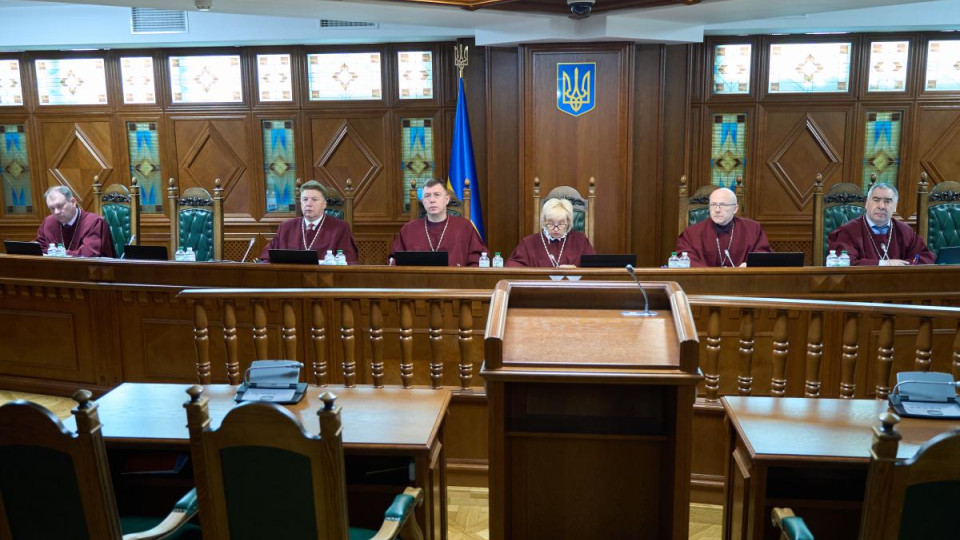










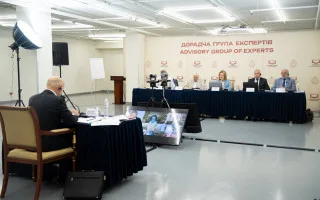
The Second Senate of the Constitutional Court of Ukraine on June 3, during the open part of the plenary session in the form of written proceedings, considered the case on the constitutional complaint of Volodymyr Volodymyrovych Slastnikov.
During the plenary session, the reporting judge in the case, Oleksandr Vodyannikov, presented the content of the constitutional complaint and the applicant's reasoning, the Constitutional Court of Ukraine reported.
The judge noted that V. V. Slastnikov applied to the Constitutional Court of Ukraine with a request to verify the constitutionality of part one of Article 130 of the Code of Administrative Offenses of Ukraine (hereinafter - the Code), "in the part that provides for liability for refusal of a person to undergo, in the prescribed manner, an examination for alcohol, drug or other intoxication, as well as the use of medicinal drugs that reduce attention and reaction speed, and the liability entailing the imposition of a fine on drivers in the amount of one thousand non-taxable minimum incomes of citizens with deprivation of the right to drive vehicles for one year, and on other persons - the imposition of a fine in the amount of one thousand non-taxable minimum incomes of citizens."
From the content of the constitutional complaint and the attached materials, it appears that an administrative offense protocol was drawn up against the applicant. According to the protocol, V. V. Slastnikov was driving a car with obvious signs of drug intoxication (behavior inconsistent with the situation; speech and coordination disorders). He refused to undergo an examination at a medical institution at the request of police officers who stopped him while driving.
The Pidvolochysk District Court of Ternopil region found the applicant guilty of committing an administrative offense established by part one of Article 130 of the Code and imposed an administrative penalty in the form of a fine of one thousand non-taxable minimum incomes of citizens in the amount of 17,000 hryvnias with deprivation of the right to drive vehicles for one year.
The Ternopil Court of Appeal dismissed the appeal filed by lawyer A. O. Signaievskyi, who acted on behalf of the applicant, and left the decision of the Pidvolochysk District Court of Ternopil region unchanged. Justifying its decision, the appellate court stated that "the guilt and qualification of V. V. Slastnikov's actions in committing the administrative offense provided for in part 1 of Article 130 of the Code of Administrative Offenses have been duly proven by the evidence examined, evaluated, and set out in the court decision . The fact of V. V. Slastnikov's refusal to undergo an examination for drug intoxication is a legal basis for administrative liability under part 1 of Article 130 of the Code of Administrative Offenses, proven by proper and admissible evidence collected in accordance with the law . The administrative penalty imposed on V. V. Slastnikov was applied in accordance with the requirements of Articles 33–34 of the Code of Administrative Offenses, taking into account his personality, the nature of the offense, within the sanction of part 1 of Article 130 of the Code, and therefore there are no grounds for canceling the court decision and closing the case."
The applicant argues that the current wording of part 1 of Article 130 of the Code does not ensure proper legal certainty, creates conditions for abuse and violation of constitutional rights of citizens. The application of the provisions of part one of Article 130 and Article 266 of the Code effectively allows holding a person administratively liable not on the basis of indisputable evidence, but based on doubts about their behavior. The author of the petition believes that the legislator has created a situation where doubt about the proof of a person's guilt turns into a basis for punishment, which directly contradicts the constitutional guarantee of the presumption of innocence.
In his opinion, the application of the contested provisions of the Code violates "the right of a person not to give testimony or explanations about themselves, family members, or close relatives, since establishing liability for refusal to undergo an examination effectively forces a person to self-incriminate," as well as the principle of individual legal responsibility, the right of everyone to respect for their dignity, and the prohibition of forced medical interventions without the free consent of the person, since the examination for intoxication is a medical procedure that cannot be conducted forcibly.
The applicant notes that Article 33 of the Constitution of Ukraine guarantees everyone the right to freedom of movement, however, in his opinion, "unjustified stopping of a vehicle restricts this right," since the current wording of part one of Article 130 of the Code lacks clearly defined and exhaustive grounds for stopping a vehicle and directing the driver for examination.
The reporting judge informed that letters-requests were sent to state authorities, leading scientific institutions, and civil society institutions with relevant questions that are fundamentally important for resolving the case.
The Court examined the case materials and proceeded to the closed part of the plenary session.
The plenary session was attended by the subject of the constitutional complaint Volodymyr Slastnikov and his representative, lawyer Hanna Slastnikova.
Subscribe to our Telegram channel t.me/sudua and to Google News SUD.UA, as well as to our VIBER and WhatsApp pages on Facebook and Instagram to stay updated on the most important events.