EU Sets Key Conditions for Ukraine: What the Benchmark Package Means for Reforms in Justice and Economy


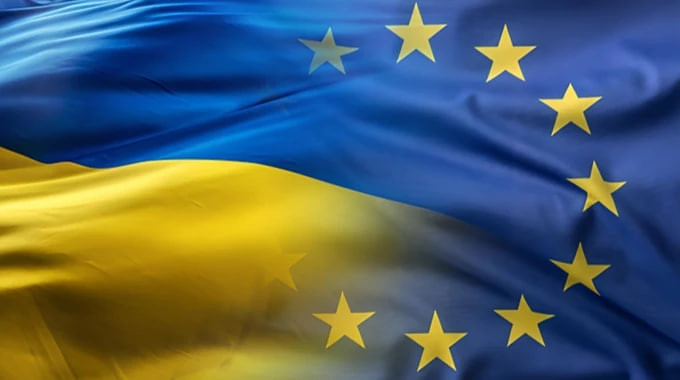










In Luxembourg, during the second Intergovernmental Conference between Ukraine and the European Union, the negotiation Cluster 1 "Fundamentals of the EU Accession Process" (Fundamentals) was officially opened. This was reported by the Office of the Vice Prime Minister of Ukraine.
Ukraine also officially accepted the benchmarks — conditions set by the European Union for the further advancement of the negotiation process.
The Ukrainian delegation included representatives from the Verkhovna Rada of Ukraine, the Office of the President of Ukraine, the Cabinet of Ministers of Ukraine, the Ministry of Foreign Affairs of Ukraine, the Ministry of Economy, Environment and Agriculture of Ukraine, the National Agency on Corruption Prevention (NACP), the State Statistics Service of Ukraine, and other bodies. During the opening of the conference, President of Ukraine Volodymyr Zelenskyy addressed the participants online.
Cluster 1 is fundamental throughout the entire negotiation process for EU accession: it is opened first and closed last. Meeting the interim benchmarks within Chapters 23 "Judiciary and Fundamental Rights" and 24 "Justice, Freedom and Security" is a necessary condition for the temporary closure of other negotiation chapters.
The chief negotiator, Vice Prime Minister for European and Euro-Atlantic Integration of Ukraine Taras Kachka, called the opening of Cluster 1 a historic moment for Ukraine and the European Union.
Ukraine confirmed the acceptance of the EU acquis in its current version and committed to considering its further development until accession. The Ukrainian side also stated that it does not request special conditions, exceptions, or transitional periods within Cluster 1. Progress in negotiations will be determined by the results of reforms according to a merit-based approach.
Despite the full-scale war, Ukraine continues implementing reforms. To open Cluster 1, the government approved and is implementing three strategic roadmaps — in the areas of the rule of law, public administration reform and democratic institutions, as well as an Action Plan for the protection of national minority rights.
During the conference, Ukraine confirmed the continuation of reforms in several areas, including:
- rule of law,
- independence of the judicial system,
- anti-corruption efforts and strengthening of anti-corruption institutions,
- functioning of democratic institutions and public administration,
- human rights protection,
- justice, freedom and security,
- development of a market economy and macro-financial stability,
- transparency of public procurement,
- statistics and financial control.
According to Taras Kachka, Cluster 1 is not only a technical stage of negotiations but a comprehensive program of state transformation.
"These reforms are primarily needed by Ukraine and its citizens. They strengthen the rule of law, improve the quality of public administration, reduce risks of corruption and distrust, make the state more predictable for citizens, reliable for partners, and understandable for business, which is also important in the process of rebuilding the country and attracting investments," he emphasized.
Ukraine also announced its intention to submit proposals for accelerated sectoral integration into specific EU policies and programs.
In summary, Taras Kachka confirmed Ukraine's commitment to fulfilling all defined benchmarks as soon as possible and expressed expectations regarding the opening of other negotiation clusters.
EU Commissioner for Enlargement Marta Kos noted that despite the war and significant losses, Ukraine maintains its commitment to the European course and continues reforms, and the progress achieved demonstrates the maturity of its institutions.
Subscribe to our Telegram channel t.me/sudua and to Google News SUD.UA, as well as to our VIBER and WhatsApp, Facebook page and Instagram to stay updated on the most important events.