Millions of Euros and the Grant Black Hole: Where the Funds Intended for Justice Reform Go












In recent years of a targeted course towards Europe, virtually every reform has been accompanied by the same promise: political influence will be eliminated, and independent competitions will form a qualitatively new system of public administration.
However, after ten years, a natural question arises: have the reforms achieved their intended goal?
As we reported earlier, under the cover of a noble goal — adapting Ukrainian law to the EU legal system — there is an attempt to introduce a destructive tool that will destroy the remnants of the unified centralized system of procedural leadership. This concerns changing the procedure for appointing the Prosecutor General — up to the introduction of direct or indirect elections or the creation of overly complex competitive procedures with decisive votes by foreign experts and activists.
However, when it comes to any systemic reform, behind the scenes of loud press releases there is always a key question: who pays for this and where does the money really go?
Over the past 5 years, according to independent auditors and monitoring data from relevant ministries, the European Union, particularly through flagship grant projects, the United States of America through USAID's "Justice for All" programs, and the Council of Europe have collectively allocated between 80 and 120 million euros for reforming the Ukrainian judicial system and prosecution bodies.
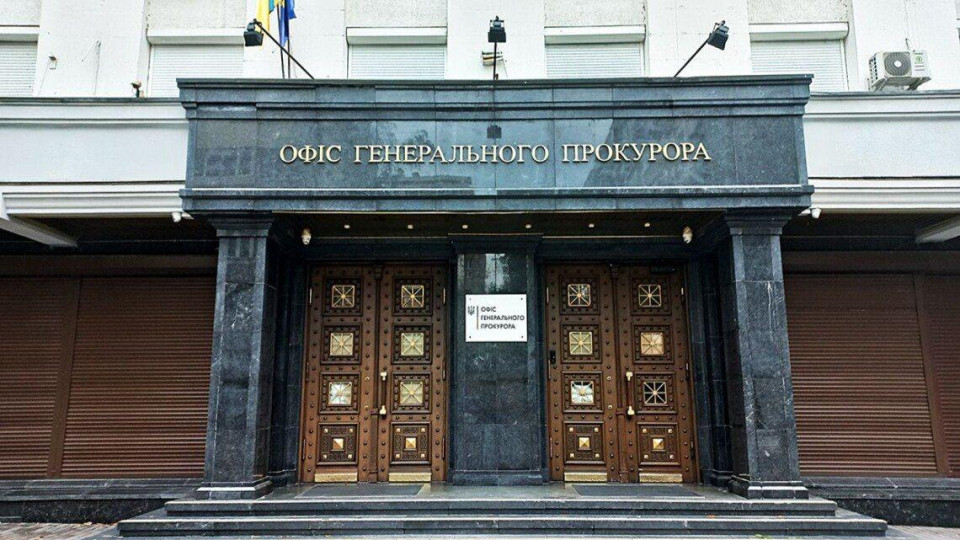
At the same time, when assessing the institutional capacity of the Office of the Prosecutor General and regional prosecutor's offices in practice, the question arises why, with such funding, the system remains in a state of constant restructuring, and instead of real changes, society is repeatedly offered legislative initiatives like the prosecutor competitions?
If you open public reports on the implementation of international technical assistance projects, the financial picture looks impeccable, technological, and modern. Taxpayer money from the EU and the USA is formally invested in the development, testing, and partial implementation of the electronic criminal proceedings system (tools like eCase and e-Prosecution). The declared goal was to eliminate tons of paper volumes and speed up data exchange between NABU, SAP, the OPG, and courts.
Additionally, funding was intended to cover logistics, development of general ability tests (IQ tests) and knowledge of legislation, financing the work of involved experts, and purchasing software to verify the integrity of prosecutors at all levels during waves of reform.
Thousands of hours of training for prosecutors on investigating war crimes, cybercrime, human rights protection standards, and institution management according to Eurojust standards were also planned.
The Money-Spending Industry
Most of the mentioned 80–120 million euros never reached and could not have reached the direct accounts of Ukrainian state bodies. According to most donors' rules, funds are administered by special Western contractor companies: consulting agencies, international bureaus, or large non-governmental organizations.
The State Audit Service notes that control over the use of these funds is not within its direct authority, and audits of individual international technical assistance projects have not been conducted. Meanwhile, the State Treasury Service indicates that a significant portion of such funds does not pass through the state treasury system because financing is carried out directly by donors or their designated project executors. Tax authorities, in turn, report the absence of centralized accounting of tax and customs benefits granted within certain international technical assistance programs.
As a result, a specific situation arises where significant financial resources aimed at reforming the justice sector remain outside the traditional budget control mechanisms of Ukraine. According to estimates derived from the analysis of individual projects, only a small portion of expenses is reflected in the state accounting of recipients, while the main bulk of funding is administered directly by international donors, contractors, and program executors.
It is important to emphasize that this model itself does not indicate illegal use of funds. Most international technical assistance programs provide their own internal and external audit mechanisms, as well as control by donor organizations. However, for Ukrainian society, the question remains open regarding the completeness and accessibility of information about the actual distribution of funds, the structure of administrative expenses, payment of international consultants, and the actual effectiveness of achieved results.
Therefore, the key problem lies not only in financial indicators but also in the level of accountability. If a significant portion of resources aimed at reform is effectively outside the national financial accounting and auditing system, this inevitably raises public questions about the transparency, efficiency, and ultimate effectiveness of such programs.
As a result, a closed ecosystem emerges. Up to 60–70% of the budget of certain programs is spent on paying the salaries of "international experts." The fees of such specialists can range from 500 to 1500 euros per working day. The problem is not so much in the fact of involving foreign experts but in how much their recommendations take into account the specifics of the Ukrainian legal system, criminal procedural legislation, and the peculiarities of national institutions' functioning.
The remaining funds are distributed as subgrants among a limited, almost closed circle of Ukrainian non-governmental organizations and analytical centers. Instead of financing salary increases for court technical staff or purchasing forensic laboratories for crime documentation, the money goes to endless monitoring, writing alternative development strategies, holding round tables, and publishing bright brochures.
In this way, a stable layer of professional "reformers" is formed, whose personal financial well-being directly depends on the reform never ending. If the prosecution or judicial system finally become stable, predictable, and fully reformed — donors will stop allocating money, projects will close, and grant recipients will lose their excessive profits.
Subscribe to our Telegram channel t.me/sudua and to Google News SUD.UA, as well as to our VIBER and WhatsApp pages on Facebook and Instagram to stay informed about the most important events.