A hazardous tree growing outside the settlement: is it possible to cut it down and who will get the wood


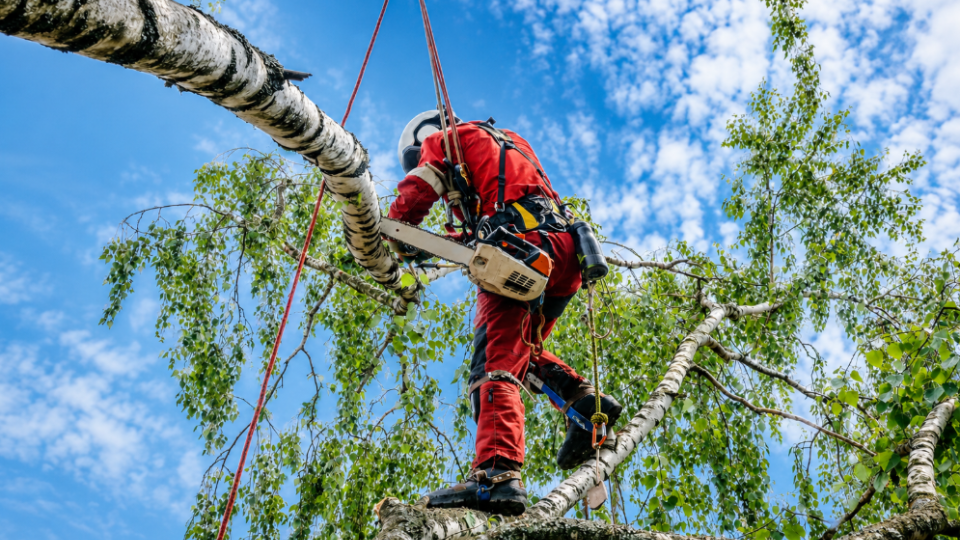










For the first time in Ukraine, a unified procedure for the removal of trees and shrubs outside settlements may be introduced.
The document obtained by "Judicial and Legal Newspaper" effectively creates new rules for the removal of hazard, dry-topped, and defective plantations outside cities and villages.
The new mechanism aims to eliminate legal uncertainty that has long complicated decision-making regarding such trees, as well as to define the grounds for their removal, the procedure for obtaining permits, the work of special commissions, and the subsequent use of the wood.
This concerns the implementation of a two-year experimental project on the removal of trees and shrubs outside settlements.
The project coordinator is designated as the Ministry of Economy, Environment, and Agriculture. Local self-government bodies, military administrations of settlements (if established), the State Environmental Inspectorate, the State Forest Resources Agency, land managers, landowners, and land users will be involved in its implementation.
After the experiment is completed, the relevant ministry must prepare a report on the results of its implementation and proposals for legislative amendments.
In which cases trees can be removed
The new procedure applies to trees and shrubs that do not belong to the forest fund of Ukraine and are located outside settlements.
Removal of such plantations will be possible in cases of:
- preparatory and construction works;
- removal of emergency, dry-standing, and faulty trees, as well as self-seeded and sprouted trees;
- elimination of consequences of accidents on engineering networks;
- restoration of light conditions in residential houses, cottages, garden houses, and agricultural buildings shaded by trees;
- repair and operational works in the protection zones of water supply, heating, and sewage networks;
- works in the protection zones of main pipelines and gas distribution systems;
- ensuring the established width of clearings along electronic communication lines and around communication facilities;
- preparation of land plots for mineral deposit development;
- ensuring compliance with the mode of economic activity in water protection zones;
- elimination of consequences of emergencies, accidents, and natural disasters.
Territories where the new rules do not apply
The document contains a list of cases where the new procedure will not be applied.
In particular, it will not apply to:
- forests and lands of the forest fund of Ukraine;
- trees and shrubs within settlements;
- territory of the National Military Memorial Cemetery;
- border strips where state border arrangement works are carried out;
- territories and objects of the nature reserve fund;
- protective forest belts;
- self-afforested land plots;
- territories of possible or active hostilities with no defined end date;
- territories temporarily occupied by the Russian Federation;
- plant world objects listed in the Red Book of Ukraine and the Green Book of Ukraine.
How to obtain a permit to remove trees
In most cases, to remove trees, it will be necessary to obtain an order issued by the executive bodies of village, settlement, or city councils or military administrations.
The basis for issuing the order will be an application from an individual or legal entity. It must include the applicant's data, the cadastral number of the land plot or its coordinates, and the reasons for removing trees or shrubs.
The application can be submitted both in paper and electronic form.
After receiving the application, the competent authority must create a commission within seven working days to assess the condition of trees and shrubs. The commission will include representatives of local authorities, the State Environmental Inspectorate, the State Forest Agency, land users, and the public.
The commission will inspect the plantations, determine their condition, and check whether they belong to categories excluded from the procedure.
Based on the inspection results, a special act with recommendations on the possibility or impossibility of tree removal will be drawn up.
After receiving this act, the competent authority will make a decision within five working days on issuing the order or refusing it.
Cases where an order is not required
The document provides several exceptions.
In particular, if the land plot is privately owned and does not belong to the forest fund of Ukraine, the owner can independently decide on the removal of trees and shrubs on their land.
Also, if the developer has already obtained permission to carry out construction works, no additional permits for tree removal within the construction site are required.
In case of elimination of consequences of accidents, natural disasters, or emergencies, tree removal can be carried out immediately with subsequent documentation.
Will restoration cost have to be paid
The new procedure stipulates that restoration cost for trees and shrubs in cases defined by the document will not be charged.
Also, owners of private land plots can remove trees without paying restoration costs if the plantations do not belong to the forest fund of Ukraine.
The issuance of the order will also be free of charge.
Who will own the removed wood
Ownership rights to removed trees and shrubs will belong to the landowner.
If trees are removed on lands not privately owned, local self-government bodies or military administrations will manage them.
It is envisaged that such wood may be used for the needs of territorial communities, including assistance to low-income citizens, persons with disabilities, persons with special merits to the Motherland, combatants, labor veterans, single mothers and fathers, large families, and citizens affected by the Chernobyl disaster.
Who may be supported in removing emergency trees
Local self-government bodies are recommended to assist socially vulnerable categories of citizens in removing emergency, dry-standing, and faulty trees on their land plots.
This includes low-income citizens, persons with disabilities, persons with special merits to the Motherland, combatants, labor veterans, single mothers and fathers, large families, and persons affected by the Chernobyl disaster.
At the same time, the costs of removing trees and shrubs will generally be borne by the applicant who initiated the works. After completion, they must notify the issuing authority. Members of commissions will also be subject to legislation on preventing and resolving conflicts of interest.
Subscribe to our Telegram channel t.me/sudua and to Google News SUD.UA, as well as to our VIBER and WhatsApp, page on Facebook and on Instagram to stay informed about the most important events.