Martial Law: Which Rights May Be Restricted and Which Are Guaranteed by the Constitution












Since February 24, 2022, Ukraine has been under a legal regime of martial law, introduced after the start of the full-scale invasion by the Russian Federation. This decision was made to strengthen the country's defense capability, protect its sovereignty and territorial integrity, and ensure an appropriate response to armed aggression.
Since then, the Verkhovna Rada has regularly extended the duration of this special legal regime along with general mobilization. The last time the parliament made the relevant decision was in April 2026, extending martial law and mobilization for another 90 days — until August 2, 2026. This was the nineteenth vote by the Verkhovna Rada.
After more than four years of living under war conditions, Ukrainians have become accustomed to many changes. At the same time, not all citizens know exactly what legal consequences martial law entails, which rights may be temporarily restricted, and which the Constitution guarantees regardless of any emergency circumstances.
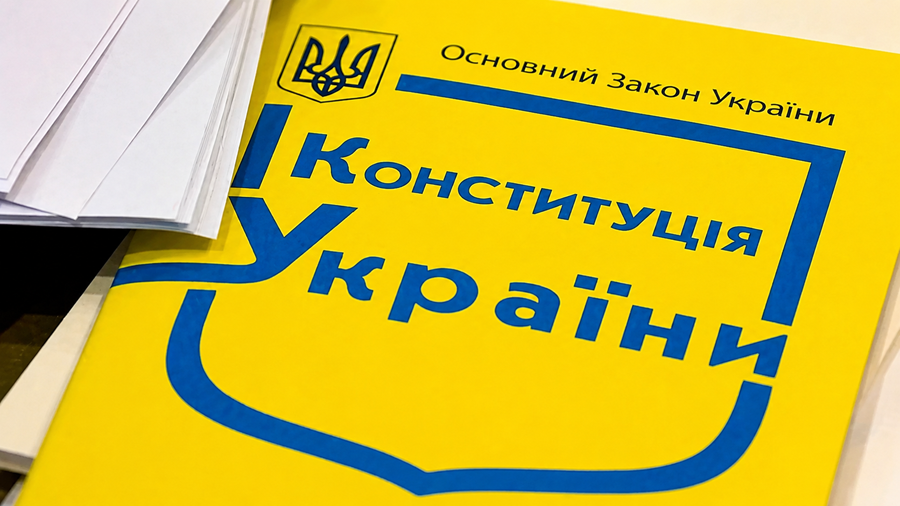
This issue becomes especially relevant ahead of the 30th anniversary of the Constitution of Ukraine. The Basic Law remains the foundation of Ukrainian statehood even during war, and the list of constitutional rights and freedoms that cannot be restricted is one of the key elements of legal protection for citizens.
What Martial Law Means
Martial law is a special legal regime that can be introduced throughout Ukraine or in certain regions in the event of armed aggression, a real threat of attack, or danger to the independence and territorial integrity of the state.
Its introduction grants state authorities, military command, military administrations, and local self-government bodies additional powers necessary to organize the country's defense, repel the aggressor, and eliminate threats to national security.
At the same time, legislation provides that during martial law, certain constitutional rights and freedoms of citizens, as well as the rights of legal entities, may be temporarily restricted. However, such restrictions are allowed only within the limits defined by the Constitution and the laws of Ukraine.
Which Rights Cannot Be Restricted Even During War
Article 64 of the Constitution of Ukraine defines the list of constitutional rights and freedoms that cannot be restricted even under martial law or a state of emergency.
These include:
- equality of all citizens before the law (Article 24);
- the right to citizenship and the impossibility of deprivation thereof (Article 25);
- the inalienable right of every person to life (Article 27);
- the right to respect for human dignity (Article 28);
- the right to freedom and personal inviolability (Article 29);
- the right to send individual or collective written appeals or personally address state authorities, local self-government bodies, and officials of these bodies (Article 40);
- the right to housing (Article 47);
- the right to marriage based on the voluntary consent of a woman and a man (Article 51);
- equality of children's rights regardless of their origin or whether born in or out of wedlock (Article 52);
- the right to judicial protection (Article 55);
- the right to compensation for material and moral damage caused by unlawful decisions or actions of authorities (Article 56);
- the right to know one's rights and duties (Article 57);
- the absence of retroactive effect of laws, except in cases of mitigating responsibility (Article 58);
- the right to professional legal assistance (Article 59);
- the right not to obey clearly criminal orders or instructions (Article 60);
- the prohibition of double prosecution of a person for the same offense of one kind (Article 61);
- the presumption of innocence (Article 62);
- the right not to testify against oneself, family members, or close relatives (Article 63).
These constitutional guarantees remain unchanged regardless of whether the country is at peace or under a special legal regime.
Which Rights May Be Temporarily Restricted
At the same time, the law allows the state to introduce certain temporary restrictions during martial law if required by defense and security interests.
In particular, the following may be applied:
- restrictions on freedom of movement;
- imposition of a curfew;
- checking documents and vehicles at checkpoints;
- temporary restrictions on holding peaceful assemblies, rallies, and demonstrations;
- special rules for the operation of enterprises, institutions, and organizations;
- introduction of certain informational restrictions regarding the activities of mass media or dissemination of certain information.
During martial law, the provisions of Article 73 of the Labor Code of Ukraine, which establish holidays and non-working days, do not apply. This is provided by the Law of Ukraine "On the Organization of Labor Relations under Martial Law."
What Happens to Freedom of Speech
One of the most common questions concerns freedom of speech.
The constitutional right to freedom of expression is not canceled even during war. However, under martial law, the state has the right to impose certain restrictions if the dissemination of certain information may pose a threat to defense capability or national security.
In particular, legislation establishes liability for unauthorized dissemination of information about the deployment, movement of weapons, movement, relocation, or placement of the Armed Forces of Ukraine or other military formations if such information was not published in open access by authorized bodies.
At the same time, citizens still have the right to:
- criticize the activities of authorities;
- address journalists and mass media;
- submit appeals, complaints, and electronic petitions;
- express their own position on socially important issues within the law.
At the same time, freedom of speech does not extend to actions that may pose a threat to state security or contain signs of criminal offenses.
In particular, legislation provides liability for:
- calls for violent overthrow of the constitutional order or seizure of state power (Article 109 of the Criminal Code of Ukraine);
- unauthorized dissemination of information about the deployment, movement of weapons, movement, relocation, or placement of the Armed Forces of Ukraine and other military formations in cases provided by Article 114-2 of the Criminal Code of Ukraine;
- threats, violence, or other unlawful actions against servicemen or representatives of state authorities in cases provided by law.
Thus, even under martial law, constitutional rights and freedoms of citizens remain guaranteed, and their restrictions are possible only in cases and procedures defined by law.
Subscribe to our Telegram channel t.me/sudua and to Google News SUD.UA, as well as to our VIBER and WhatsApp, our page on Facebook and on Instagram to stay informed about the most important events.