Can Elephants Obtain Human Rights: Hawaii Supreme Court to Hear Unprecedented Case


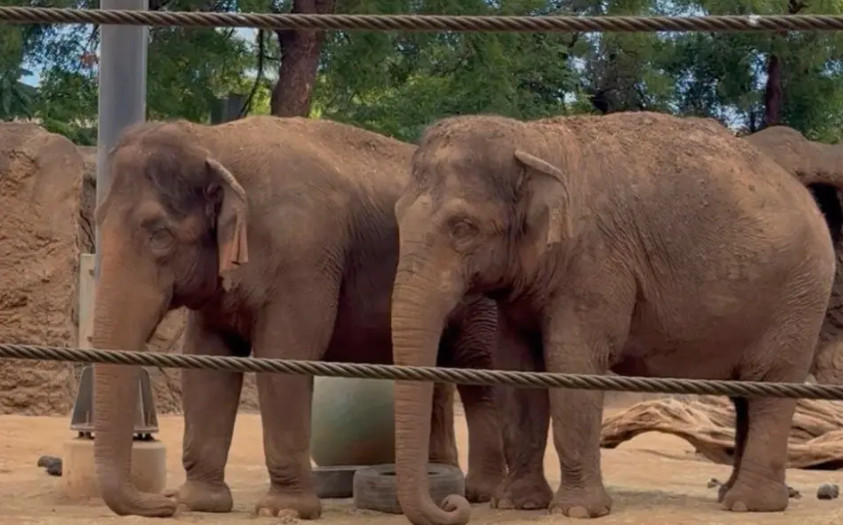










The Hawaii Supreme Court has agreed to hear an unusual case in which human rights advocates seek legal recognition of two elephants as "persons" and their transfer from the Honolulu Zoo to a specialized sanctuary. The plaintiffs argue that the animals have the right to bodily freedom, while lower courts believe that the habeas corpus procedure applies exclusively to humans, writes Alohastatedaily.
In 2023, the nonprofit organization Nonhuman Rights Project filed a petition with the First Circuit Court in Honolulu on behalf of two elephants from the Honolulu Zoo — Marie and Waigai.
The petition was filed in the form of habeas corpus — a legal mechanism that allows a court to review the legality of a person's detention and, if necessary, overturn unlawful imprisonment. According to the applicants, even non-human animals, specifically elephants, have the right to bodily freedom under common law norms, so the court should order the transfer of Marie and Waigai to a specialized elephant sanctuary.
The question of whether Marie and Waigai can legally be considered persons became central to the court proceedings, which after several instances reached the highest court of the state. Last week, the Hawaii Supreme Court agreed to hear the case.
"As social norms and knowledge about non-human animals evolve, common law must also develop," the petition states.
A significant part of the document is devoted to modern scientific knowledge about elephants, their complex cognitive abilities, and potential for self-awareness.
Marie, who is now 50 years old, and 40-year-old Waigai were born in the wild. Accordingly, 44 and 34 years ago, they were gifted to the Honolulu Zoo by the then Prime Ministers of India. Since then, they have lived without other members of their species, which the plaintiffs consider "undeniably cruel" given the high sociality of elephants.
The petition also claims that the conditions in the zoo negatively affect the animals' health. According to the plaintiffs, both elephants suffer from obesity and have access only to an "impoverished environment" that does not provide sufficient stimulation.
In 2024, the First Circuit Court rejected the petition, stating that the habeas corpus procedure under common law applies exclusively to humans. After that, the Nonhuman Rights Project appealed the decision to the Intermediate Appellate Court of the state.
In January of this year, the appellate court upheld the decision of the first instance. At that time, the legal discussion focused on the definition of the term "person" and whether it always means a human. The author of the majority opinion, Judge Keith Hiraoka, noted that under common law, "person" and "animal" are traditionally different legal categories, including in cases of theft of property, which includes animals, or in legislation prohibiting zoophilia.
Subscribe to our Telegram channel t.me/sudua and to Google News SUD.UA, as well as to our VIBER and WhatsApp, our pages on Facebook and Instagram to stay informed about the most important events.