The Supreme Court recognized the refusal to pay the family of an energy worker who died during electrical network repairs as illegal


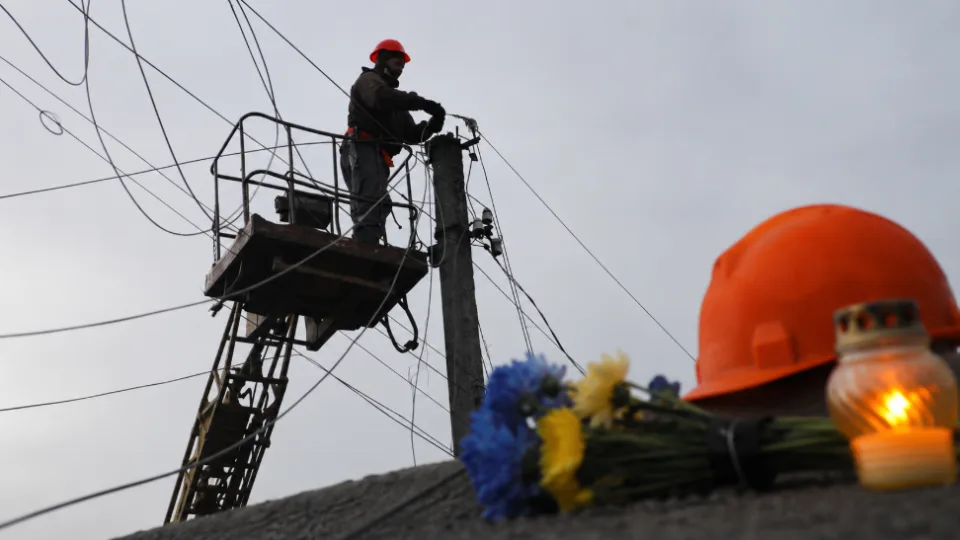










The absence of the enterprise in the Register of Critical Infrastructure Objects at the time of the employee’s death does not deprive his family of the right to a one-time assistance payment if, according to the legislation in force at that time, the enterprise belonged to critical infrastructure objects.
The Administrative Cassation Court within the Supreme Court expressed a legal position regarding the payment of one-time financial assistance to families of critical infrastructure workers who died as a result of Russian military aggression.
The court concluded that the state cannot refuse social protection solely because the mechanism for maintaining the Register of Critical Infrastructure Objects had not yet been introduced or the relevant enterprise had not been included in it at the time of the employee’s death. The right to assistance arises from the moment of the legal fact — the death of the employee while performing professional duties — and not after the state completes the necessary organizational procedures.
Case circumstances
The plaintiff in the case was the wife of an employee of JSC "Khersonoblenergo," who died on March 31, 2023, while performing official duties.
The man worked as a senior foreman of the overhead and cable electric networks service. During the repair of a power line near Posad-Pokrovska and Kyselivka in the Kherson region, he died as a result of the detonation of an explosive device. A special investigation established that the accident was work-related and occurred during the performance of labor duties.
After the husband’s death, the Pension Fund assigned his wife a one-time insurance payment of UAH 268,000 according to the Law "On Compulsory State Social Insurance."
In 2024, the woman applied for a one-time financial assistance provided by Law No. 2980-IX, which establishes a payment of UAH 1 million for family members of a deceased critical infrastructure worker. Since she had already received UAH 268,000 under another law, she requested the assistance to be assigned taking this payment into account and to pay the difference of UAH 732,000.
However, the Main Department of the Pension Fund of Ukraine in the Kherson region refused to assign the assistance, citing that on the day of the employee’s death, JSC "Khersonoblenergo" was not yet included in the Register of Critical Infrastructure Objects.
The courts of first and appellate instances recognized such refusal as illegal, after which the Pension Fund filed a cassation appeal.
What the Supreme Court decided
The Administrative Cassation Court left unchanged the decisions of the lower courts.
The court noted that the Procedure for maintaining the Register of Critical Infrastructure Objects was approved by the Cabinet of Ministers only on April 28, 2023, and came into force on May 2, 2023, i.e., after the employee’s death. At the time of the disputed legal relations, the status of critical infrastructure objects was determined by the Law "On Critical Infrastructure" and Cabinet of Ministers Resolution No. 1109.
The Supreme Court stated that JSC "Khersonoblenergo" carries out activities related to the distribution of electric energy and belongs to the fuel and energy sector, which according to Cabinet of Ministers Resolution No. 1109 was classified as a critical infrastructure sector. Therefore, the court agreed with the conclusions of the lower courts that the enterprise at the time of the employee’s death was already a critical infrastructure object according to the legislation in force at that time.
Moreover, after the introduction of the new procedure for maintaining the Register, the enterprise was officially included in it on March 28, 2024.
The Supreme Court emphasized that the later inclusion of the enterprise in the Register itself does not mean that it did not have the status of a critical infrastructure object before that.
Procedures that did not yet exist cannot be applied
The Supreme Court identified the key point in this case as the Pension Fund effectively refusing payment by referring to legislation and administrative procedures that did not exist at the time of the employee’s death.
The court noted that the absence of the Register or the non-inclusion of the enterprise in it cannot be grounds for refusal of social guarantees if at the time the right arose the status of the enterprise was determined by other legislative norms.
The state cannot shift its own mistakes onto citizens
Separately, the Supreme Court emphasized the principle of good governance.
The court stated that neither the deceased employee nor his wife can bear negative consequences because the state did not timely introduce the Register of Critical Infrastructure Objects or complete the necessary administrative procedures.
The risk of errors or inaction by state bodies should fall on the state itself, not on citizens. To support this, the Supreme Court referred to the practice of the European Court of Human Rights in the case Pincová and Pinc v. the Czech Republic, according to which authorities cannot use their procedural mistakes as grounds to deprive a person of their rightful rights if they acted in good faith.
The right arises at the moment of the employee’s death
The Supreme Court stressed that the right to one-time financial assistance provided by Law No. 2980-IX arises from the moment of the legal fact — the death of the employee in connection with the performance of professional duties as a result of Russian military aggression.
Subsequent state decisions, including the creation of the Register or the inclusion of the relevant enterprise in it, cannot narrow, cancel, or delay an already acquired right to social protection.
The court also noted that by Cabinet of Ministers Resolution No. 748 dated June 10, 2026, a review of decisions by territorial Pension Fund bodies that refused assistance due to the absence of the relevant enterprise in the Register of Critical Infrastructure Objects was already provided.
Thus, in case 420/37993/24, the Supreme Court confirmed that if at the time of death the employee performed professional duties at an enterprise that, according to the legislation in force at that time, belonged to critical infrastructure objects, the absence of such an enterprise in the Register created later cannot be a lawful reason to refuse the family a one-time financial assistance payment.
Subscribe to our Telegram channel t.me/sudua and to Google News SUD.UA, as well as to our VIBER and WhatsApp, page on Facebook and on Instagram to stay informed about the most important events.