What punishment threatens a driver for a phone conversation while driving: a fine or license suspension


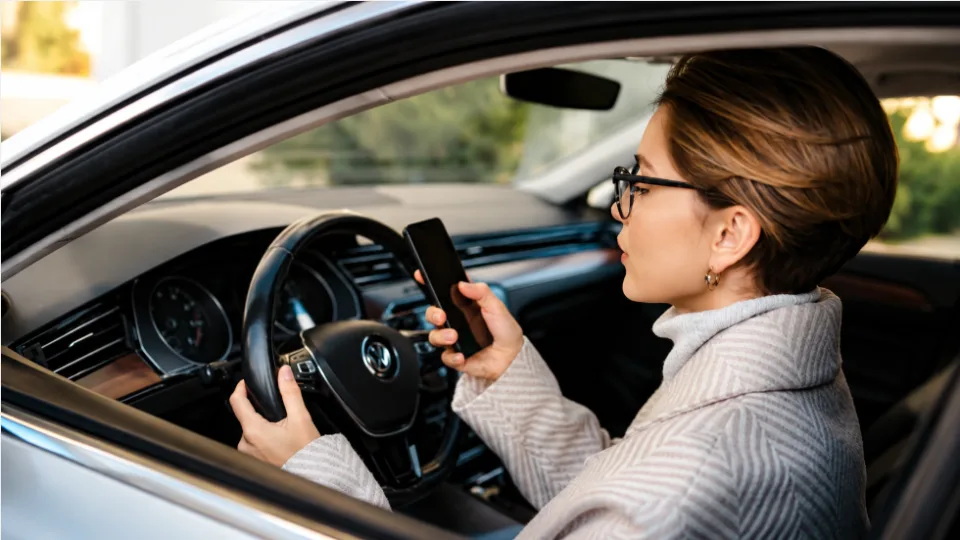










Talking on a mobile phone while driving a car can result not only in a fine for the driver but also in a temporary loss of the right to drive vehicles. Ukrainian legislation provides different levels of responsibility depending on whether such actions created a danger to other road users. At the same time, the final decision to revoke a driver’s license is made exclusively by the court, and the police order itself can be canceled if the violation is not confirmed by proper evidence.
Using a phone while driving: what the Traffic Rules prohibit
Using a mobile phone while driving without a special headset or hands-free system is prohibited by clause 2.9 "d" of the Traffic Rules. This specifically refers to using a phone held in the driver’s hand while driving.
Such a violation is considered dangerous because talking on the phone significantly distracts the driver’s attention, slows their reaction to the road situation, and increases the risk of a traffic accident.
What fine threatens the driver
Responsibility depends on the consequences of the violation.
If the driver used the phone without a headset but their actions did not create a danger to other road users, a fine of 510 hryvnias is applied according to part two of article 122 of the Code of Ukraine on Administrative Offenses (CUAO).
When a driver’s license can be revoked
If using the phone while driving led to the creation of an emergency situation or danger to other road users, the responsibility becomes much stricter.
In such a case, the law provides for a fine of 1,445 hryvnias or deprivation of the right to drive vehicles.
When such a violation is detected, the police draw up an administrative protocol and may temporarily seize the driver’s license. At the same time, the decision to apply punishment, including deprivation of the right to drive for a period of six to twelve months, is made exclusively by the court.
How the police must prove the violation
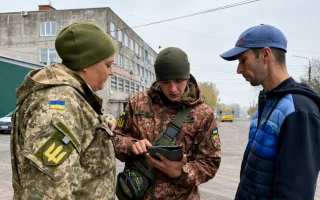
The police can record the violation during patrol or using technical means of video recording.
At the same time, according to articles 251–252 of the CUAO, evidence in the case may include photo and video materials, witness testimonies, and other proper evidence.
The mere explanations or statements of the patrol officer are not enough to confirm the driver’s guilt. Judicial practice shows that rulings are often canceled if the police did not provide video recording or other proper evidence of the violation.
How to appeal a fine
The driver has the right to appeal the administrative offense ruling within 10 days from the moment it is issued.
Appeals can be made both to the relevant police authority and directly in court.
Grounds for canceling the ruling may include, in particular:
- absence of photo or video recording;
- errors in the date, time, or place of the offense;
- violations of the procedure for processing materials.
In their explanations, the driver may state that they do not admit the violation and point to the lack of proper evidence of its commission.
What the court considers during the case review
During the consideration of such cases, the court evaluates all circumstances as a whole. In particular, the duration of phone use, the nature of the driver’s actions, the behavior of the police during the processing of materials, and the observance of the person’s procedural rights may be taken into account.
If the police drew up a protocol on creating an emergency situation or temporarily seized the driver’s license, it is advisable to seek legal assistance as soon as possible. A lawyer can help gather the necessary evidence, including initiating the retrieval of recordings from the police officer’s body camera, which can be crucial during the court hearing.
Subscribe to our Telegram channel t.me/sudua and to Google News SUD.UA, as well as to our VIBER and WhatsApp, our page on Facebook and on Instagram to stay informed of the most important events.