Unauthorized Surveillance Measures and Manipulations with Automated Case Distribution: The High Council of Justice Returns to Judge Hennadiy Salay's Case


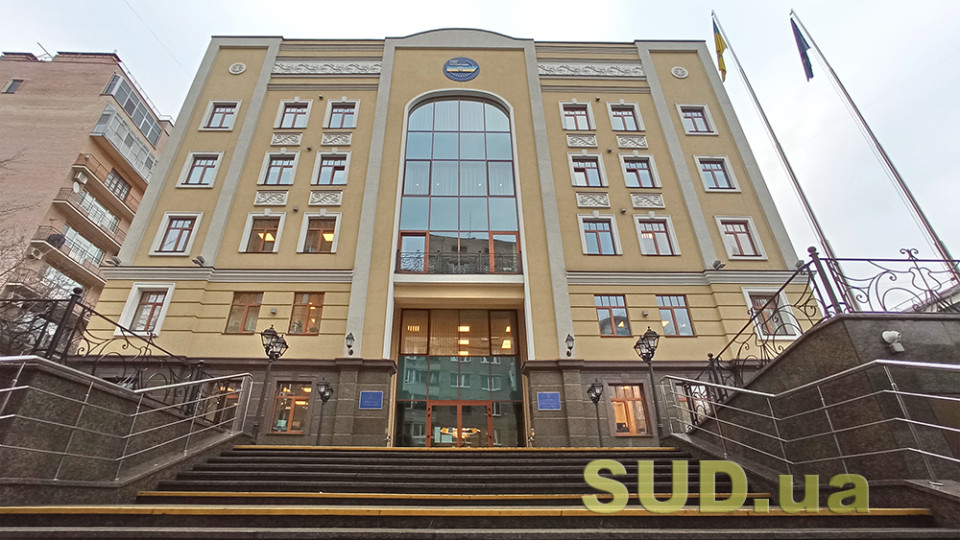










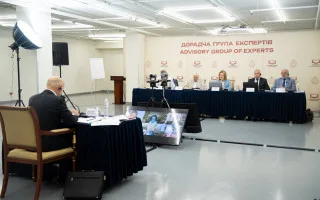
The High Council of Justice is once again returning to the consideration of a high-profile case that has long been under close scrutiny by the legal community and which our editorial team has been continuously monitoring. At the meeting on Tuesday, June 2, 2026, complaints against the decision of the Third Disciplinary Chamber of the High Council of Justice regarding Judge Hennadiy Salay of the Chernihiv Court of Appeal are scheduled to be reviewed.
Recall that the "Judicial and Legal Newspaper" previously raised this issue in a publication questioning whether the High Council of Justice would justify a judge who authorized illegal surveillance measures.
Currently, the review of this case based on complaints by A. K. Slavytska and R. Yu. Kravets is approaching its final stage, forcing society once again to assess whether judicial governance bodies are ready to abandon the practice of double standards.
Procedural Chaos and Ignoring the Status of a Lawyer
The case concerns the review of the decision of the Third Disciplinary Chamber of the High Council of Justice dated March 20, 2024, No. 805/3dp/15-24. The systemic violations committed by Judge Salay H. A. are striking in their scale and blatant disregard for legislative guarantees.
- Violation of the special status of a lawyer:
The object of the surveillance measures authorized by the judge included, among others, a person with the status of a lawyer — A. K. Slavytska. The procedural law (Article 23 of the Law "On Advocacy and Advocacy Activity") clearly and imperatively states that a motion to conduct surveillance measures regarding a lawyer must be submitted exclusively by the Prosecutor General, his deputies, or the regional prosecutor. However, Judge Salay approved a motion submitted by an improper subject — an ordinary investigator. Moreover, at the time of the request (February 4, 2019), this investigator was not even legally part of the interregional investigative group, which was officially created only two days later — on February 6.
- Lack of legal grounds and qualifying features: Such measures as audio and video surveillance of a person are allowed by law only in case of suspicion of committing a grave or especially grave crime. However, there were no signs or justified suspicions of such a level in the materials provided to the judge.
- Manipulation of the "Maidan Case" and property: The pre-trial investigation was artificially "linked" to criminal proceeding No. 4201410020000046 (the so-called "Maidan case"), to which lawyer Slavytska had no relation.
An additional reason for surveillance was the unsubstantiated assumptions of the investigation about her alleged unlawful acquisition of an apartment. However, Judge Salay did not verify either the official income of the lawyer or the real value of the property, limiting himself to vague general phrases.
Administrative Arbitrariness: Manual "Auto-Distribution" Bypassing the Law
A separate egregious episode in the judge's activity, demonstrating a systematic disregard for the law, is the manipulation of automated case distribution. While the Criminal Procedure Code of Ukraine clearly establishes the principle of randomness during auto-distribution, and the Regulations on the Automated Court Document Management System explicitly state that any decisions regarding judges' specialization or duty schedules must be made exclusively by a collegial body — the judges' assembly — different rules operated in the Chernihiv Court of Appeal.
Judge Salay, acting alone as the head of the respective court, by his own administrative orders assigned himself to consider certain categories of cases. In fact, he created an alternative-free scheme of case distribution for himself without any lawful approvals or decisions of the judges' assembly.
A Clear Signal from the ECHR: The "Vykhor v. Ukraine" Precedent
This case gains particular relevance due to the recent practice of the European Court of Human Rights. On January 26, 2026, the ECHR issued a decision in the case "Vykhor v. Ukraine," where it directly recognized that formal authorization of surveillance measures in vague terms, without proportionality analysis and without considering the professional status of a lawyer, constitutes a direct violation of Article 8 of the Convention. Judge Salay's rulings contained absolutely identical defects, which effectively elevates the violations he committed to an international level.
Thus, the existing legal position provides indisputable grounds for annulling the decision of the Third Disciplinary Chamber of the High Council of Justice and bringing Judge Hennadiy Salay to real disciplinary responsibility. But will the High Council of Justice on Tuesday demonstrate commitment to the law and protection of the professional rights of lawyers, or will it again hide behind the politics of double standards? Our editorial team continues to closely monitor the progress of this process.
Author: Volodymyr Pravo
Subscribe to our Telegram channel t.me/sudua and to Google News SUD.UA, as well as to our VIBER and WhatsApp, pages on Facebook and Instagram to stay informed about the most important events.