Woman died during a fire in a rented apartment, and the damages will be compensated by her mother — Supreme Court


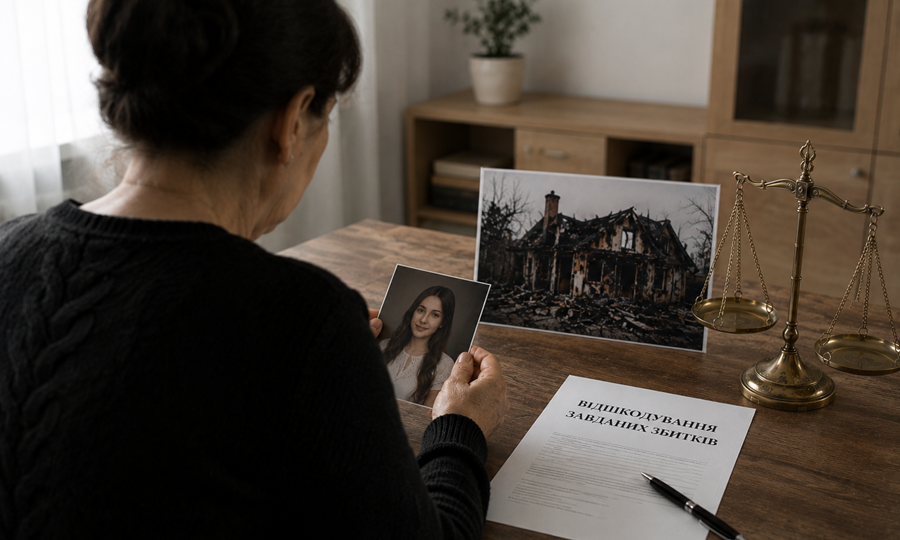










When a fire destroys rented housing, the property owner often remains alone with multi-thousand losses. If the tenant living in the apartment died during the fire, an additional question arises: can claims for compensation of damages, lost profits, and moral harm be made against their heirs.
In the ruling dated May 27, 2026, in case No. 466/215/25, the Supreme Court, sitting as the Cassation Civil Court, considered the issue of compensation for property, moral damage, and lost profits caused by a fire in a rented apartment.
The practical significance of this decision lies in confirming the approach regarding the distribution of the burden of proof in disputes over damage compensation, as well as the application of inheritance law norms to the claims of the creditor of the deceased.
Circumstances of the case
The plaintiff owned a one-room apartment in Lviv, which she rented out in 2019. According to the lease agreement, the tenant was obliged to ensure the preservation of the property, prevent its damage, and comply with fire safety requirements.
In October 2021, a fire occurred in the apartment. As a result of the fire, a significant part of the property and the apartment itself were destroyed or damaged, and the tenant died. Expert examinations showed that the fire's origin was in the living room, and the probable cause was careless handling of fire during smoking.
After the tenant's death, her mother accepted the inheritance and became the sole heir. The apartment owner filed a lawsuit to recover the cost of damaged property, lost profits from the inability to rent out the apartment, and moral damages.
The court of first instance partially satisfied the claim and recovered from the heir 883,136 UAH in property damage, 187,000 UAH in lost profits, and 20,000 UAH in moral damages. The appellate court upheld the decision.
The heir filed a cassation appeal, citing, among other things, the creditor's missed deadline for claims against the heir, inadmissibility of certain evidence, and lack of proven fault of the tenant.
Position of the Supreme Court
The Supreme Court indicated that according to part one of Article 1166 of the Civil Code of Ukraine, property damage caused to the property of a natural or legal person is compensated in full by the person who caused it. For liability to arise, the presence of damage, unlawful conduct, causal link, and fault is necessary.
According to Article 1167 of the Civil Code of Ukraine, moral damage caused to a natural or legal person by unlawful decisions, actions, or inaction is compensated by the person who caused it, provided their fault exists, except for cases established by part two of this article.
According to Article 1192 of the Civil Code of Ukraine, considering the circumstances of the case, the court may, at the victim's choice, oblige the person who caused damage to property to compensate it in kind (transfer an item of the same kind and quality, repair the damaged item, etc.) or compensate the damages in full.
The court noted that money acts as an equivalent of moral damage. Monetary funds, as a general equivalent of all values, in an economic sense "transform" damage into a universally accessible expression, and the amount of compensation "calculates" the damage. The amount of compensation determined should, at least approximately, measure the moral damage and the restored state of the victim.
Therefore, when determining compensation for moral damage, the difficulty lies in the impossibility of calculating it using any monetary scale or equating it to another property equivalent.
Civil law in tort obligations presumes the fault of the damage causer. If during the case review this presumption is not refuted, it is a legal basis for concluding the presence of fault of the damage causer.
The Supreme Court emphasized that the defendant bears the burden of proving the absence of fault in causing damage, while the plaintiff proves the presence of damage and its amount.
However, the absence of fault in causing damage must be proven by the damage causer themselves. Meanwhile, the plaintiff only proves the facts on which their claims are based.
The court reminded that under a lease agreement, the lessor transfers or undertakes to transfer property to the lessee for use for a fee for a certain period.
According to Article 780 of the Civil Code of Ukraine, damage caused to third parties in connection with the use of an item leased is compensated by the lessee on general grounds. Damage caused in connection with the use of the item is compensated by the lessor if it is established that this occurred due to special properties or defects of the item, about which the lessee was not warned by the lessor and which the lessee did not know and could not have known.
A contract clause exempting the lessor from liability for damage caused due to special properties or defects of the item, about which the lessee was not warned and did not know and could not know, is void.
A fire is an uncontrolled combustion process that destroys or damages property, natural resources, and creates dangerous factors that threaten the life and health of people and animals and negatively affect the environment.
Fire safety is the state of protection of human life and health, property, and the environment from fires, characterized by achieving an acceptable level of fire risk.
According to part six of Article 55 of the Civil Protection Code of Ukraine, the duty to ensure fire safety in residential premises of state, communal, public housing stock, and housing construction cooperatives lies with tenants and apartment owners, and in residential premises of private housing stock and other buildings, private residential houses of homestead type, summer and garden houses with outbuildings and buildings — with their owners or tenants if stipulated by the lease agreement.
At the same time, mutual obligations of the house owner, owner, and tenant (lessee) regarding fire safety must be determined by the contract. Fire safety in other separately located structures and garages on the adjacent territory is the responsibility of their owners.
The Supreme Court noted that it is precisely the defendant, as the successor of the tenant, who bears the burden of proving the absence of fault in causing damage.
The court emphasized that the plaintiff proved with proper, admissible, reliable, and sufficient evidence the existence of damage and its amount. Meanwhile, the defendant did not provide any evidence that the fire occurred due to force majeure circumstances or actions of third parties, and not due to violation of fire safety rules in the rented apartment.
The court separately rejected arguments about missed deadlines since the creditor applied to the notary with a claim within six months after the opening of the inheritance. Moreover, the certificate of inheritance was issued later, and the heir's identity was finally established only by court decision in 2023.
The Supreme Court left unchanged the decisions of the lower courts and confirmed the apartment owner's right to compensation for property damage, lost profits, and moral damage caused by the fire in the rented housing.
Thus, the court confirmed that the creditor's property claims can be made against the heir of the deceased tenant within the framework of inheritance relations.
Additionally, read in the article of the "Judicial and Legal Newspaper" about how courts resolve disputes regarding the inheritance of bank funds and what legal approaches to these disputes the Supreme Court has generalized.
Subscribe to our Telegram channel t.me/sudua and to Google News SUD.UA, as well as to our VIBER and WhatsApp, Facebook page and Instagram to stay informed about the most important events.