Children without vaccinations will not be allowed into educational institutions — Ukraine is preparing a new law


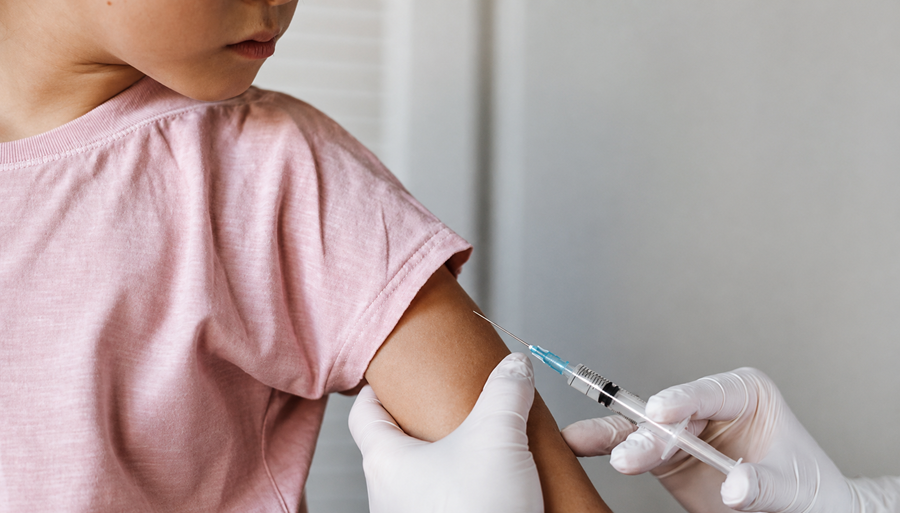










As reported by the "Judicial and Legal Newspaper", Ukraine proposes to update the rules for protecting the population from infectious diseases — from forming the vaccination schedule and defining the list of mandatory vaccinations to strengthening control over the safety of immunobiological products, regulating the response procedures to possible side effects, and clearly distributing powers among state bodies in this area.
In 2022, the Verkhovna Rada adopted the Law "On the Public Health System," which changed the state's approach to protecting the population from infectious diseases and introduced a new prevention and response system. In connection with this, bill No. 15286 was registered in parliament, which provides for replacing the current 2000 Law "On the Protection of the Population from Infectious Diseases" and aligning regulations with the new public health system.
The bill changes the approach to infection prevention, in particular, it enshrines the Ministry of Health's authority to determine the list of infections preventable by vaccination, form the list of mandatory vaccinations, and approve the vaccination calendar.
What will change
The bill grants the Ministry of Health the right to determine which infectious diseases can be prevented by vaccination, as well as to form the list of mandatory vaccinations and approve the preventive vaccination calendar. Additionally, the Ministry of Health gains the authority to establish which vaccinations are mandatory for different population categories — by age, health status, or epidemiological situation.
The document also introduces an official definition of adverse events following vaccination and establishes procedures for responding to complications. All data on administered vaccinations, as well as recorded refusals, will be mandatorily entered into the electronic health system.
According to the bill, mandatory vaccinations by age, vaccinations for persons with calendar violations, rabies prevention, and vaccinations based on epidemiological indications will be provided free of charge. Funding for these measures is proposed to come from state and local budgets, as well as other sources permitted by law.
Procurement of vaccines and medical products for mandatory age-based vaccinations and rabies prevention will be financed from the state budget.
At the same time, vaccines for vaccinations based on health status, epidemiological indications, or in certain territories are proposed to be primarily funded from local budgets. Local self-government bodies are also granted the right to develop their own immunization programs.
No vaccination, no admission to educational institutions
The bill also defines the procedure for distributing vaccines and medical products among healthcare institutions — which is to be established by the Ministry of Health. Vaccinations can only be performed by trained medical or pharmaceutical workers, who are obliged to inform patients about the effectiveness of vaccination and possible risks. A medical examination and obtaining consent from the patient or their legal representatives are mandatory before vaccination. In case of refusal, the medical worker must record it in writing, or if impossible, draw up an official act.
Specifically, the bill regulates the prevention of infectious diseases in educational institutions and children's health and recreation facilities. According to it, enrollment of children in such institutions is possible only with a medical certificate or extract from the medical record issued by the healthcare institution where the child is under supervision. This document is formed based on a medical examination and provided there are no contraindications to staying in the institution, as well as if vaccinations have been carried out according to the vaccination calendar, unless there are medical restrictions.
The bill establishes that children who have not received preventive vaccinations according to the calendar cannot attend educational institutions or children's health and recreation facilities. Exceptions are provided only in cases where vaccination was not performed or was delayed due to temporary or permanent medical contraindications. In such cases, subject to a favorable epidemiological situation, the decision to admit the child may be made by the medical advisory commission of the healthcare institution.
Among other things, the duties of employees of educational institutions and children's recreation facilities are defined. They must continuously monitor the health status of children, and in case of detecting an infectious disease — ensure isolation of the sick child from others and immediately notify the healthcare institution about the case.
Employees are also responsible for conducting systematic hygienic education and upbringing of children.
The Cabinet of Ministers of Ukraine must, before the new law comes into force, bring its normative legal acts into compliance with this law and ensure the updating of the subordinate legal framework by other central executive authorities. Separately, the government must prepare and submit to parliament within six months amendments to the Criminal Code of Ukraine and the Code of Ukraine on Administrative Offenses, proposing to introduce liability for violations of legislation in the field of population protection from infectious diseases.
Subscribe to our Telegram channel t.me/sudua and to Google News SUD.UA, as well as to our VIBER and WhatsApp, Facebook page and Instagram to stay informed about the most important events.