Ukraine switches to European customs rules: when old permits will cease to operate and what will happen to Duty Free












In fulfillment of the requirements for Ukraine as a candidate country for EU accession and the National Revenue Strategy until 2030, the Government has developed a fundamentally new edition of the Customs Code of Ukraine. As reported by the "Judicial and Legal Newspaper", this concerns the new government draft No. 15295, which is intended to change the entire customs regulation system.
The scale of changes is so global that it will affect absolutely all processes — from daily declaration processing to anti-corruption checks of customs officers themselves. The reform requires a complete revision of the subordinate legislation and technical restructuring of systems.
"Judicial and Legal Newspaper" begins a detailed analysis of the government draft. In the new series of materials, we will analyze the reform in three key aspects: general rules and deadlines, how and when the transition to the European model will take place, new tools for business and customs reform from within.
When and how long will the new Code be in effect?
The new code is a step towards full implementation of the EU acquis, which transforms customs into a service-law enforcement body of the European type. From December 1, 2027, every Ukrainian entrepreneur will begin to operate under rules identical to those in Germany or Poland.
According to the Final Provisions, the new edition of the Customs Code comes into force from December 1, 2027. That is, the State Customs Service and Ukrainian business have a transitional period of about one and a half years for technical and legal adaptation.
Regarding the duration of validity, the Code is designed for indefinite application. However, Section XVI contains a number of provisions that apply temporarily — until Ukraine acquires full EU membership, for example, specific duty exemptions for investment projects or defense needs.
The adoption of this law automatically means the repeal of the 2012 Customs Code and a complete revision of the subordinate legislation. The Cabinet of Ministers is obliged to develop amendments to the Tax Code and adopt dozens of new resolutions to implement the Code's provisions by December 1, 2027.
As for authorizations, such as AEOs, which are valid indefinitely, they remain in force, and those with a specific term remain valid until its expiration.
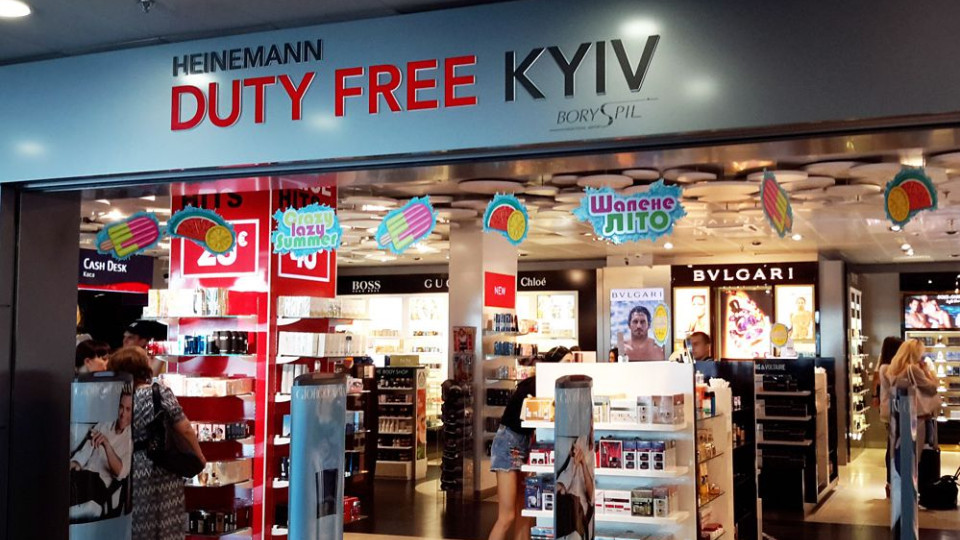
However, permits for operating duty-free shops and free customs zones of the old type are canceled.
Transitional provisions
The draft new edition of the Customs Code of Ukraine contains Section XVI "Transitional Provisions," which enshrines a number of provisions that apply temporarily — until Ukraine obtains EU membership status.
Until EU accession, the following goods are exempt from customs duties when imported or exported:
- Defense goods, namely gunpowder, explosives, electronic reconnaissance means, armored vehicles, drones (UAVs) and parts for them, parachutes, military ships, and optical devices for military purposes.
- Humanitarian and technical aid, i.e., goods imported under international projects or recognized as humanitarian aid, as well as goods for the Red Cross.
- Equipment for the modernization of the Bortnychi aeration station (within the Japanese project) and new equipment for participants of industrial parks (provided it is used personally for 5 years).
- Goods for significant investment projects (until 2035), equipment for vehicle manufacturing (until 2031), and goods for energy restoration (until 2029).
- Pharmaceutical products and reagents not produced in Ukraine; scientific instruments and samples for state institutions and universities.
Also, until EU membership is obtained, when exporting goods subject to export duty, the value is determined at a level not lower than quotations on international exchanges. If the goods are not traded on exchanges — based on component prices or domestic prices.
Movement of goods from countries with which free trade agreements have been concluded through the territories of third countries (except Russia/Belarus) is allowed while maintaining preferential status if the goods were under customs supervision in the transit country.
Special requirements for declaring agricultural goods (rye, oats, soy, etc.) also apply, including mandatory registration of tax invoices and compliance with minimum export prices.
Regarding postal and express shipments, goods valued from 150 to 1000 euros are subject to import duty at a rate of 10%. For gifts from one individual to another, the limit is 45 euros, above which (up to 1000 euros) a 10% duty is also paid.
Postal operators and express carriers may use registers instead of standard declarations for goods valued up to 1000 euros.
Key changes
The structure of the draft completely differs from the current one. Sections I–IX of the draft fully reproduce the structure of the EU Customs Code (Regulation No. 952/2013).
This ensures unification of terminology and procedures, which is important for Ukraine's future integration into the EU Customs Union.
Article 6 establishes that all information exchange, declarations, statements, decisions between customs and business must be carried out exclusively using electronic data processing means. The use of paper media is allowed only as an exception — in case of technical failures or in specific cases defined by the Government.
A transitional period until December 31, 2029, is set for the full implementation of all electronic systems.
Interaction with other controlling bodies (one-stop-shop) will occur through the web portal "Single Window for International Trade," eliminating the need to duplicate documents.
Instead of a purely fiscal role, the task of customs authorities will be supervision of international trade to promote fair business and ensure supply chain security. The main principle should be maintaining a balance between customs control and simplifying lawful trade.
Subscribe to our Telegram channel t.me/sudua and to Google News SUD.UA, as well as to our VIBER and WhatsApp, Facebook page Facebook and on Instagram to stay informed about the most important events.