Rescuers of the State Emergency Service and police officers will receive new payments: which allowances and bonuses will remain after the increase


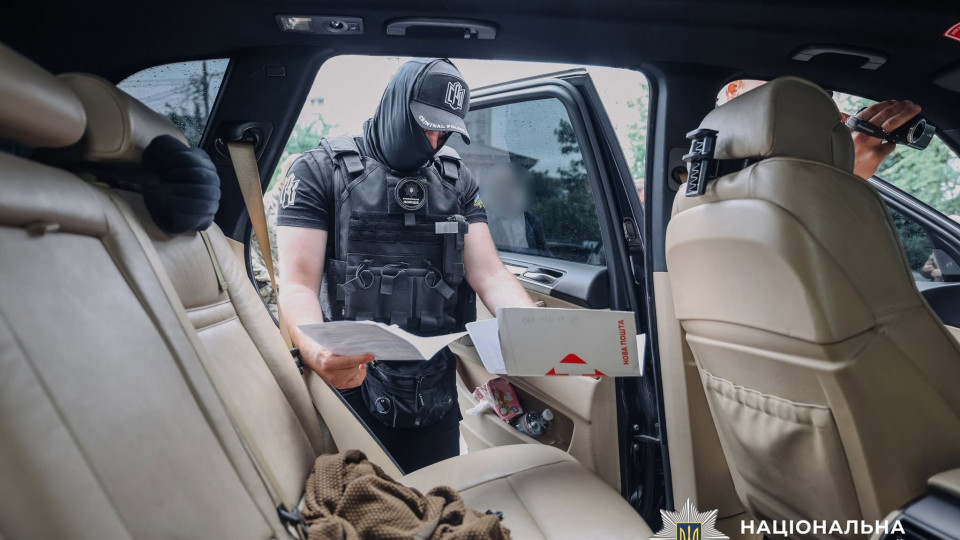










Police officers can receive monetary provision at a level of no less than ten subsistence minimums for able-bodied persons. As reported by the "Judicial and Legal Newspaper", the Verkhovna Rada on June 10 approved a bill that changes the approach to forming the monetary provision of National Police employees.
The bill introduces amendments to the Law "On the National Police" and effectively revises the system of monetary provision for police officers. The authors of the legislative initiative emphasized that the official salaries of most police officers remain at the level established back in 2015. Salaries of operatives, district police officers, and patrol police inspectors have long not exceeded a few thousand hryvnias, and the law did not contain minimum guarantees regarding their size.
In particular, the bill provides for the addition of a new Article 94-1 to the Law "On the National Police". Monetary provision now must not only be accrued but also ensure adequate material conditions, stimulate achievement of results, and compensate for physical and intellectual costs.
The law also regulates the payment procedure for those who found themselves in extraordinary circumstances under special conditions.
For police officers captured as prisoners, hostages, interned, or missing under special circumstances, all types of monetary provision (salary, rank, length of service, permanent allowances) are preserved. These funds are paid monthly to family members in equal shares until all circumstances are clarified. However, these provisions do not apply to persons who voluntarily surrendered or left their place of service without authorization.
It is provided that in the event of a general indexation of police officers' monetary provision, payments to families of prisoners will also be recalculated taking this indexation into account.
What changes
The law stipulates that the monetary provision of police officers must ensure proper material conditions for performing official duties, take into account the danger of the work, contribute to attracting qualified personnel, and stimulate effective service.
The size of payments will still depend on position, special rank, length of service, work intensity, qualification, and the presence of an academic degree or scientific title.
The structure of monetary provision will include:
- official salary;
- additional payment for special rank;
- allowance for length of service;
- additional payment for work with state secrets;
- additional payment for academic degree or scientific title;
- bonus.
At the same time, the bonus cannot exceed 30% of the official salary.
Also, police officers are provided with a monthly allowance for length of service (term of service), the size of which depends on the length of service in the police.
Specifically, the following percentages of the official salary are established:
- from 1 to 2 years of service — 5%;
- from 2 to 4 years — 10%;
- from 4 to 7 years — 15%;
- from 7 to 10 years — 20%;
- from 10 to 13 years — 25%;
- from 13 to 16 years — 30%;
- from 16 to 19 years — 35%;
- from 19 to 22 years — 40%;
- from 22 to 25 years — 45%;
- over 25 years — 50% of the official salary.
The procedure for paying the monthly length of service allowance will be determined by the Cabinet of Ministers of Ukraine.
A key innovation was the establishment of guaranteed monetary provision.
From now on, monetary provision cannot be less than ten subsistence minimums for able-bodied persons, defined as of January 1 of the respective year. An exception is made only for cadets and students of educational institutions with specific training conditions preparing police officers.
Effectively, this means moving away from the current model, where specific salaries were mainly determined by government resolutions and could remain unchanged for years.
The law also enshrines the scale of allowances for length of service.
Police officers with service from one to two years will receive an allowance of 5% of the official salary. Then the allowance size will gradually increase and can reach 50% of the official salary for those who have served more than 25 years.
The procedure for paying such allowances will be separately determined by the Cabinet of Ministers.
Minimum level of monetary provision will be established for State Emergency Service rescuers
The law also updates the system of financial and social guarantees for employees of the State Emergency Service (SES).
At the same time, financial guarantees for SES employees are enshrined in the updated Article 125 of the Civil Protection Code.
The new version provides that the monetary provision of rescuers (except cadets) on a monthly basis cannot be less than 10 times the subsistence minimum for able-bodied persons established as of January 1 of the calendar year.
Since the subsistence minimum for able-bodied persons is established by the Law «On the State Budget of Ukraine» at the beginning of each year, this approach will allow automatic indexation and protect the basic payments of rescuers from inflation by linking them to general social standards.
It is expected that legislative establishment of the minimum financial threshold will contribute to reducing staff turnover in the SES, increasing the prestige of the profession of firefighters and rescuers who work daily under increased risk conditions.
Why the changes were needed
During the preparation of the bill, its authors drew attention to the significant gap between the wages of police officers and employees of other law enforcement agencies.
In particular, legislation on the Economic Security Bureau, State Bureau of Investigations, National Anti-Corruption Bureau, and the Prosecutor's Office already contains provisions on minimum official salaries tied to the subsistence minimum. Similar guarantees did not exist for police employees until now.
According to the initiators, the absence of a legislatively defined minimum wage level negatively affected the staffing of the National Police and contributed to the outflow of experienced employees from service.
The law will come into force 180 days after its official publication.
Within three months after the publication of the document, the Cabinet of Ministers must bring its regulatory acts into compliance with the new requirements and approve the necessary mechanisms for implementing the law.
Subscribe to our Telegram channel t.me/sudua and to Google News SUD.UA, as well as to our VIBER and WhatsApp, page on Facebook and on Instagram to stay informed about the most important events.