Booking in a New Way: What the September 1 Deadline Hides












Social networks and media exploded with the thesis that in autumn all those booked would be declared wanted. The basis was the deadline for re-registering deferrals until September 1, 2026. Spoiler – there will be no mass disappearance of bookings in one day.
The informational chaos that unfolded regarding mass searches for those booked in autumn has certain legal grounds, but they are much more complex than they seem at first glance.
Today, for many, the issue of booking military liable persons has turned into a complex legal quest. The implementation of CMU Resolution No. 692 introduced further changes to the rules of the game, establishing new deadlines and financial requirements for businesses.
Deadline September 1
According to Resolution No. 692, all decisions recognizing enterprises as critically important, which were made before June 2, 2026, are valid only until the expiration of their term, but no longer than September 1.
This means that by the end of summer, enterprises must prove their criticality again according to updated criteria. There will be no mass disappearance of bookings in one day, but for many employees, deferrals may indeed end precisely on September 1, but only if the employer fails to pass the verification.
If the company does not complete this procedure by the established date, its criticality status will be canceled, which will automatically lead to the loss of valid deferrals for personnel.
New Financial Criteria
The main obstacle to successfully re-registering the status in autumn will be the new financial criterion. To confirm criticality, the following requirements apply regarding the average salary of employees for the last calendar month:
- No less than the minimum wage multiplied by a coefficient of 3, which amounts to 25,941 UAH before deductions.
- For enterprises in the combat zone, the threshold is somewhat lower – the minimum wage multiplied by a coefficient of 2.5, which amounts to 21,618 UAH.
If the enterprise cannot confirm such a level of official employee income, it will not receive a new criticality status and, therefore, will not be able to book personnel after September 1.
The Phenomenon of the "Wanted" Mark in Booked Individuals
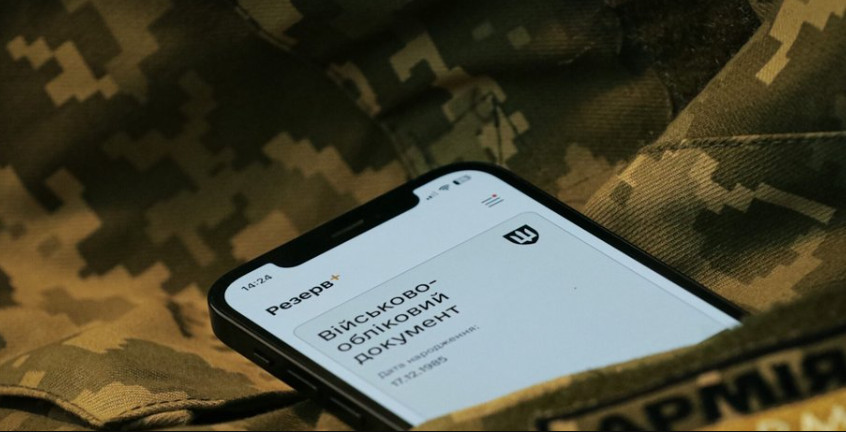
Many military liable persons who have booking registered see the status "wanted" in the Reserve+ app. This causes concern, but in most cases, it is not about a criminal search but an administrative mechanism of the Territorial Recruitment and Social Support Centers (TRSSC) responding to violations of military registration rules.
In fact, booking does not cancel military registration duties. A person who has a booking is still obliged to update military registration data, appear upon summons to clarify information, and in certain cases – undergo a military-medical commission. Failure to comply with these requirements may be grounds for being entered into the TRSSC wanted records, even if booked.
Another reason is outdated or incompletely synchronized data in the "Oberih" system. For TRSSC bodies, a person is considered booked only after the corresponding entry is made in the register. Until then, the status may be displayed as "wanted."
In some cases, the status is formed even before booking is registered and is not automatically removed after circumstances change, which also creates false data display in the app.
Risk of a Legal Gap
The real risk is the emergence of a temporary gap between the expiration of the old and the new deferral. If the enterprise submits documents for re-confirmation of criticality status too late, or the application review is delayed (although the regulatory period is 10 working days), a period arises when the employee legally no longer has a deferral, but the new one has not yet been loaded into the system.
During this short interval, the employee formally has no deferral. If at this moment they encounter TRSSC representatives, they have legal grounds to issue a summons or even mobilize, since the booking status will be absent in the "Oberih" database.
Booking via "Diia"
To minimize risks, the government launched a mechanism for booking extension on the "Diia" portal. If the enterprise's criticality status is confirmed and the granting body has not changed, rebooking occurs automatically within 24 hours without canceling the previous status. This is the main tool to combat the aforementioned "legal gap."
What Will Happen in Reality?
There will be no mass search for booked persons in autumn 2026 if businesses and citizens act preventively. However, the system is indeed undergoing a reboot, which requires maximum attention.
Enterprises should not wait until September. An analysis of compliance with the new salary criteria and resubmission of documents should take place now to avoid delays.
Before any contact with TRSSC, a booked employee must ensure that their status is displayed in "Reserve+" or "Diia." If booking exists on paper but not in the database, the risk of forced delivery to TRSSC increases significantly.
A possible search is mostly a consequence of negligence in military registration or the employer's delay in re-confirming criticality status. For those who keep data up to date and timely use booking in "Diia," risks are minimal.
Subscribe to our Telegram channel t.me/sudua and to Google News SUD.UA, as well as to our VIBER and WhatsApp, Facebook page Facebook and on Instagram to stay informed about the most important events.