The provision on 'Ukrainophobia' may not be supported due to the risk of duplicating existing Criminal Code provisions


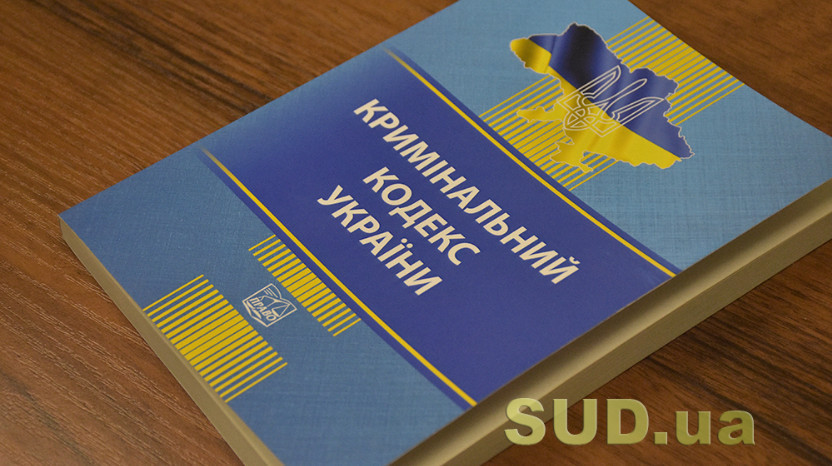










The Verkhovna Rada is considering draft law No. 15186, which proposes amendments to Article 161 of the Criminal Code of Ukraine and the introduction of separate criminal liability for "Ukrainophobia."
As previously reported by the "Judicial and Legal Newspaper", the draft law provides for establishing criminal liability for manifestations of Ukrainophobia, in particular for public calls to deny the subjectivity of the Ukrainian state and nation, justification of their subjugation or assimilation, as well as denial of the legitimacy of the struggle for independence and development of Ukrainian statehood. It also proposes to criminalize public contempt for the Ukrainian language, culture, and ethnocultural traits aimed at undermining national identity.
Specifically, the authors of the draft emphasize that the document aims to "create effective legislation" that will allow criminalizing Ukrainophobia as a tool of "hybrid warfare," as well as strengthen the state's informational resilience and legal protection of Ukrainian statehood, language, and culture.
However, the draft law has already received a number of remarks.
The Verkhovna Rada noted that the proposed changes show signs of duplicating already existing criminal law mechanisms. In particular, the document emphasizes that some manifestations proposed to be covered by the concept of "Ukrainophobia" are already regulated by current legislation.
These include, in particular:
- administrative liability for violations of language legislation;
- criminal liability for collaboration activities;
- Article 161 of the Criminal Code of Ukraine concerning incitement of national hatred and discrimination;
- Article 300 of the Criminal Code of Ukraine on the dissemination of materials promoting intolerance;
- Article 442 of the Criminal Code of Ukraine (calls for genocide);
- Article 436-1 of the Criminal Code of Ukraine (propaganda of totalitarian regimes);
- Article 436-2 of the Criminal Code of Ukraine (justification of armed aggression by the Russian Federation).
It is also emphasized that committing a crime motivated by racial, national, or religious intolerance is already recognized as an aggravating circumstance (paragraph 3 of part 1 of Article 67 of the Criminal Code of Ukraine) and may serve as a qualifying feature for a number of crimes — including intentional murder, bodily injury, battery and torture, threats of murder, as well as encroachment on the territorial integrity of Ukraine.
Moreover, the draft law lacks sufficient justification for the necessity of new criminalization — in particular, it lacks proper statistical analysis, criminological characterization of the phenomenon, and assessment of the effectiveness of existing norms.
Draft law No. 15186, which proposes to introduce criminal liability for "Ukrainophobia" through amendments to Article 161 of the Criminal Code of Ukraine, contains a number of conceptual and technical-legal reservations that have already been evaluated by state bodies.
The key block of criticism concerns the very advisability of criminalization. It is emphasized that changes to the Criminal Code should only be adopted when there is a justified necessity, so as not to expand criminal legislation unnecessarily and not to create duplicative offenses with similar features. Attention is also drawn to the fact that the proposed model may create a risk of further expanding criminal law norms regarding various forms of xenophobia, considering that over 100 national minorities live in Ukraine.
Additionally, the draft law does not comply with the approaches of the Constitutional Court regarding the entry into force of laws. This concerns the need to establish a reasonable transitional period between the official publication of the law and its enforcement.
However, the financial and economic component of the project is assessed positively. The Ministry of Finance reported that the provisions of the initiative do not create additional burdens on the state budget and do not contradict budget legislation, effectively eliminating fiscal risks.
At the same time, the National Police pointed out potential duplication of the Criminal Code norms. The current version of Article 161 of the Criminal Code of Ukraine already provides liability for actions aimed at inciting national, racial, or religious hatred, as well as humiliating national honor and dignity. This calls into question the necessity of distinguishing a new offense and requires clear differentiation from existing regulation.
The Committee on Humanitarian and Information Policy noted that the issue raised by the draft law is relevant, as Ukrainophobia is considered a tool of hybrid warfare by the aggressor state. It is aimed at justifying armed aggression through the dehumanization of Ukrainians, denial of their state-building efforts, devaluation of cultural identity, and discrediting of the Ukrainian language. In particular, the term "Ukrainophobia," enshrined in the law condemning and prohibiting propaganda of Russian imperial policy and decolonization of toponymy, does not fully correspond to the elements of the offense provided for in the current Article 161 of the Criminal Code of Ukraine. Therefore, it is proposed to separately enshrine the concept of "manifestations of Ukrainophobia" as an independent type of criminally punishable acts in this article.
The Cabinet of Ministers, in its assessment of the reservations, did not express objections and noted that the draft law generally complies with Ukraine's international legal obligations and approaches to combating forms of intolerance in the context of European integration.
Thus, the positions of government bodies form a heterogeneous picture: the government level demonstrates a neutral-positive assessment, the relevant committee shows conceptual support with a need for clarifications, while law enforcement and legal institutions focus on risks of duplication of norms, legal uncertainty, and potential complication of the criminal law system.
In conclusion, the discussion concerns not only the concept of "Ukrainophobia" but also whether it is necessary to introduce a new article at all and whether this will complicate the existing criminal legislation.
Recall that earlier the "Judicial and Legal Newspaper" drew attention to the fact that criminalizing "Ukrainophobia" may create more problems than legal solutions. The key reservation is that the formulations proposed in the draft law are evaluative in nature and are not established legal terms. In criminal law, this may create risks for the principle of legal certainty, as a person must clearly understand which actions are criminally punishable.
Currently, a significant part of the actions publicly associated with "Ukrainophobia" are already covered by Article 161 of the Criminal Code of Ukraine, which provides liability for incitement of national, racial, or religious hatred, humiliation of national honor and dignity, as well as restriction of rights on a national basis. In this regard, the question arises whether this concerns clarification of existing norms or actually the creation of a new offense with broader application boundaries.
There is also a risk associated with the use of the evaluative concept of "Ukrainophobia," since its lack of a clear normative definition may lead to varied and subjective interpretation, which contradicts the basic principles of criminal law.
Subscribe to our Telegram channel t.me/sudua and to Google News SUD.UA, as well as to our VIBER and WhatsApp, Facebook page and Instagram to stay updated on the most important events.