The fiscal regime "Free Hryvnia" requires revision due to weaknesses in the registry and tax mechanisms


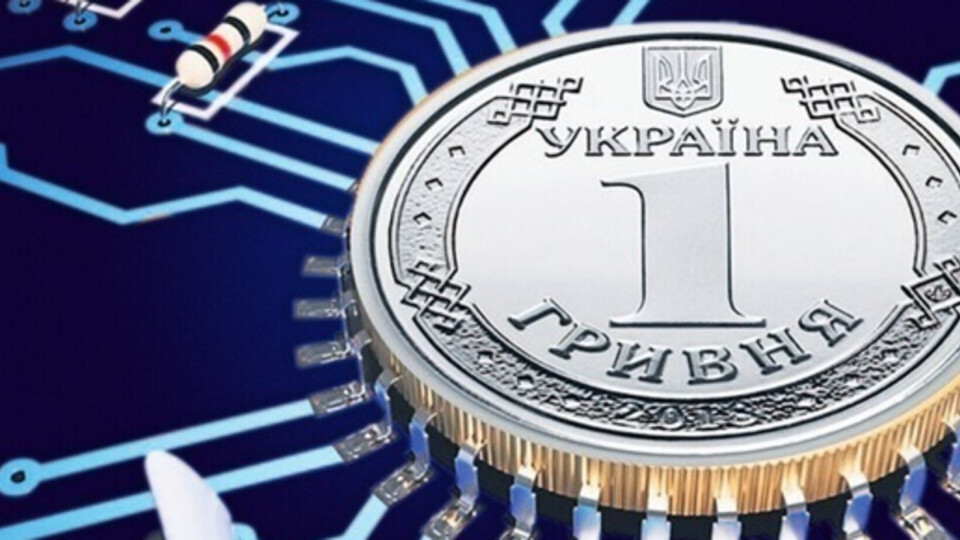










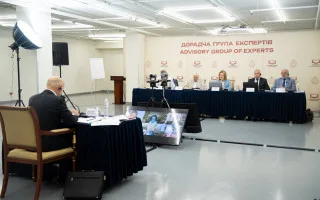
The Verkhovna Rada Committee on Digital Transformation reviewed bill No. 15009 on the introduction of a special fiscal regime "Free Hryvnia" and concluded that the document requires significant revision due to a number of legal and technical inaccuracies.
As reported by the "Judicial and Legal Newspaper", the bill proposes to supplement the Tax Code of Ukraine with a new special regime featuring voluntary participation, automated tax administration, and the use of special accounts. According to the authors, the new tax model envisages the actual replacement of classical tax administration with an automatic fiscal contribution levied on the balances of funds in accounts.
It is also envisaged that participants in the regime will voluntarily open special "Free Hryvnia" accounts, from which an automated fiscal contribution of 1% to 3% of the account balance will be automatically debited monthly.
Within the proposed model, a participant in the regime will be considered to have fulfilled tax obligations on profit tax, VAT, personal income tax, and military levy for operations carried out within the system.
Joining the regime will be possible for legal entities — residents and non-residents, individual entrepreneurs, and individuals.
Gaps in the regulation of the registry
One of the main problems pointed out by the Committee on Digital Transformation is the lack of proper legal regulation of the Registry of participants in the special tax regime. It is noted that the bill provides for the creation of a new state registry but does not define its key parameters — purpose, administrator, source of information, procedure for maintenance, and data protection.
At the same time, the Committee refers to the Law of Ukraine "On Public Electronic Registries," which already establishes comprehensive requirements for such systems. This law stipulates that the creation of registries is possible only under clear legislative regulation of their structure and functioning.
Thus, in its current form, the draft does not ensure full compliance with the Law of Ukraine "On Public Electronic Registries."
The Committee also drew attention to terminological inconsistencies in the text of the document. Different provisions use the terms "automated electronic registries" and "registries," which, according to deputies, may create legal uncertainty during practical application of the norms.
The Committee proposes to unify the terminology and use exclusively the term "public electronic registry" in all cases according to current legislation.
The exit payment in "Free Hryvnia" requires clarification due to unclear application logic
Another significant remark concerns the new Article 321-1 of the Tax Code, which introduces the concept of "exit payment."
The bill provides that the exit payment is defined as a one-time fiscal payment levied when cash is withdrawn from a participant's special account in the "Free Hryvnia" special tax regime or when funds are transferred in cases provided by the Code. The entire proposed Article 321-1 details the cases when this payment applies, specifically cash withdrawals from the special account and transfers from the special account to other accounts not included in the "Free Hryvnia" regime.
It is noted that when funds are transferred to an account subject to the general taxation regime, the exit payment is not levied. However, the conclusion states that the proposed norm is formulated insufficiently clearly and does not allow unambiguous determination of its application logic.
In this regard, the Committee proposed to revise Article 321-1 of the Tax Code of Ukraine in a new edition, defining the concept of "exit payment" and the procedure for its collection. According to the Committee's proposal, the exit payment is a one-time fiscal payment levied when cash is withdrawn from a participant's special account in the "Free Hryvnia" regime or when funds are transferred from the special account in cases provided by the Code.
The proposed revision also defines the cases when the exit payment is due, including cash withdrawals from the special account, transfers to another own account that is not special within the regime, and transfers to accounts of other individuals or legal entities.
Additionally, it is provided that the size of the exit payment is established by law as a percentage of the amount of the respective operation, and during the pilot project period, the rate is determined by the Cabinet of Ministers of Ukraine. The exit payment is defined as a compensatory fiscal payment related to the termination of the participation of funds in the special regime and is not a tax on income, profit, or other operations.
Despite supporting the idea of creating an alternative tax regime, the Committee emphasized the need for comprehensive revision of the bill.
In particular, the document requires alignment with legislation on public electronic registries, unification of terminology, and clear definition of financial mechanisms. Following the review, the Committee on Digital Transformation recommended that the relevant Committee on Finance, Tax, and Customs Policy take into account the expressed remarks during further consideration.
Subscribe to our Telegram channel t.me/sudua and to Google News SUD.UA, as well as to our VIBER and WhatsApp, and follow us on Facebook and Instagram to stay updated on the most important events.