Territorial Recruitment Centre officers without balaclavas and only under video recording: the commission proposed new rules for mobilization measures












A draft resolution No. 15332 "On the report of the Temporary Investigative Commission of the Verkhovna Rada of Ukraine on investigating possible violations of Ukrainian legislation in the field of defense, anti-corruption legislation, and observance of human rights and freedoms during martial law on the work performed" has been registered in the Verkhovna Rada.
The purpose of the document is to submit a written report of the Commission's six months of activity to the parliament. The draft proposes to acknowledge the report and publish it on the official website of the Verkhovna Rada of Ukraine.
Results of the Commission's work over six months
During the reporting period, the Commission:
- held 20 meetings;
- held 3 briefings;
- heard over 70 representatives of state authorities, law enforcement agencies, Territorial Recruitment and Social Support Centres (TRSSC), institutions, organizations, and citizens;
- adopted 9 decisions;
- sent over 60 inquiries.
An Expert Council was created to support investigations, consisting of 18 specialists and representatives of state institutions, as well as three specialized working groups in the areas of defense, anti-corruption legislation, and human rights.
Covered faces during mobilization measures
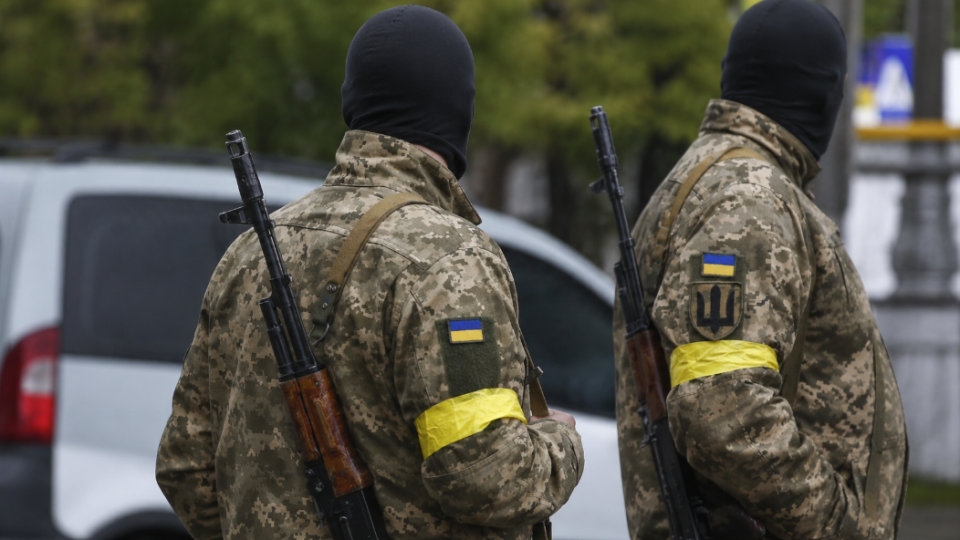
One of the Commission's areas of work was studying the practice of using balaclavas and tubular scarves by TRSSC representatives and police officers during mobilization measures.
The report states that the Commission analyzed numerous video materials from social networks, media, and citizen appeals, which recorded cases where the faces of notification group members were fully or partially covered.
The Commission noted that hiding the face during interaction with civilians complicates or makes impossible the further identification of officials, causes psychological resistance among citizens, and contradicts the principle of openness of state authorities' activities.
During hearings with heads of various TRSSC, they reported that the use of balaclavas is not an acceptable practice, and tubular scarves are intended solely for protection against weather conditions.
Body cameras and video recording of mobilization measures
A separate section of the report is dedicated to the use of photo and video recording means.
During the Commission meeting, the Verkhovna Rada Commissioner for Human Rights, Dmytro Lubinets, presented statistics on citizen appeals regarding the actions of TRSSC representatives:
- 2022 — 18 appeals;
- 2023 — 514 appeals;
- 2024 — 3,319 appeals;
- 2025 — 6,014 appeals.
Among the most frequent complaints, the Ombudsman named violations of military registration procedures, illegal detention, restriction of freedom of movement, and unlawful actions of notification groups.
The Commission identified several problems in the use of body cameras:
1) Lack of separate accounting for violations
The National Police reported that separate accounting of official investigations due to the absence or switching off of body cameras is not maintained.
At the same time, the Ministry of Defense provided information on official investigations regarding the non-use of video recorders in various regions, and the Volyn Regional TRSSC reported 16 protocols for negligent military service drawn up after the mandatory use of body cameras was introduced.
2) Problem of stopping video recording
The Commission drew attention to a Ministry of Defense Instruction provision that allows stopping video recording in case of a threat of capturing military objects or information with restricted access in the frame.
The report notes that this provision covers too broad a range of situations and can be used to stop recording possible violations.
3) Problems during the delivery of citizens
The Commission found that during administrative detention and delivery of citizens to TRSSC, continuous video recording is practically not ensured, as police officers and detainees often move in different vehicles.
Also, body cameras record events only in front of the device carrier, which does not allow full documentation of events inside the transport.
4) Deletion of video recordings after 30 days
According to the current Ministry of Defense instruction, recordings from body cameras are stored for 30 days.
The Commission noted that due to the time required for forwarding and reviewing citizen appeals, video materials may be automatically deleted before the completion of complaint checks or lawyer requests.
In this regard, the Commission recommended increasing the minimum storage period of recordings to 90 calendar days.
Recommendations regarding mobilization measures
Based on the investigation results, the Commission recommended prohibiting the work of notification groups in cases where their members are not provided with functioning body cameras and means of reading electronic military registration documents.
It was also proposed to introduce mandatory continuous video recording for TRSSC representatives and police officers during mobilization measures.
Separately, the Commission recommended equipping vehicles used to transport conscripts with means of continuous video recording inside the cabin.
Additionally, it is proposed to increase the storage period of body camera video recordings from 30 to 90 days.
Another recommendation was to introduce separate accounting of official investigations regarding cases of absence, switching off, or loss of body camera recordings during mobilization measures.
Interaction of NABU, SAP, and State Financial Monitoring Service
Another area of work was studying interagency interaction between NABU, SAPO, and the State Financial Monitoring Service within the "MIDAS" case.
The report states that NABU does not see systemic problems in interaction with SAP but reported isolated cases of untimely or poor-quality execution of requests by the State Financial Monitoring Service.
Examples include cases where responses to requests were received many months after submission or remained unfulfilled.
The Commission reported that it continues analyzing materials within the "MIDAS" case investigation and has not yet formed final conclusions.
Conclusions
The Temporary Investigative Commission noted in the report that over six months of work, a significant volume of documents and materials in the fields of defense, anti-corruption legislation, and human rights protection has been accumulated. A significant part of the information is still being processed, so final conclusions on most of the studied issues have not yet been formed.
In this regard, the Commission proposed that the Verkhovna Rada acknowledge the report and continue its work for the entire term defined by the resolution establishing the TSC.
Additionally, read how previously the Ministry of Defense did not establish a ban on wearing balaclavas by TRSSC servicemen, and the decision on their use is made by commanders on site.
Also, you can familiarize yourself with a decision where the court fined an TRC officer 30,600 UAH for conducting mobilization measures with violations, including without video recording and using means that covered the faces of notification group members.
Subscribe to our Telegram channel t.me/sudua and to Google News SUD.UA, as well as to our VIBER and WhatsApp, page on Facebook and on Instagram to stay updated on the most important events.