Weapons for Money: Parliament Proposes Introducing a Mechanism for Buying Out Weapons from Civilians


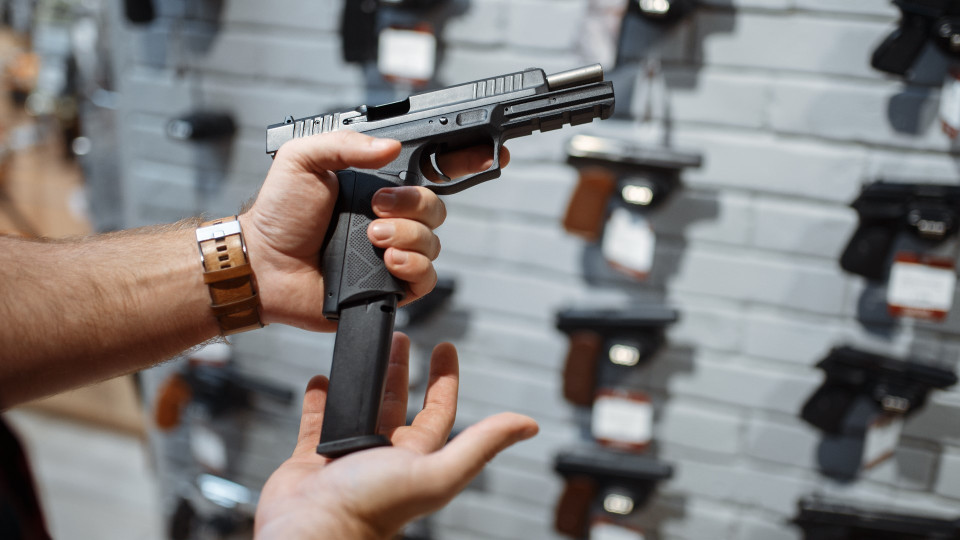










In Ukraine, it is proposed to introduce a new legal mechanism that will allow citizens to receive monetary compensation for the voluntary transfer to the state of certain types of firearms and ammunition, which will be determined by the Ministry of Internal Affairs as critically important for the needs of security and defense forces. This concerns a draft law that provides for amendments to the relevant laws on civilian participation in the defense of Ukraine and on the National Police.
The initiative effectively forms a new model of interaction between the state and civilian weapon owners under martial law – from voluntary declaration to paid transfer of certain types of weapons.
Background: Why the Initiative Emerged
After the start of the full-scale war on the territory of Ukraine, a significant amount of weapons and ammunition appeared outside the state accounting system. Some of this armament is in civilian possession – sometimes legally, sometimes not, and sometimes due to wartime circumstances. The current regulatory model provides for the possibility of declaring weapons but does not contain economic incentives for their transfer to the state. According to the initiators, this gap complicates the return of potentially useful weapon samples to the state sector.
The explanatory note also emphasizes that certain types of weapons can be reused by defense forces after inspection, repair, or modernization. At the same time, the presence of such weapons in civilian circulation creates risks – from illegal use to the formation of a shadow market.
The Essence of the Legislative Proposal
The draft law proposes several conceptual changes in the field of weapons circulation:
- introduction of monetary compensation for the transfer of specified types of weapons; formation by the Ministry of Internal Affairs of a special list of armaments critically important for defense;
- prohibition of declaring weapons that fall under this list;
- transfer of the functions of receiving and processing weapons to the National Police; defining such transfer as voluntary surrender in the legal sense.
Effectively, it is proposed to create an alternative to the current declaration system – a financially incentivized model for withdrawing certain categories of weapons from civilian circulation.
Legal Logic of the Initiative
The draft law integrates into the existing regulatory system, which includes laws on national security, defense, the National Police, as well as a special law on civilian participation in the defense of Ukraine. A separate important aspect is the reference to the Ministry of Internal Affairs' subordinate regulations, which traditionally define the technical and procedural aspects of weapons circulation.
After the adoption of the amendments, the government and the Ministry of Internal Affairs will have to develop new procedures: determining the value of compensation, the mechanism for receiving weapons, criteria for classifying weapons as "critically important," accounting procedures, and further use.
Security Context
The initiative is presented as part of a broader state policy aimed at: strengthening control over weapons circulation; reducing the illegal market; enhancing defense capability; optimizing resources during wartime. It is separately emphasized that uncontrolled weapons circulation is not only a criminal but also a security problem. In wartime, this gains additional weight, as every illegal weapon sample can potentially be used against civilians or the state.
International Approaches
The explanatory materials of the draft law mention international practices of disarmament and illegal weapons removal programs. In particular, it refers to approaches applied within disarmament, demobilization, and reintegration programs. Such models provide not only for forced weapons withdrawal but also for economic incentives for voluntary surrender, which is considered a more effective tool in stabilization processes.
Key Idea of the Draft Law
Effectively, the state proposes to change the approach: from control and declaration to active buyout of certain categories of weapons that have defensive value. Thus, a citizen receives: legal certainty, financial compensation, and legal protection when voluntarily transferring weapons.
And the state receives an additional resource for defense and a reduction of risks related to internal weapons circulation.
What Will Change
- For citizens, there will be an opportunity to receive money for transferring weapons to the state; certain types of weapons will no longer be simply declared – they will need to be transferred; the transfer of weapons will be considered voluntary surrender, which may have legal protection; legal uncertainty regarding certain types of armament will decrease.
- For the state, the National Police will receive the function of receiving and processing such weapons; the Ministry of Internal Affairs will define the list of critically important armaments; a centralized mechanism for buying out weapons will be created; the state will gain additional resources for defense.
- For the weapons circulation system, the scope of declaring certain types of weapons will narrow; a new category will be introduced – "weapons subject to mandatory transfer for compensation"; control over the illegal market will be strengthened; the amount of "off-the-record" weapons will decrease.
- For security, potential reduction of illegal circulation, lowering risks of weapons use for criminal purposes, strengthening overall state control over armaments in the civilian sector.
Financial Aspect
The implementation of the mechanism will require additional budget expenditures, which will depend on:
- the amount of weapons transferred;
- their types and value;
- the level of citizen participation.
Funding is proposed to be carried out from the state budget, including through adjustments to reserve funds. At the same time, the authors emphasize that the potential effect for defense may exceed the costs.
Conclusions
The proposed model is an attempt to combine security and economic tools in the field of weapons circulation. It effectively forms a new approach: the state not only controls and withdraws weapons but also buys them from the population if they have strategic significance. Under wartime conditions, such a construct appears as a compromise between the need to strengthen defense capability and the need to reduce internal risks associated with uncontrolled weapons circulation.
Subscribe to our Telegram channel t.me/sudua and to Google News SUD.UA, as well as to our VIBER and WhatsApp, our page on Facebook and on Instagram to stay updated on the most important events.