Pavlo Vovk: The decision of the Grand Chamber of the Supreme Court was a consequence of systemic pressure on judges, ahead — ECHR


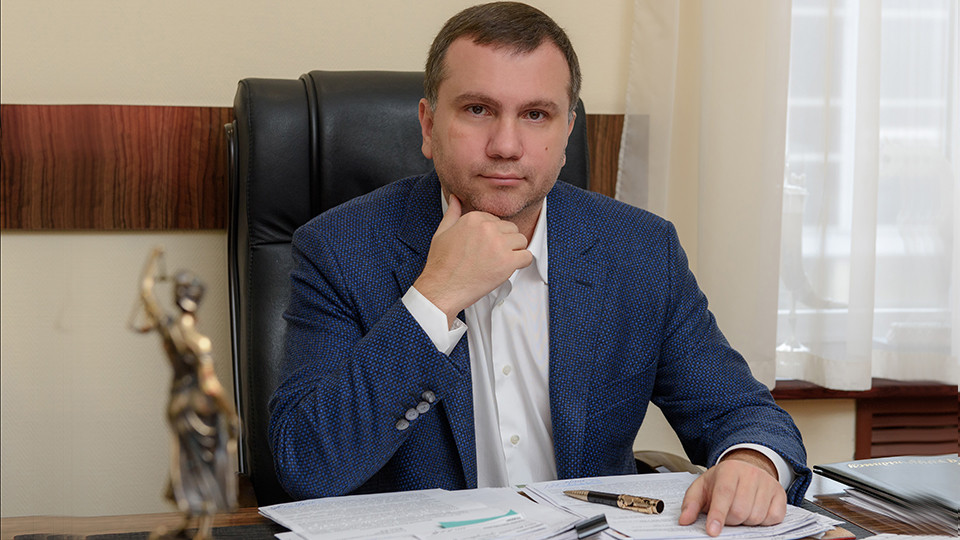










As already reported by «Judicial and Legal Newspaper», the Grand Chamber of the Supreme Court considered the appeal of the former head of the Kyiv District Administrative Court Pavlo Vovk against the decision of the High Council of Justice.
The head of the liquidated Kyiv District Administrative Court Pavlo Vovk appealed the dismissal decision, citing systemic and gross violations of the Constitution and the Convention on Human Rights.
Against this background, as the editorial office noted, a staged campaign of pressure on the judges of the Supreme Court’s Grand Chamber unfolded outside the court, aimed at forcing the court to make a decision not based on law but under the direction of the "public".
Public speculations on the topic of "vote distribution" in the Grand Chamber and attempts to turn society against the judges are direct interference in the consideration of a specific case, and according to the words of Pavlo Vovk himself, the informational pressure has a single goal — to unlawfully influence the judicial process in the Supreme Court’s Grand Chamber.
In a comment to «Judicial and Legal Newspaper» Pavlo Vovk for the first time commented on how he assesses the consideration of the case by the Supreme Court’s Grand Chamber.
Pavlo Vovk: The consideration of this case by the Grand Chamber of the Supreme Court (GCSC) should be evaluated through the prism of systemic pressure and a prolonged informational-manipulative campaign initiated by a circle of pseudo-civic organizations (in particular, "De-jure", CPC, etc.), which openly declared influence on this judicial process and boasted about it on social networks. Unfortunately, the GCSC succumbed to this pressure, which is direct evidence of its institutional incapacity and raises justified doubts about the advisability of the existence of this body at all.
These circumstances become critically important given that the former head of the Supreme Court and the chamber secretary concluded an agreement with the investigation and gave testimony against a number of colleagues, some of whom have been suspected, while others involved in the consideration of the Zhevago case still remain in the GCSC, creating direct dependence of these judges on the pre-trial investigation body (NABU) and nullifying any guarantees of impartiality.
Despite the brutal external influence and pressure, obvious from the point of view of an outside observer, the judges of the GCSC did not use the legally provided obligation to appeal to the Prosecutor General’s Office and the High Council of Justice with the appropriate statements. This is not only confirmation of decision-making under pressure but also an independent ground for qualifying their actions as a disciplinary offense, indicating systemic violation of procedural duties.
At the same time, as Pavlo Vovk pointed out before the GCSC session, in recent months he and his colleagues have become the object of another systemic media attack, which, in his opinion, has one goal — to create an unobjective background, an illusion of public support for the activities and demands of the "public" and to influence the judicial process in the GCSC.
What can you say about the arguments in the case?
Pavlo Vovk: The argumentation of the position is legally balanced and fully justified. The inability of the GCSC to provide a proper legal assessment of the arguments indicates a degradation of professional standards caused by fear of "integrity checks," which has nothing to do with the rule of law. In fact, we observe a substitution of justice by political expediency.
The fact remains indisputable: information obtained within the framework of covert investigative actions (CIA) should be used exclusively for criminal proceedings purposes. Its disclosure is allowed only to persons directly involved in it, not at the discretion of the next unprofessional detective.
It is obvious that even representatives of the Supreme Court’s Scientific Advisory Council share this position. As we could see from the Supreme Court’s news feed. However, the arguments of scientists are ignored in favor of Facebook "expertises" of pseudo-activists appealing to embassies. Such practice is absurd: if decisive roles are played not by scientific conclusions but by public manipulative posts of pseudo-civic organizations, the activity of the Supreme Court’s Scientific Advisory Council loses its meaning and it is justifiably liquidated, replaced by an "activists’ council" for directive instructions to judges.
At the same time, we witness an openly manipulative practice of the High Council of Justice, which suspends disciplinary proceedings pending court decisions, including those of the High Anti-Corruption Court, when it deems it appropriate, and resorts to abstract mantras about "autonomy," when it is also beneficial for it. This selectivity is a gross violation of the principle of legal certainty.
A separate manifestation of cynicism is that under similar circumstances (involvement in CIA) the High Council of Justice applies the strictest sanctions to judges, but supports the candidacy of Maksym Pampura for the position of head of the State Judicial Administration, despite the same risks. This is direct evidence of double standards.
The plaintiff’s argumentation regarding the calculation of deadlines for applying disciplinary sanctions, which have expired, as well as regarding the application and citation by the High Council of Justice of irrelevant practice of the ECHR, and ignoring relevant practice of the European Court and the Court of Justice of the EU, is also fully justified.
Overall, the activity of the GCSC in general feels like collective irresponsibility, motivated by fear, and a refusal to properly analyze logical arguments, which makes it incapable of justice. In the expert community, the constitutionality of this institution is reasonably and justifiably questioned. Therefore, judges should file appropriate constitutional complaints on this matter.
Opponents of this approach believe that selective use of CIA materials, which have not received judicial evaluation, in disciplinary cases appears as a "quick response mechanism" to judicial violations. What can you say about this?
Pavlo Vovk: Current legislation provides a single lawful algorithm of actions in such cases — suspension of a judge from office exclusively on the basis of a motivated prosecutor’s motion. Subsequently — in case of a guilty verdict, the judge’s powers are automatically terminated on this basis. In case of acquittal, disciplinary proceedings may be conducted even on facts recognized by the court as insufficient for criminal charges — and this fully complies with the ECHR practice and the presumption of innocence principle.
Everything else proposed by so-called "opponents" is selective application of the law and gross double standards, the systemic nature of which I have already detailed above. Any deviation from this procedure is a deliberate violation of procedural law and nullification of guarantees of judicial independence.
At the same time, the GCSC not only avoided providing an objective assessment of systemic violations by the disciplinary chamber and the High Council of Justice but actually legitimized them, demonstrating a replacement of the rule of law principle with situational and conjunctural approaches.
The adopted decision shows denial of obvious violations of the Constitution of Ukraine; citation of invalid legal norms; empty citation of legal norms with logical errors and without correlation with conclusions; absence of motives for rejecting some of my claim arguments; gross ignoring of certain facts; references to the ECHR (European Court of Human Rights), which is not related to these legal relations; ignoring decisions we indicated; ignoring our references to the Constitutional Court of Ukraine decisions. All this together indicates that this is neither a court nor justice.
Two-thirds of the decision is citation of the disciplinary chamber and High Council of Justice decision texts, including selectively compiled CIA materials for which there is evidence of forgery.
Obviously, the absence of argumentation to refute my arguments, the GCSC decided to replace with information from forged and unassessed CIA materials with the sole purpose of creating a negative image of the complainant to justify its inability to assess circumstances and facts impartially, objectively, and based on law.
What are your further legal actions?
Pavlo Vovk: A promising mechanism given the significant number of violations and circumstances of the case consideration is an appropriate appeal to the ECHR. Being aware of the length of the procedure (we know that decisions in the European court can take years) — a relevant mechanism for the state as a whole is regression: compensation amounts awarded by the ECHR should be recovered by regression from specific officials whose actions/inaction caused the violations, not at the expense of taxpayers.
In addition, since I am currently not limited by judicial ethics, I will more actively inform the public about violations by the High Qualification Commission of Judges, the High Council of Justice, and other bodies — information that pseudo-activist groups deliberately silence and hide.
At the same time, society has a legitimate demand for critical analysis of the pseudo-reform activities of these structures, and this demand requires consolidation of all moderate citizens, interested in real, not declarative justice, which we have as a result of grant "reforms".
Our path forward — is filing a constitutional complaint and a complaint to the ECHR. At the same time, it can be stated that Poroshenko’s judicial reform almost destroyed justice in the country, which he now actually feels himself.
How do you assess the current activities of the High Council of Justice?
Pavlo Vovk: First of all, it should be noted that despite the fact that the GCSC often fears making lawful decisions in lawsuits against the High Council of Justice to avoid angering activists and NABU, such decisions still exist.
This also indicates that the High Council of Justice or its officials make illegal decisions.
Overall, we see rude behavior of the High Council of Justice leadership towards judges or complainants, the interest of certain members not to take an active position during disciplinary case consideration, because they are primarily interested in their personal career issues, I am now talking about the participation of High Council of Justice members and their relatives in competitions for positions in appellate courts. It is well known that this procedure involves evaluation by the so-called HRD, controlled by Mr. Zhernakov, who is connected to Mr. Maselko.
It is also worth mentioning the legitimacy issue of certain High Council of Justice members, as it is well known that, for example, Mr. D. Lukyanov cannot be considered an elected member of the High Council of Justice from the congress of scientists since he did not receive half of the delegates’ votes from elected representatives of legal universities. Nevertheless, despite this, he was included in the High Council of Justice staff and instead of conscientiously performing duties, engaged in promoting relatives’ careers in exchange for necessary votes for Maselko.
At the same time, Mr. Maselko pretends he has no conflict of interest regarding OASK judges, despite the fact that at a profile committee meeting he himself claimed the opposite, pretending to be "recused" and uninterested in these matters. In reality, this is a lie; he undoubtedly influenced the consideration of my disciplinary case in the High Council of Justice.
By the way, I previously communicated on work matters with former Supreme Court head Vsevolod Knyazev, and he also confirmed that Maselko contacted him at that time regarding my case. From the former Supreme Court head, I know other details of personnel conspiracies during the formation of the High Council of Justice, who promoted whom and for whom asked, so I can confidently say that these people are not independent and objective in their decisions and actions.
At the same time, the recent decision of the GCSC regarding illegal actions of the High Council of Justice head H. Usyk concerning the sole consideration of disciplinary complaints against High Council of Justice members on our lawsuit confirms the systemic problem of systematic violations by the High Council of Justice and its leadership.
Our history has already demonstrated precedents of lustration for entire categories of officials. I reasonably predict that current representatives of the High Council of Justice and the GCSC will face a similar fate.
Subscribe to our Telegram channel t.me/sudua and to Google News SUD.UA, as well as to our VIBER and WhatsApp pages on Facebook and Instagram to stay informed about the most important events.