Russian music in the car and stories on TikTok: where personal life ends and responsibility begins












After the start of the full-scale war, the issue of using Russian cultural products in Ukraine has acquired not only social but also legal significance. The state introduced a number of restrictions aimed at protecting the information space from content of the aggressor country, but there are still many misunderstandings around these innovations.
Messages regularly appear on social networks about alleged fines for listening to Russian songs in one's own car or even for using such compositions in Instagram or TikTok stories. At the same time, not all the widespread information corresponds to current legislation.
Can a driver really be fined just for playing Russian music? Is a story on social networks considered public distribution of a musical work? And what exact restrictions are currently established by Ukrainian legislation?
What exactly does Law No. 2310-IX prohibit
The main regulatory act governing this issue is Law of Ukraine No. 2310-IX dated June 19, 2022. It introduced amendments to the Law of Ukraine "On Culture." According to part two of article 15 of the Law of Ukraine "On Culture", public performance, demonstration, display, and other public use of phonograms, videograms, music videos, and works of performers who after 1991 are or were citizens of the aggressor state are prohibited.
At the same time, the law does not contain provisions prohibiting citizens from listening to Russian music for personal use. The restrictions apply specifically to its public use, i.e., cases when a musical work is played for an indefinite circle of persons. This distinction is crucial for the correct application of the legislation.
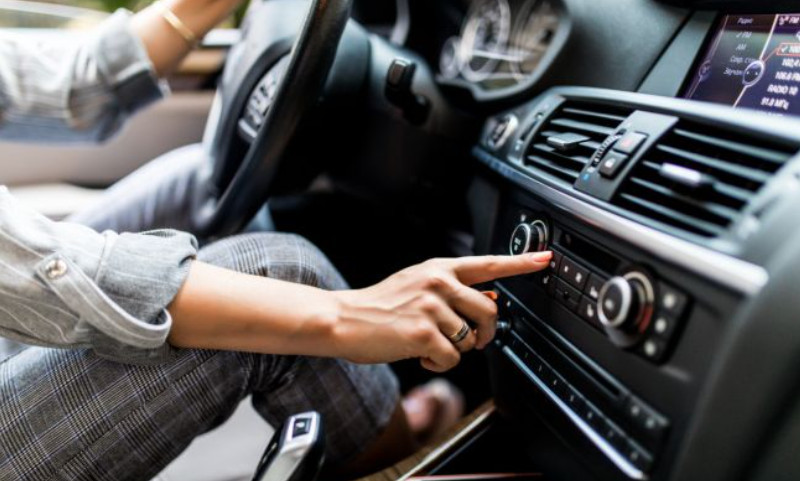
Is it allowed to listen to Russian songs in your own car
Current legislation does not establish a direct ban on listening to Russian-language songs in a private car. If the music is played exclusively for the driver or passengers of the vehicle, such use is considered private. The Law of Ukraine "On Culture" does not extend its restrictions to personal listening of musical works.
However, the situation may change if the music playback effectively goes beyond private use. For example, if the car is moving with open windows, a powerful sound system is used in a parking lot, or the music is so loud that it can be heard freely by random passersby, questions may arise as to whether such playback acquires the characteristics of public performance.
At the same time, the law does not define a private car as automatically a public place. Therefore, each specific situation must be assessed individually, taking into account all circumstances. In other words, the answer to whether it is allowed to listen to Russian music loudly in a car depends not only on the place of playback but also on whether it becomes accessible to an unlimited circle of persons.
Is a fine provided
Recently, information about fines of 25,000 hryvnias for Russian music in a car has been actively spreading on social networks. In reality, such messages do not correspond to current legislation.
Indeed, legislative initiatives to strengthen responsibility for violating established restrictions have been repeatedly registered in the Verkhovna Rada, but none of them currently provide for automatic fines solely for listening to Russian music in one's own vehicle.
At the same time, if loud music playback violates public order or noise regulations, the person may be subject to the provisions of article 182 of the Code of Ukraine on Administrative Offenses. In this case, responsibility arises not because of the origin or language of the musical work, but solely due to violation of noise rules.
Is it allowed to publish stories with Russian music: what the law says
The most questions today arise precisely regarding the use of Russian music on social networks. While the legislation has clearly defined the rules for broadcasting such compositions in cafes, restaurants, retail establishments, or public transport, the situation regarding Instagram, TikTok, Facebook, and other platforms is not so straightforward.
Law of Ukraine No. 2310-IX, which supplemented the Law of Ukraine "On Culture" with article 15-1, prohibits public performance, public notification, demonstration, and other means of public use of phonograms, videograms, and music videos of performers who are or were citizens of the aggressor state after 1991. However, the law does not contain any specific mention of social networks or user posting of video content on digital platforms. For this reason, the legal qualification of stories or short videos remains debatable.
On one hand, an Instagram story or a TikTok video is an open publication accessible for viewing by other users. If such a publication is accompanied by a musical work of a Russian performer subject to legislative restrictions, it can be argued that it is being distributed among an indefinite circle of persons.
On the other hand, Ukrainian legislation currently does not contain a norm that would directly establish administrative or other legal liability specifically for posting such content on personal social media accounts. In other words, there is no special prohibition on publishing stories with Russian music today.
At the same time, this does not mean that the use of such content will always be outside the scope of legal assessment. If the musical accompaniment is used by a business entity to promote its activities—for example, a restaurant, cafe, nightclub, store, or beauty salon—such publication may be considered one of the ways of public use of a musical work within business activities. In this case, the legality will be assessed taking into account the requirements of article 15-1 of the Law of Ukraine "On Culture."
Judicial practice: are there fines for publishing content with Russian music on social networks
Some court decisions already indicate that content on social networks can become the subject of judicial review, but not because of the mere fact of using Russian music. For example, in 2025 in Lviv region, the court in case No. 446/2970/25 held a mother of a minor administratively liable under article 184 of the Code of Ukraine on Administrative Offenses due to a video published by her daughter on TikTok containing Russian music and obscene language. However, the court considered the case not as a violation of the law prohibiting Russian music, but as improper fulfillment of parental duties. That is, the basis for liability was the child's behavior, not the use of the musical work. The fine amounted to 850 UAH plus 665.60 UAH court fee.
Meanwhile, judicial practice already contains examples of holding catering establishments and event organizers liable for publicly broadcasting Russian songs. For instance, in 2025, the Boryspil City District Court in case No. 359/7565/25 fined the director of an entertainment complex 425 hryvnias after a concert during which Russian-language compositions were performed.
As previously reported by "Judicial and Legal Newspaper", in Kyiv a 28-year-old resident of a residential complex was held administratively liable for listening to Russian music and dancing on the balcony on a day of mourning for missile attack victims. The woman was charged under article 173 of the Code of Ukraine on Administrative Offenses—minor hooliganism. The sanction of this article provides for a fine from 51 to 119 UAH.
Thus, as of today, it is not possible to speak of established judicial practice regarding fines specifically for stories with Russian music. However, considering the development of legislation and the state's attention to protecting the information space, it is not excluded that in the future the issue of publishing such content on social networks will become the subject of separate legal regulation or judicial interpretation.
In conclusion, Ukrainian legislation does not prohibit private listening to Russian music in one's own car or at home. Restrictions apply specifically to the public use of works by performers who are or were citizens of the aggressor state, as provided by article 15-1 of the Law of Ukraine "On Culture" (as amended by Law No. 2310-IX). Regarding publishing stories on social networks, there is currently no special legislative prohibition or separate liability.
At the same time, in cases where such publications are used for commercial activities or effectively constitute a way of public broadcasting of musical content, they may receive a different legal assessment. Therefore, it is important to distinguish between private use of music and its distribution among an unlimited circle of persons. The first case is not prohibited by law today, the second may fall under state-imposed restrictions aimed at protecting the Ukrainian informational and cultural space.
Subscribe to our Telegram channel t.me/sudua and to Google News SUD.UA, as well as to our VIBER and WhatsApp, Facebook page and Instagram to stay informed about the most important events.