Due to an appeal error in a fatal traffic accident case, the Supreme Court canceled the ruling — case details


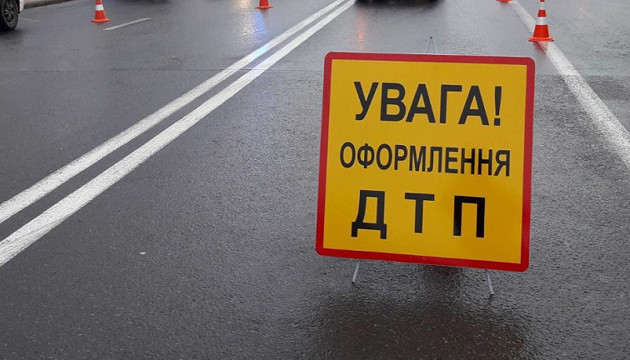










In case No. 132/1925/23, the panel of judges of the first judicial chamber of the Cassation Criminal Court canceled the appellate court's ruling issued following the review of the verdict in the criminal proceedings concerning a fatal traffic accident and leaving the victim in danger. The court noted that the appellate instance unjustifiably denied the defense the opportunity to examine an alternative expert opinion and did not properly assess all the arguments of the appeal.
Circumstances of the case
According to the case materials, on February 20, 2023, around 22:00 in the city of Kalynivka, Vinnytsia region, the accused, being, according to the first instance court's findings, intoxicated, was driving a Mercedes-Benz 200D exceeding the allowed speed limit. While driving near a public transport stop, he struck a pedestrian crossing the roadway. The victim died at the scene from the sustained injuries.
Also, the case materials indicate that after the accident, the driver, realizing that the victim had life-threatening injuries and having the opportunity to assist, left the scene of the traffic accident.
According to the local court's verdict, the driver was convicted under Part 1 of Article 135 and Part 3 of Article 286-1 of the Criminal Code of Ukraine to 6 years imprisonment with a 6-year driving ban. The court also awarded the victim 500,000 UAH in moral damages and 8,000 UAH for legal assistance costs.
The appellate court changed the verdict only regarding the start date of the sentence.
What the Supreme Court established
After reviewing the criminal case materials and the cassation appeal arguments, the Supreme Court reminded that according to Articles 433 and 438 of the Criminal Procedure Code of Ukraine, the cassation court reviews the correctness of the application of substantive and procedural law by the courts but does not examine evidence, establish new factual circumstances, or decide on the reliability of evidence. At the same time, the appellate court is the last instance responsible for ensuring the completeness of the trial and the correctness of establishing the factual circumstances of the case and, if there are grounds provided by law, to re-examine evidence.
The court noted that the principle of direct examination of evidence is an important guarantee of the right to a fair trial. If the defense disputes the conclusions underlying the guilty verdict, it must have the opportunity to submit an alternative expert opinion, and the court must examine it and provide a proper legal assessment.
As established by the Supreme Court, during the appellate review, the defense filed a motion to attach and examine the engineering transport expert opinion dated October 20, 2025, No. 2071/25-21, according to which, in the specific traffic situation, the accused had no technical possibility to avoid the accident. However, the appellate court denied this motion, citing the lack of procedural possibility to examine evidence not submitted by the parties during the first instance trial.
According to the cassation court, this decision was made without considering the case circumstances and the reasons why the defense requested to examine this opinion, which, in their view, could affect the legality of the verdict regarding the proof of the accused's guilt.
The Supreme Court also referred to the ruling dated January 22, 2019, in case No. 697/2272/14-k, which stated that in cases related to traffic accidents, expert examination can influence the final court decision. Therefore, the defense's right to refute the prosecution experts' conclusions with an alternative expert opinion must be ensured by the court, and unjustified rejection of such evidence violates the adversarial principles and the principles of a fair trial.
Furthermore, the Supreme Court noted that in the appeal, the defense also challenged the correctness of the victim's civil claim resolution and questioned the proof of the accused's intoxication. However, the appellate court did not assess these arguments, limiting itself to stating the absence of corresponding claims in the appeal's request section.
In conclusion, the Supreme Court found that during the verdict review, the appellate court did not properly examine the defense's arguments and did not provide reasoned responses, resulting in a decision made without complying with Article 419 of the Criminal Procedure Code. Such violations are significant as they hindered the adoption of a lawful and reasoned court decision and, according to paragraph 1 of part one of Article 438 of the Criminal Procedure Code, are grounds for its cancellation.
Therefore, the Supreme Court partially satisfied the defense's cassation appeal, canceled the Vinnytsia appellate court's ruling, and appointed a new appellate review. During the new review, the appellate court must examine the alternative expert opinion submitted by the defense, give it proper legal assessment, review other appeal arguments, and make a lawful and reasoned decision in compliance with Articles 370 and 419 of the Criminal Procedure Code.
Since the appellate court's ruling was canceled with the appointment of a new review, the Supreme Court also imposed a preventive measure on the accused in the form of detention for 60 days.
Subscribe to our Telegram channel t.me/sudua, Google News SUD.UA Google News SUD.UA, as well as our VIBER and WhatsApp, Facebook Facebook and Instagram Instagram pages to stay updated on the most important events.