Lost Property Due to War: Under What Conditions Can Owners Receive Compensation from the State


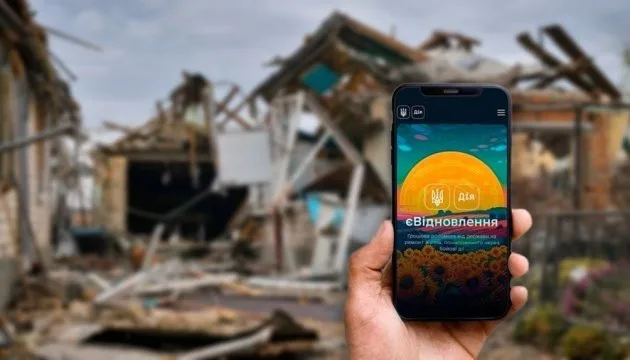










The Russian armed aggression has left hundreds of thousands of Ukrainians without homes and production facilities. As a result of missile strikes, artillery shelling, and hostilities, apartments, private houses, enterprises, and other real estate objects were damaged or completely destroyed. At the same time, alongside the issue of property restoration for the affected, another equally important question arose – whether it is possible to receive compensation from the state and what needs to be done for this.
Today, legislation provides several different compensation mechanisms, but they are not universal. The rules for receiving compensation depend on the type of real estate, the owner’s status, the date the damage occurred, the location of the object, and other legally significant circumstances. That is why seemingly identical situations may have different legal consequences in practice.
Which regulatory acts make up the compensation system
The state compensation system was gradually formed in response to the challenges of war. The first step was the approval by the Cabinet of Ministers of Ukraine on March 20, 2022, No. 326 of the Procedure for determining damage and losses caused to Ukraine as a result of the armed aggression of the Russian Federation. The document established general rules for recording and assessing losses suffered by the state, citizens, and business entities starting from February 19, 2014.
Subsequently, the Government adopted Resolution No. 380 on March 26, 2022, which introduced a mechanism for submitting informational reports about damaged or destroyed real estate objects. Thanks to this, a unified system for accounting for housing affected by hostilities, missile strikes, sabotage, or terrorist acts was created.
However, the key document in the field of compensation was the Law of Ukraine No. 2923-IX “On Compensation for Damage and Destruction of Certain Categories of Real Estate Objects...”, which came into force on May 22, 2023. It defined who can claim state support, what types of compensation exist, and under what conditions they are provided.
What compensation mechanisms operate today
Currently, two separate compensation mechanisms effectively operate in Ukraine. The first concerns individuals and is implemented primarily through the state program “eRecovery,” the procedure of which is approved by the Cabinet of Ministers of Ukraine Resolution No. 381 dated April 21, 2023. The second mechanism is aimed at private sector legal entities, which can claim partial compensation for property value through special war risk insurance instruments and state-administered programs.
Note that the procedure for receiving compensation, the list of documents, and the requirements for applicants differ significantly.
Who can receive compensation
Article 2 of Law No. 2923-IX defines a fairly broad circle of persons entitled to state compensation. Primarily, these are Ukrainian citizens – owners of damaged or destroyed residential properties. At the same time, the legislator did not limit itself to classic owners only. The right to compensation is also granted to customers of individual residential construction, owners of special property rights to unfinished construction objects, investors in residential projects, members of housing construction cooperatives who have effectively purchased housing but have not yet formalized ownership rights, as well as heirs of such persons.
A separate procedure is provided for condominium associations (OSBB), housing construction cooperatives, and managers if the damage concerns common property of an apartment building.
Priority rights to receive compensation are held by:
- If the property is damaged:
- Combatants (participants in hostilities).
- Persons with disabilities due to the war.
- Families of fallen defenders.
- Mobilized persons without combatant status.
- Persons with disabilities of groups I-II.
- Large families.
- Parents-educators of family-type orphanages (DBST).
- Foster parents.
- Patronage caregivers.
- Orphans and children deprived of parental care.
- Guardians and custodians.
- If the property is destroyed:
- Combatants (participants in hostilities), persons with disabilities due to the war;
- Persons called up for military service during mobilization who were not granted combatant status;
- Large families;
- Persons with disabilities of groups I and II;
- Internally displaced persons according to criteria defined by the Cabinet of Ministers of Ukraine.
What compensation can the owner receive
Several forms of state support are provided for citizens depending on the nature of the damage. If the housing is subject to repair, compensation may be provided in the form of funds for restoration works. In case of complete destruction of the object, the owner may receive a housing certificate to purchase new housing or compensation for building a new house on their own land plot.
The law also establishes a number of mandatory conditions. In particular, the object must have been damaged after the introduction of martial law on February 24, 2022, be located in a territory where the relevant state service can be provided on the date of application, and ownership rights must be confirmed by data from the State Register of Property Rights to Real Estate or other documents provided by law.
How to submit an application and what documents need to be prepared
Receiving compensation begins with submitting an application. This can be done remotely via the “Diia” app or portal, as well as in person through the administrative service center or a notary.
One of the key conditions for receiving compensation is proper confirmation of ownership rights to the damaged or destroyed real estate object. In most cases, such rights are confirmed by data entered into the State Register of Property Rights to Real Estate. According to the Cabinet of Ministers of Ukraine Resolution No. 381 dated April 21, 2023, compensation under the “eRecovery” program is provided if ownership data on the object is contained in the State Register of Property Rights. These data are used during the applicant’s verification and decision-making on payment assignment.
However, in practice, a significant number of citizens face the problem of missing information in the Register. This most often concerns housing ownership rights that arose before 2013 and were not re-registered due to transactions or other legal actions. In such a situation, the applicant must first carry out state registration of ownership rights. For this, one can contact a state registrar or notary, providing title documents, or apply to the administrative service center (CNAP).
If the relevant documents are missing, the registrar has the right to request information from the technical inventory bureau. When confirming ownership rights by administrative means is impossible, the issue is resolved in court by filing a claim for recognition of ownership rights according to Article 392 of the Civil Code of Ukraine.
Joint ownership and inheritance: when additional requirements arise
In practice, some of the most complex cases are when housing belongs to several owners. In such cases, the compensation procedure has its own specifics that should be considered before submitting an application. If the damaged housing is in joint ownership, one of the co-owners may apply for compensation. However, it is necessary to obtain consent from the other owners. This consent can be given electronically via the “Diia” app or in writing, with the signature notarized.
If a co-owner is a minor, incapacitated, or partially incapacitated person, the corresponding consent is provided by their legal representative. Different rules apply in case of complete destruction of housing. In this situation, each co-owner submits a separate application, and the compensation amount is determined according to their ownership share. If shares are not officially defined, they must be established before applying for compensation by executing the relevant agreement with a notary.
The law separately regulates inheritance issues. If the owner of damaged or destroyed housing died without using the right to compensation, this right passes to their heirs. After accepting the inheritance, obtaining a certificate of inheritance rights, and state registration of ownership rights, they may apply for compensation in the general procedure.
Repeated damage to housing: what has changed
Hostilities continue, so cases of already repaired or partially restored housing being damaged again are increasingly common. The compensation procedure approved by Cabinet of Ministers Resolution No. 381 provides a separate procedure for such situations.
If the previous compensation has not yet been verified, the owner must close the special account, return unused funds, and initiate a check of their targeted use. Only after this does the commission determine the new extent of damage and calculate the amount of additional compensation, taking into account the repair work already performed.
Thus, repeated damage itself does not deprive a person of the right to state support but significantly complicates the procedure for obtaining it.
A separate mechanism for business
From January 1, 2026, businesses will be able to use mechanisms to receive partial compensation for property damaged or destroyed due to the war in accordance with the Cabinet of Ministers of Ukraine Resolution No. 1541 dated November 28, 2025, which came into force on November 29, 2025, and approved the Procedure for providing partial compensation for the value of property of business entities destroyed or damaged as a result of the armed aggression of the Russian Federation, as well as partial compensation of insurance premiums under war risk insurance contracts (hereinafter – Compensation Procedure).
For private sector enterprises, the state introduced a separate program implemented with the participation of the Export Credit Agency of Ukraine. Its main feature is that compensation applies only to those war risks that occurred after the enterprise acquired the status of a program participant.
The compensation procedure defines:
1) the mechanism for providing partial compensation for the value of property of business entities destroyed or damaged as a result of the armed aggression of the Russian Federation (hereinafter – compensation for damage/destruction of property);
2) the mechanism for partial compensation of insurance premiums (contributions) under war risk insurance contracts (hereinafter – compensation of insurance premiums).
Participation in both mechanisms is on a paid basis. Compensation is made in non-cash form by transferring funds to the business entity’s account.
To gain the potential ability to use compensation for damage/destruction of property, a business entity must become a participant in the compensation program for damage/destruction of property and pay a one-time contribution when submitting an application for participation in the program in the amount of 0.5 percent of the total probable damage amount for damage/destruction of all property declared for participation in the compensation program (the probable damage amount cannot exceed the actual value of such property according to the property valuation report).
The role of judicial practice
Since the start of the full-scale war, the Supreme Court has formed an important legal position. In the ruling dated April 14, 2022, in case No. 308/9708/19, the court recognized the possibility of Ukrainian courts considering claims for compensation directly against the Russian Federation, stating that the aggressor state cannot invoke sovereign immunity in cases related to the consequences of armed aggression. At the same time, even with a court decision, the issue of its actual enforcement remains open, as mechanisms for forced recovery of funds from the aggressor state are still being developed.
The compensation system for property destroyed or damaged as a result of the war is gradually developing but remains multi-layered and legally complex. For citizens, the main instrument is the “eRecovery” program, while businesses use separate war risk compensation mechanisms. At the same time, successful receipt of payments largely depends not only on the fact of property destruction but also on proper registration of ownership rights, timely recording of damages, correctness of submitted documents, and compliance with all procedural requirements.
Subscribe to our Telegram channel t.me/sudua and to Google News SUD.UA, as well as to our VIBER and WhatsApp, Facebook page and Instagram to stay informed about the most important events.