From Lecturer to Judge of the High Anti-Corruption Court: The High Council of Justice Reviewed Mykola Rubashchenko's Candidacy for the Position of Judge of the Appeals Chamber of the HACC


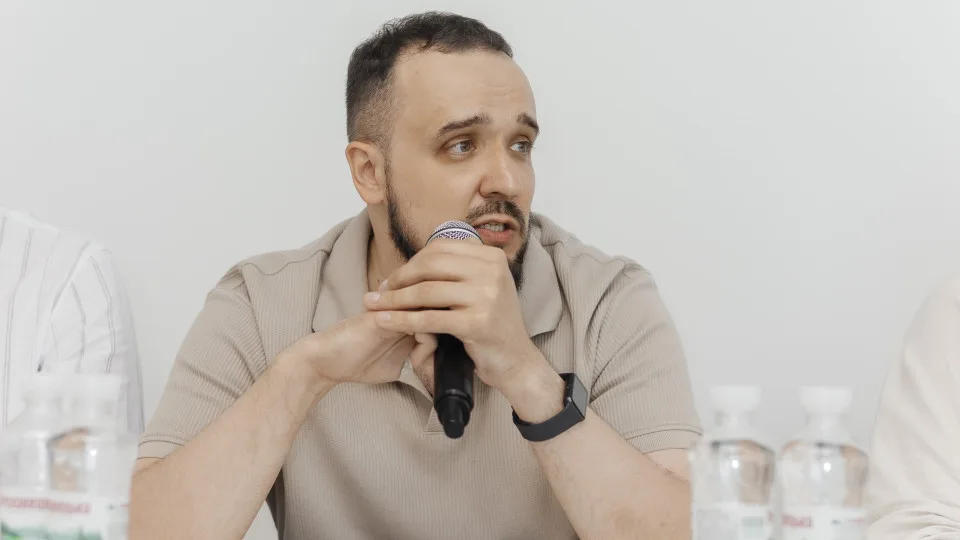










The High Council of Justice (HCJ) considered the recommendation of the High Qualification Commission of Judges of Ukraine regarding the appointment of Mykola Rubashchenko to the position of judge of the Appeals Chamber of the High Anti-Corruption Court (HACC).
Candidate's Professional Path
Mykola Rubashchenko graduated from the Yaroslav Mudryi National Law Academy of Ukraine, obtaining a qualification as a lawyer. He defended his dissertation at the Research Institute for the Study of Crime Problems named after Academician V. V. Stashis of the National Academy of Legal Sciences of Ukraine in the specialty of criminal law, criminology, and criminal-executive law.
The candidate has significant experience in scientific and pedagogical activities: teaching at the university, conducting scientific research, participating in analytical projects, and cooperating with public organizations. As a result of the qualification assessment, he scored 736 points and was recognized as meeting the requirements to administer justice in the High Anti-Corruption Court. In the ranking of candidates for positions in the Appeals Chamber of the HACC, Rubashchenko took third place.
Discussion at the HCJ Meeting
During the interview, members of the High Council of Justice actively discussed the candidate's motivation, lack of practical judicial experience, and his readiness to work in the anti-corruption court.
Mykola Rubashchenko emphasized that the main motive for his participation in the competition is zero tolerance for corruption. He noted that manifestations of corruption have always caused him strong rejection, and these axiological values became the key factor in his decision to submit his candidacy.
The candidate acknowledged that he does not have experience in direct participation in court hearings, as all his professional activity was related to science, teaching, and analytics. At the same time, he stressed that his theoretical training is at a high level, and examples of successful judicial careers of judges who came from the scientific field give grounds for optimism.
HCJ members asked questions regarding:
- possible pressure from public organizations and media;
- conflict of interest (in particular, in cases related to the university where the candidate worked);
- understanding of the presumption of innocence (Article 62 of the Constitution of Ukraine);
- actions of the reporting judge upon receipt of an appeal complaint.
Rubashchenko demonstrated solid theoretical knowledge, clearly answered questions about self-recusal, limits of communication with former colleagues, and the inadmissibility of interference in the court's activities.
HCJ Decision
Following the discussion, the High Council of Justice announced a break in the consideration of Mykola Rubashchenko's candidacy until July 14, 2026, for further study of the materials.