Man claimed deferral and illnesses, but the Territorial Recruitment Center mobilized him: the court explained whether this is legal


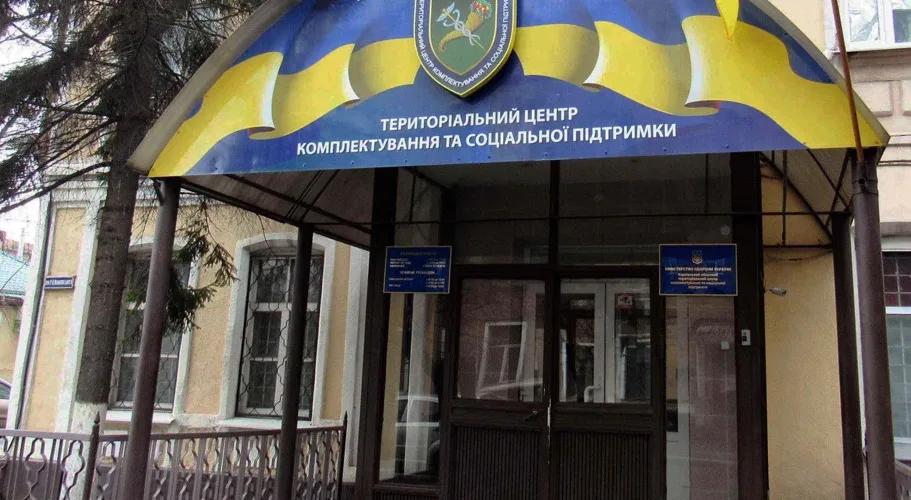










The Zakarpattia District Administrative Court considered an administrative case filed by a serviceman against the Territorial Recruitment and Social Support Center regarding the recognition as unlawful and cancellation of the order for his conscription into military service by mobilization, as well as the obligation of the military unit to release him from service and remove him from the personnel list.
Essence of the case
The plaintiff appealed to the court, considering illegal the order of the head of the Territorial Recruitment and Social Support Center concerning his conscription and direction to undergo military service by mobilization to a military unit.
As grounds for his claims, he stated that in December 2025 he underwent a military medical commission at another Territorial Recruitment and Social Support Center. According to him, during the medical commission he was undergoing treatment and had chronic cardiovascular diseases, due to which the commission concluded his limited fitness for military service.
The plaintiff also noted that the head of the respective Territorial Recruitment and Social Support Center handed him a summons indicating the arrival date of December 9, 2026, for completion of treatment and rehabilitation. In his opinion, this indicated that he was granted a deferral from conscription until that date, and therefore no mobilization measures could be conducted against him before the expiration of this term.
Despite this, on March 10, 2026, he was delivered to another Territorial Recruitment and Social Support Center where, as the plaintiff claimed, further mobilization measures were carried out and his conscription into military service was formalized.
The defendant's representative opposed the satisfaction of the claim. He noted that according to part eleven of article 38 of the Law of Ukraine "On Military Duty and Military Service," conscripts are obliged to notify the Territorial Recruitment Center of circumstances that may affect the fulfillment of military duty.
According to the defendant, the plaintiff did not inform the Territorial Recruitment Center about his right to a deferral from mobilization and did not submit any documents confirming such a right. Furthermore, on March 11, 2026, he underwent an unscheduled permanent military medical commission at the regional temporary mobilization point, which recognized him fit for military service in support military units, Territorial Recruitment and Social Support Centers, higher military educational institutions, training centers, medical units, logistics units, communications, operational support, and security units.
The defendant also noted that during mobilization measures the plaintiff did not report any illnesses or other circumstances that could hinder military service.
In additional explanations, the plaintiff's representative emphasized that the military medical commission certificate dated March 11, 2026, contains a list of the plaintiff's diagnoses, which, in his opinion, were obtained by the defendant from the electronic health system eHealth. On this basis, the plaintiff argued that the defendant was aware of his health condition and had no right to conduct a repeated medical examination, carry out mobilization measures, and send him to military service without his consent, since part of the relevant procedures had already been conducted by another Territorial Recruitment and Social Support Center.
Circumstances established by the court
The court established that the plaintiff was handed a summons requiring him to appear at the Territorial Recruitment and Social Support Center on December 9, 2026. The summons stated that failure to appear would entail liability according to the law.
At the same time, the military medical commission certificate dated March 11, 2026, shows that the plaintiff was recognized as fit for military service in support military units, Territorial Recruitment and Social Support Centers, educational institutions, medical units, logistics, communications, operational support, and security units.
Moreover, by order dated March 12, 2026, the plaintiff was conscripted into military service by mobilization according to a nominal list.
Position of the court
Providing a legal assessment of the disputed relations, the court primarily relied on articles 19, 65, and paragraph 20 of part one of article 106 of the Constitution of Ukraine, which define the obligation of state authorities to act exclusively within their powers and in the manner prescribed by law, impose on citizens the duty to defend the homeland, and empower the President of Ukraine to make decisions on mobilization and the introduction of martial law.
The court noted that at the time of the disputed relations and the case consideration, martial law was in effect in Ukraine, so the norms of the Law of Ukraine "On Mobilization Preparation and Mobilization," the Law of Ukraine "On Military Duty and Military Service," the Regulation on Territorial Recruitment and Social Support Centers approved by the Cabinet of Ministers of Ukraine Resolution No. 154, as well as the Procedure for Conscription of Citizens for Military Service during Mobilization approved by Cabinet Resolution No. 560, were applicable to the disputed relations.
Analyzing the legislation, the court pointed out that district Territorial Recruitment and Social Support Centers are vested with the authority to grant conscripts deferrals from conscription during mobilization, verify the grounds for granting them, and maintain special military records. Thus, deferral is granted exclusively in the manner prescribed by law.
The court specifically cited paragraphs 56–60 of Procedure No. 560, according to which, if there are grounds for deferral, the conscript must personally submit an application in the prescribed form to the chairman of the respective Territorial Recruitment and Social Support Center commission with documents confirming the right to deferral. Such an application must be registered, after which the commission reviews the documents, verifies the legality of the grounds, and makes a decision to grant or deny the deferral, which is formalized by protocol.
According to the court, the conscript's submission of the application and the commission's decision are necessary legal prerequisites for granting a deferral.
The plaintiff insisted that the Territorial Recruitment Center already had information about his right to deferral since he was handed a summons with an arrival date in December 2026. He believed that such a summons confirmed the exercised right to deferral, and therefore he should not have been subjected to medical examination or conscription during mobilization.
However, the court did not agree with these arguments.
The court found that the summons provided by the plaintiff only obligated him to appear at the Territorial Recruitment and Social Support Center on December 9, 2026, and did not confirm the fact of deferral being granted in accordance with legal requirements.
Moreover, the case materials contain no evidence that the plaintiff applied to the district Territorial Recruitment and Social Support Center with an application for deferral in the form prescribed by Procedure No. 560 or that the commission made a decision to grant such a deferral.
The plaintiff also did not provide the court with any certificate or other document confirming that the deferral was granted in the prescribed manner. Therefore, the arguments about his exercised right to deferral were not confirmed during the court proceedings.
The court also took into account that according to the military medical commission certificate dated March 11, 2026, the plaintiff was recognized fit for military service in support military units, Territorial Recruitment and Social Support Centers, training centers, medical units, logistics, communications, operational support, and security units.
At the same time, the court noted that the plaintiff did not provide sufficient evidence that the defendant violated the requirements of the Law of Ukraine "On Mobilization Preparation and Mobilization" or Procedure No. 560 during mobilization measures.
The court separately noted the plaintiff's argument that mobilization was conducted not at his place of military registration.
Regarding this, the court stated that paragraph twelve of point 9 of Regulation No. 154 explicitly provides for conscription during mobilization regardless of the citizen's place of military registration.
Similarly, paragraph 81 of Procedure No. 560 stipulates that in case of conscription not at the place of military registration, the person is preliminarily registered at the Territorial Recruitment and Social Support Center conducting the conscription, and the relevant information is entered into the Unified State Register of conscripts, reservists, and military personnel before referral to the military medical commission.
Furthermore, paragraph 3 of Cabinet Resolution No. 560 also provides that conscription of reservists and conscripts during mobilization is carried out regardless of their place of military registration. Therefore, the court found no violations in the fact that mobilization measures concerning the plaintiff were conducted by another Territorial Recruitment and Social Support Center.
The court also analyzed the plaintiff's demand to cancel the order directing him to the military unit.
Regarding this, the court noted that after a citizen is sent to a military unit and enrolled in the personnel list, further accounting of the serviceman is carried out according to the Law of Ukraine "On Military Duty and Military Service" and the Instruction on the organization of personnel accounting in the Ministry of Defense system, approved by Ministry of Defense Order No. 280.
Enrollment in the personnel list of the military unit is carried out by order of the military unit commander based on nominal lists received from Territorial Recruitment and Social Support Centers. Thus, the military unit does not decide on mobilization at its own discretion but acts on documents received from the Territorial Recruitment and Social Support Center.
Court conclusions
Evaluating all evidence collectively, the court concluded that the defendant proved the legality of its actions.
The court found no evidence that the plaintiff properly formalized a deferral from conscription during mobilization or that the defendant violated the requirements of the Law of Ukraine "On Mobilization Preparation and Mobilization" or Procedure No. 560.
The court also found no circumstances that would prevent the plaintiff's conscription into military service during mobilization and therefore concluded that there were no legal grounds to recognize the order for his conscription and direction to the military unit as unlawful and to cancel it.
In this regard, the court also denied the related claim to oblige the military unit to release the plaintiff from military service and remove him from the personnel list.
As a result of case No. 260/1786/26, the Zakarpattia District Administrative Court fully denied the administrative claim.
An appeal against the court's decision may be filed within thirty days to the Eighth Administrative Court of Appeal.
Subscribe to our Telegram channel t.me/sudua and to Google News SUD.UA, as well as to our VIBER and WhatsApp, Facebook page and Instagram to stay informed about the most important events.