In the Khmelnytskyi Region, a Court Sentenced a Woman Who Worked for the FSB and Was Preparing a Terrorist Act












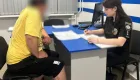
The Khmelnytskyi City District Court found a resident of Khmelnytskyi district guilty of treason, cooperation with the Russian FSB, calls for overthrowing the constitutional order, justification of Russia’s armed aggression, and preparation for the illegal manufacture of an explosive device. The court sentenced her to 15 years in prison with the confiscation of property. This was reported by the court.
Circumstances of the case
A resident of Khmelnytskyi district, born in 1965 and originally from Arkhangelsk, appeared before the Khmelnytskyi City District Court. She was accused of treason, calls for overthrowing the constitutional order, justification of Russian armed aggression, and preparation for the illegal manufacture of an explosive device. Her actions were qualified under Part 2 of Article 111, Part 3 of Article 109, Part 1 of Article 14, Part 1 of Article 263-1, and Part 3 of Article 436-2 of the Criminal Code of Ukraine.
The court established that no later than March 2025, the woman voluntarily agreed to cooperate with a representative of the Russian FSB. According to the case materials, she acted intentionally, during martial law, for mercenary motives and in the interests of the Russian special service, being aware that her activities harmed the sovereignty, territorial integrity, defence capability, and information security of Ukraine.
Her first task was to administer the public Telegram channel "Khmelnytskyi First (independent)". Through this resource, according to the investigation, she systematically disseminated pro-Russian materials aimed at destabilising the situation in Ukraine.
In particular, the accused posted publications calling for the violent seizure of state power. One of the posts was addressed to servicemen of the Ukrainian Defence Forces and contained calls to take up arms against the current government. Another publication urged users to forcibly seize power and use weapons to "restore order".
Additionally, the woman repeatedly published materials denying Russian aggression against Ukraine, used the propagandistic term "SVO" (Special Military Operation), spread messages glorifying Russian military personnel, and posted images depicting the division of Ukrainian territory. The court noted that there were many such publications, all aimed at supporting the interests of the aggressor state.
In April 2025, cooperation with the FSB entered a new phase. The Russian handler offered her a monetary reward for collecting information about critical infrastructure and military facilities in the Khmelnytskyi region. The accused agreed and began regularly transmitting photo, video materials, and coordinates of strategic objects.
According to the investigation, she sent information about the Territorial Medical Association of the Ministry of Internal Affairs, Khmelnytskyi pre-trial detention centre, infrastructure and rolling stock near the "Khmelnytskyi" and "Hrechany" railway stations, administrative buildings, tracks, reservoirs, energy facilities, fences, security systems, and other elements of critical infrastructure.
The court also noted that the woman provided the FSB representative with the coordinates of her son’s training location abroad, who was undergoing training as a serviceman of the Armed Forces of Ukraine. She also reported the coordinates of the assembly point of the Khmelnytskyi Regional Territorial Centre for Recruitment and Social Support and recorded several videos of the city territorial recruitment centre building.
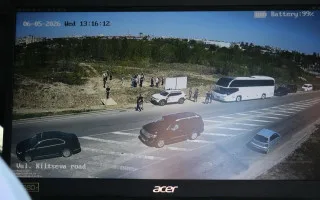
Subsequently, the accused gathered information about the National Academy of the State Border Guard Service of Ukraine, the railway station in Khmelnytskyi, locations of air defence units, tank brigade, and other military units in the region. She also filmed security systems of military facilities and transmitted the recordings to her handler.
At the end of April and beginning of May, she documented the movement of military equipment and aviation of the Armed Forces of Ukraine. In particular, she transmitted information about the transportation of an armoured personnel carrier by rail, movement of armoured vehicle columns by highways, flight of a military transport plane, and described engineering obstacles and security systems of military units.
Another area of her activity was collecting personal data. According to the case materials, the woman provided the FSB with information about Khmelnytskyi volunteers who helped Ukrainian military personnel, as well as data about her neighbour — an instructor for drone operator training at the National Academy of the State Border Guard Service.
The investigation also established that she voluntarily sent the Russian special service information about Ukrainian military field exercises involving unmanned aerial vehicles.
Position of the court
The court found that in May 2025, the accused’s activities shifted from gathering intelligence to preparing sabotage. Following instructions from the FSB representative, she purchased two packages of ammonium nitrate, "Vanish Oxi Action" bleach, and a fire extinguisher tube. According to the investigation, these items were to be used to make an improvised explosive device. After acquiring the necessary components, the woman sent photos to her handler via Telegram as confirmation of task completion.
Subsequently, on her initiative, she provided the Russian special service representative with personal data and coordinates of the location of one of the combat units of the Armed Forces of Ukraine on the state border.
In June 2025, the suspect continued gathering information about objects of interest to the FSB. She recorded on video the building of the Headquarters for Assistance to the Armed Forces of Ukraine, Khmelnytskyi Regional Military Administration, administrative buildings of local government bodies, the Security Service of Ukraine office complex in Khmelnytskyi region, and the infrastructure of the regional territorial recruitment and social support centre. All recorded materials were handed over to the handler.
Later, the FSB representative sent her instructions on making an improvised explosive device. According to the case materials, the woman was to place explosives with a GSM module inside the fire extinguisher tube, send it by taxi to the location of the Special Operations Forces military unit, and detonate it remotely by phone call. She was promised a reward of over 5,000 US dollars for completing this task.
After receiving the instructions, she went to the military unit to conduct reconnaissance and managed to record its perimeter on her phone. However, she was unable to send the video to her handler. The counterintelligence of the Security Service of Ukraine detained her immediately after completing this stage of the task, preventing a possible sabotage.
The court also took into account the forensic psychiatric examination conclusion, which stated that the accused was sane, did not suffer from mental illnesses, was aware of her actions, and could control them. When sentencing, the court considered that the woman had no prior convictions, has a family, and is positively characterised at her place of residence and work. At the same time, the court noted that she only partially admitted her guilt and did not express sincere remorse.
Court decision
After examining all the evidence in the case, the Khmelnytskyi City District Court found the accused guilty under all charged articles of the Criminal Code of Ukraine.
For treason committed under martial law (Part 2 of Article 111 of the Criminal Code of Ukraine), she was sentenced to 15 years in prison with confiscation of property. For justification and glorification of Russian armed aggression (Part 3 of Article 436-2 of the Criminal Code of Ukraine), the court imposed a punishment of five years' imprisonment with confiscation of property. For public calls for the violent overthrow of the constitutional order (Part 3 of Article 109 of the Criminal Code of Ukraine), she was sentenced to three years' imprisonment with confiscation of property, and for preparation for the illegal manufacture of an explosive device (Part 1 of Article 14, Part 1 of Article 263-1 of the Criminal Code of Ukraine) — an additional three years' imprisonment.
Based on Part 1 of Article 70 of the Criminal Code of Ukraine, the less severe punishments were absorbed by the more severe one, so the woman was ultimately sentenced to 15 years in prison with confiscation of property.
Until the verdict takes legal effect, the preventive measure of detention remains unchanged. The verdict may be appealed to the appellate court within 30 days from the date of its announcement.
Subscribe to our Telegram channel t.me/sudua, follow SUD.UA on Google News , and join us on VIBER, WhatsApp, Facebook and on Instagram to stay informed about the important events.