Kernel vs Sense Bank Case: Analysis of the 1.75 Billion Hryvnia Lawsuit












The circumstances of the agrarian group Kernel’s case against "SENSE BANK" should attract special attention from state authorities, particularly the High Council of Justice (HCJ). According to former editor of "Economic Truth" Serhiy Lyamets, certain coincidences allow one to assume that these circumstances may raise questions about ensuring external impartiality of the judicial process.
"I have reasonable doubts both about the randomness of the judge’s selection, the motives of Kernel, and even the impartiality of the top managers of SENSE BANK. This is not a suspicion in the sense used by investigators and prosecutors, but simply my personal evaluative judgment," the author notes.
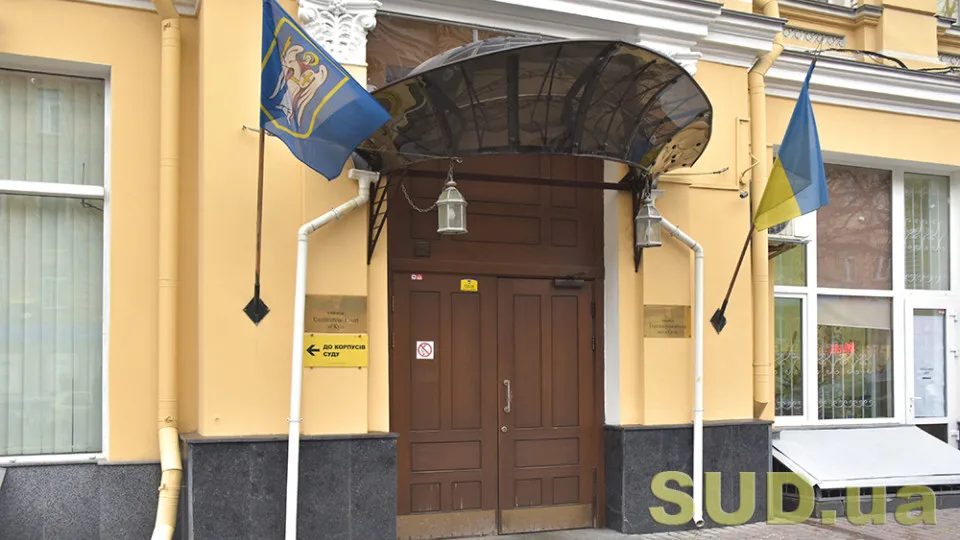
As previously reported by the "Judicial-Legal Newspaper," the Commercial Court of Kyiv is considering case No. 910/4298/26 filed by the Cypriot company Etrecom Investments Limited, part of the Kernel group, against the Cypriot company Greatford Limited and the state-owned JSC "SENSE BANK." The Ministry of Finance of Ukraine acts as a third party on the side of the state bank.
The claim amount is 38.8 million USD, which at the current exchange rate is approximately 1.75 billion UAH. Importantly, in this case, Greatford and JSC "SENSE BANK" are co-defendants. Since Greatford Limited has no funds, if the claim is satisfied, the recovery may be directed at "SENSE BANK." As the author wrote earlier, this could impact the indicators of the state budget of Ukraine. If the claim is satisfied, the financial consequences may go beyond this specific dispute, as the court’s decision could potentially influence further judicial practice in cases related to obligations under Loan Participation Notes (LPN).
"The Kernel lawsuit against SENSE BANK is a matter of state importance," the author believes.
Cross-border dispute in a Ukrainian court
The lawsuit was filed by the Cypriot company Etrecom against the Cypriot company Greatford, which, according to open data, is linked to the former owners of SENSE BANK. The author notes certain reservations that may raise questions about risks in this case. In particular, involving the bank as a co-defendant allowed the plaintiff to transfer the cross-border dispute to a Ukrainian court. Such a move may be aimed at gaining access to the bank’s assets. Similar procedural risks may be subject to legal evaluation.
According to case materials, historically there were active relations between structures related to Kernel and the bank. Kernel was serviced by the bank, took loans, and overall the relationship history was positive. Based on this positive experience, Kernel, through its company Etrecom, decided to invest its own funds in Loan Participation Notes (LPN) issued by the Dutch independent fund E.M.I.S. Finance B.V., purchasing them on the secondary market from Greatford.
According to Etrecom, the company accepted these bonds as fulfillment of the respective obligations of JSC "SENSE BANK" even before its nationalization. The securities were transferred by Greatford.
After the bank’s nationalization in July 2023, new debt repayment terms were established — 2029-2032, but Etrecom filed the lawsuit now, naming "SENSE BANK" as a co-defendant.
"I think Kernel’s lawyers made the bank a co-defendant to get to the bank’s money and possibly receive funds twice, once from the bank and again from the future LPN redemption. Although the state bank has nothing to do with this debt, it may be forced to pay," writes Serhiy Lyamets. The editorial board notes that this is the author’s personal assessment and is not confirmed by court decisions or other established facts.
Circumstances of case assignment
The lawsuit was filed three times to the Commercial Court of Kyiv before it was assigned to Judge Svitlana Pohrebna. She is a judge of the Commercial Court of Poltava region and was seconded to the Commercial Court of Kyiv for one year according to the decision of the High Council of Justice.
According to Serhiy Lyamets, the repeated filing of the lawsuit and its subsequent automated assignment may require additional procedural evaluation despite significant court fee expenses. He estimates that with each repeated filing, Kernel paid a court fee totaling about 50,000 USD, part of which the company likely will not be able to recover.
The author also notes that, according to the Unified State Register of Court Decisions, Judge Svitlana Pohrebna has repeatedly considered cases involving Kernel group companies. According to the author, the decisions made in these cases were favorable to the agrarian group.
At the same time, this fact alone does not indicate judicial bias. These circumstances were among the reasons cited by Greatford when filing a motion for the judge’s recusal. The motion was considered under the procedure provided by the Commercial Procedural Code of Ukraine but was denied, after which the case continued to be heard by the judge assigned by the automated distribution system.
According to the author, the combination of circumstances related to the repeated filing of the lawsuit, its repeated automated assignment, and the judge’s prior involvement in Kernel cases may be of interest regarding compliance with procedural guarantees and the principle of random court composition. The final assessment of compliance with automated case distribution requirements and the presence or absence of grounds for judge recusal belongs to higher courts and judicial governance bodies as prescribed by law.
Judge’s biography and family ties
The author notes that according to declarations of Judge Svitlana Pohrebna published in the NACP Declaration Register, her property status does not indicate significant wealth. The declared real estate and vehicle are "quite modest," and the judge’s family continues to service a loan.
At the same time, the author draws attention to the fact that before her appointment as a judge, Svitlana Pohrebna worked as a private notary in Kharkiv.
Additionally, the author refers to information that in 2020 the National Agency on Corruption Prevention received a report regarding a possible violation of anti-corruption legislation by the judge. The matter was not substantively considered because the statute of limitations for administrative liability had expired at the time the report was received.
Commenting on these circumstances, the author speculates: "It is quite possible that someone performed a procedural action, but at an extremely favorable time for Pohrebna to remove risks from her." This is the author’s personal opinion and is not confirmed by court-established facts.
At the same time, the author separately notes: "I do not claim that Judge Pohrebna should automatically be suspected of corruption... Nevertheless, circumstances related to the judge’s family situation may create grounds for increased public attention to this case’s consideration."
Open sources contain information about disciplinary proceedings against a close relative of the judge. From July 2024, he held the position of prosecutor at the Luhansk Specialized Prosecutor’s Office in the defense sector of the Eastern region. However, in May 2026, the Qualification and Disciplinary Commission of Prosecutors, by decision No. 180dp-26, held him disciplinarily liable and imposed a disciplinary sanction in the form of dismissal from the prosecutor’s office. The commission made its decision on April 1, 2026, and the disciplinary sanction order is dated May 5, as noted in the Register of Persons Who Committed Corruption or Corruption-Related Offenses.
The author notes that the commission’s decision states that his actions contained signs of a disciplinary offense and indicated: "In his official activities, he showed dishonesty, violated restrictions on personal connections and relationships that may compromise the prosecutor’s rank, and allowed manifestations that may create the impression of corruption."
The author also refers to disciplinary case materials, from which, in his opinion, it follows that the prosecutor used his official position in cases related to mobilization. At the same time, the question of the presence or absence of a criminal offense in his actions belongs to the competence of pre-trial investigation bodies and the court and has not been established by a final court decision. The decision on disciplinary liability was appealed to the High Council of Justice, which on July 16 reviewed the complaint and left the decision of the Qualification and Disciplinary Commission of Prosecutors unchanged.
Moreover, a pre-trial investigation is being conducted by the State Bureau of Investigation. The author notes that the criminal proceeding is registered under Part 2 of Article 369 of the Criminal Code of Ukraine. Currently, the judge’s relative has procedural status as a witness. There is no information about notification of suspicion or a court conviction.
Commenting on these circumstances, the author expresses his opinion that they may affect public perception of the impartiality of the judicial process.
The editorial board considers it necessary to emphasize that, along with the above facts, namely regarding participation in Kernel cases or repeated case assignment, these data alone do not indicate a conflict of interest, bias, or any illegal influence on the administration of justice — the assessment of the judge’s compliance with integrity requirements belongs exclusively to the High Council of Justice and other authorized bodies.
Public position of the state bank
The author draws attention to the procedural strategy of JSC "SENSE BANK" in this case. According to his observations, the bank as a defendant did not challenge the court composition determined by the automated system and did not file procedural motions related to its formation. The chosen tactic itself does not indicate a violation of the law or bad faith of the participants.
However, in the author’s opinion, given the significant amount of the claim and the circumstances of the court composition determination, the case requires increased public attention. In this context, the author speculates about the possibility of coordinated actions between the plaintiff and the bank’s management, for example, to allow the bank to lose the case and pay the agrarian group 1.75 billion hryvnias, while specifically emphasizing that he does not consider this speculation as an accusation or statement of an established fact.
The author also notes that, in his opinion, representatives of JSC "SENSE BANK" did not pay proper attention to circumstances related to the judge’s appointment for the case. In particular, he points out that Judge Svitlana Pohrebna previously considered cases involving Kernel group companies, as well as the coincidence in timing of her secondment to the Commercial Court of Kyiv with the lawsuit filing and the plaintiff’s repeated appeals to the court. According to the author, the combination of these circumstances may be subject to additional procedural evaluation but does not by itself indicate any violations.
Furthermore, the author finds unusual the absence of a public position from state authorities regarding this case. Given the state status of JSC "SENSE BANK" and the significant amount of the claim, he expresses the opinion that more active public information about the legal position of the bank and authorized state bodies could help increase trust in the judicial process and reduce room for various speculations.
To support his position, the author states: "We must clearly understand that one of the three largest agrarian groups in Ukraine is trying to recover funds from a systemically important state bank in a case to which the bank has no relation. In such cases, public activity is often much more important than legal. A consolidated state position can stop such a lawsuit in one hour and even turn the situation in favor of society. However... the bank, Ministry of Finance, National Bank, Presidential Office — have not yet made any statements regarding Kernel’s lawsuit." At the same time, these conclusions are the author’s assessment of the public significance of the case and the role of state bodies and do not contain established facts about any unlawful agreements or violations of the law.
Editorial legal position
The material is based on open sources, court decisions, official documents, and other publicly available information and prepared taking into account guarantees of freedom of expression (Article 34 of the Constitution of Ukraine, Article 10 of the Convention for the Protection of Human Rights and Fundamental Freedoms, Article 30 of the Law of Ukraine "On Information"), as well as the practice of the European Court of Human Rights and the Supreme Court regarding the distinction between factual statements and evaluative judgments — in particular in the cases Lingens v. Austria, Thoma v. Luxembourg, Bladet Tromsø and Stensaas v. Norway, Oberschlick v. Austria, Jerusalem v. Austria, and Axel Springer AG v. Germany.
The material is not a statement about the commission of any offenses and does not replace the conclusions of the court or other competent authorities; its purpose is journalistic and legal analysis of circumstances of significant public interest. All mentions of Kernel, JSC "SENSE BANK," their officials, or other participants in events are made exclusively in the context of analyzing publicly available information, case materials, and other legally significant facts. The final decision in the case must be made by the court, provided all procedural law norms and ethical standards are observed.
Subscribe to our Telegram channel t.me/sudua and to Google News SUD.UA, as well as to our VIBER and WhatsApp pages on Facebook and Instagram to stay updated on the most important events.