Products after the expiration of the minimum shelf life will be donated to charity — what the Rada proposes












Ukraine continues to harmonize its legislation with European Union law in the field of sanitary and phytosanitary measures.
The Verkhovna Rada is considering two large-scale bills — the main one No. 15058 and the alternative No. 15058-1, which aim to bring Ukrainian rules closer to European standards in the areas of food safety, veterinary medicine, feed, GMOs, state control, and protection of human and animal health.
At the same time, the Committee on Ukraine's Integration into the EU concluded that the documents only partially comply with the European integration course or require substantial revision, and the Main Scientific and Expert Department of the Verkhovna Rada expressed a number of comments on certain provisions of both legislative initiatives.
Ukraine brings food legislation closer to EU standards
Ukraine has taken another step towards fulfilling its obligations as a candidate country for accession to the European Union. This concerns a large-scale update of legislation in the field of sanitary and phytosanitary measures — a direction that directly affects food safety, veterinary control, feed production, combating dangerous animal diseases, state control, export of Ukrainian products, and access of its producers to the European market.
The legislative changes cover dozens of Ukrainian laws, hundreds of new norms, and are intended to ensure the implementation of EU law (EU acquis). At the same time, relevant parliamentary bodies noted that some proposed mechanisms require significant refinement to fully comply with European legislation and the Ukrainian legal system.
The Verkhovna Rada Committee on Ukraine's Integration into the European Union reviewed the draft Law "On the Implementation of European Union Legislation Regarding the Improvement of Regulation in the Areas of Sanitary and Phytosanitary Measures" No. 15058 and its alternative draft No. 15058-1.
The adoption of the main bill is expected to:
- eliminate the European Commission's remarks regarding the alignment of Ukrainian legislation in the field of sanitary and phytosanitary measures with the EU acquis, as outlined in the European Commission's Reports on Ukraine's progress within the EU Enlargement Package for 2023, 2024, and 2025;
- implement EU law provisions in the field of sanitary and phytosanitary measures into Ukrainian legislation;
- accelerate Ukraine's fulfillment of its European integration obligations as a candidate country for EU membership.
At the same time, it is noted that although the bill aims to adapt Ukrainian legislation to EU law and fulfill Ukraine's international legal obligations, it requires further refinement and additional analysis after receiving the European Commission's assessment.
Regarding the alternative bill, the Committee noted that it only partially meets Ukraine's international legal obligations in the field of European integration and EU law, and therefore also requires revision.
What exactly does bill No. 15058 propose
The main bill is one of the largest European integration documents in recent times in the field of agricultural and food policy. Its provisions simultaneously amend a significant number of Ukrainian laws and implement numerous EU regulations and directives.
In fact, the document creates a new model of state regulation in the field of sanitary and phytosanitary measures.
It envisages modernization of legislation regarding:
- food safety and certain quality indicators;
- state control;
- veterinary medicine;
- animal health and welfare;
- feed;
- by-products of animal origin;
- genetically modified organisms;
- materials and articles in contact with food;
- geographical indications of alcoholic beverages;
- certain procedures for state registration of sanitary measure objects.
One of the key parts of the document is the update of the Law "On Basic Principles and Requirements for Food Safety and Quality."
The draft significantly expands the terminology, introduces new definitions, changes the rules for state registration of certain sanitary measure objects, improves risk assessment procedures, establishes new requirements for dietary supplements, food flavorings, enzymes, novel foods, and health claims.
A separate large section is devoted to creating a modern system of state registers of sanitary measure objects, digitizing procedures, and harmonizing Ukrainian mechanisms with EU practice.
What will change for food producers and market operators
One of the key goals of bill No. 15058 is to align Ukrainian rules on production, circulation, and state control of food products with European standards. The document does not limit itself to individual amendments to current legislation but effectively forms a new system of state regulation in the field of food safety.
Significant attention is paid to the activities of food market operators. For them, it is proposed to update rules on product traceability, state registration of production facilities, obtaining operating permits, conducting laboratory control, and interaction with competent authorities. A large part of the innovations is aimed at digitizing procedures and reducing administrative barriers while simultaneously strengthening product safety requirements.
It also envisages a substantial update of mechanisms for state registration of certain sanitary measure objects, including novel foods, dietary supplements, flavorings, enzymes, and health claims. For this, it is proposed to modernize state registers and their maintenance procedures, as well as establish new requirements for risk assessment and scientific support of relevant decisions.
New rules for risk communication
One important novelty of the legislative changes is the introduction of a separate risk communication mechanism.
Its purpose is to ensure open, clear, and timely communication between state bodies, scientific institutions, market operators, consumers, and other interested parties regarding risks related to the food chain. It is planned that such a system will help increase trust in decisions of state bodies, ensure transparency of risk assessment, and more effectively counter the spread of misinformation.
The competent authority will be required to develop a separate risk communication plan that will define ways to inform the public, mechanisms for interaction with stakeholders, and procedures for updating information considering scientific developments and EU practice.
Food safety culture will become mandatory
Another fundamentally new requirement will be the introduction of the so-called food safety culture.
The bill proposes to establish the obligation of market operators not only to comply with legislative requirements but also to create within enterprises a management system where food safety issues become part of corporate culture.
In particular, market operators must ensure:
- clear distribution of responsibilities among employees;
- proper staff training;
- continuous updating of internal procedures;
- open communication about risks;
- adequate resource provision for food safety management systems;
- continuous improvement of internal processes according to modern scientific approaches.
This approach corresponds to current EU practice, where responsibility for product safety lies primarily with the market operator.
Charitable redistribution of food products
The project also comprehensively regulates the issue of charitable distribution of food products for the first time.
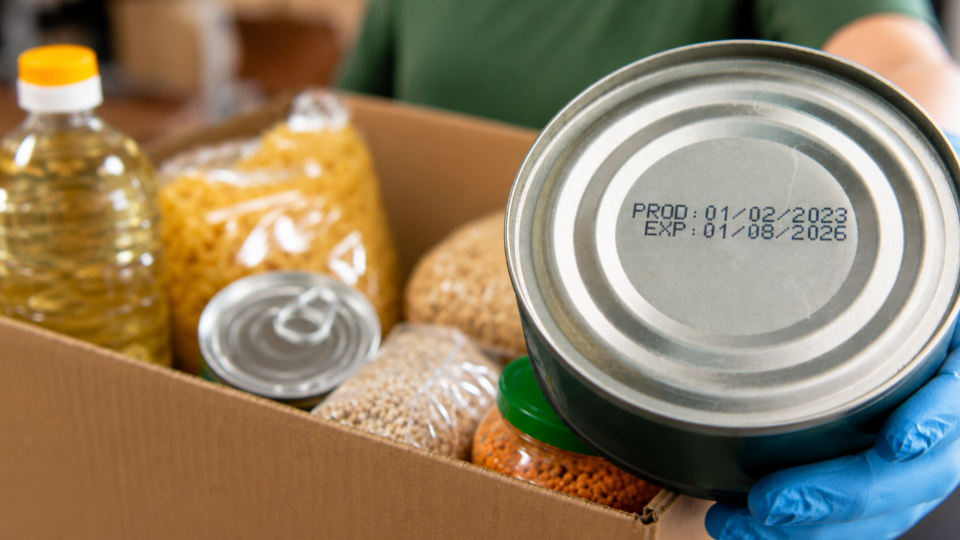
The document defines conditions under which products can be transferred for charitable activities even after the expiration of the minimum shelf life, provided this does not pose health risks to humans.
Before such redistribution, the market operator must assess product safety considering:
- shelf life;
- integrity of packaging;
- transportation and storage conditions;
- organoleptic characteristics;
- ensuring traceability of products of animal origin.
These provisions aim to simultaneously reduce food waste and guarantee the safety of products transferred to charitable organizations.
New rules on food irradiation introduced
The bill also contains a completely new section dedicated to the use of ionizing radiation during food processing.
It is envisaged that such activity can be carried out only with the appropriate license in the field of nuclear energy use.
For market operators, detailed requirements are established regarding:
- keeping special accounting records;
- documenting each batch of products;
- dosimetric control;
- annual reporting to the competent authority;
- state accounting of enterprises using food irradiation technologies.
In addition, the competent authority must annually publish information on the results of state control of such market operators and the application of relevant technologies.
What the alternative bill No. 15058-1 proposes
The alternative bill pursues the same strategic goal — harmonization of Ukrainian legislation with EU law — but proposes different approaches to implementing certain provisions.
The document is also intended to eliminate the European Commission's remarks, implement the EU acquis provisions, close existing legal regulation gaps, and create legislative grounds for adopting necessary subordinate acts, which will facilitate the negotiation process for Ukraine's accession to the EU.
At the same time, the authors of the alternative draft propose a different model of state registration of certain sanitary measure objects. In particular, it provides for abandoning state registration of novel foods and health claims, instead proposing to use authorization mechanisms according to EU legislation.
The document also clarifies approaches to maintaining state registers, revises certain requirements for dietary supplements, food flavorings, and enzymes, and contains a number of additional norms regarding export of certain products, state control, and regulation of land relations, which are not present in the main bill.
How the alternative bill No. 15058-1 differs
Despite the common goal — implementation of EU legislation in the field of sanitary and phytosanitary measures — the alternative bill No. 15058-1 proposes different mechanisms for implementing certain provisions.
One of the main differences is the revision of the state registration system for sanitary measure objects.
If the main bill proposes to maintain state registration of novel foods, health claims, and a number of other objects, the alternative document provides for a significant reduction of this list.
In particular, it proposes to retain state registration only for:
- dietary supplements;
- food flavorings;
- food enzymes.
Instead, novel foods, health claims, and certain other objects are proposed to be recognized through authorization mechanisms already used in the EU.
In addition, the alternative draft details the procedure for interaction between Ukrainian authorities and the European Food Safety Authority (EFSA) during the consideration of applications for authorization of health claims.
Certain provisions of the alternative document also concern:
- clarification of requirements for dietary supplements;
- maintenance of the state register of dietary supplements, flavorings, and enzymes;
- changes in approaches to state registration of sanitary measure objects;
- export of walnuts;
- regulation of certain land issues;
- state control;
- genetically modified organisms;
- handling of by-products of animal origin.
Comments from the Main Scientific and Expert Department
The Main Scientific and Expert Department of the Verkhovna Rada generally agrees on the need to harmonize Ukrainian legislation with EU law but draws attention to a number of legal and practical issues that require revision.
Regarding bill No. 15058, experts expressed dozens of comments on certain provisions.
In particular, they concern:
- alignment of new norms with the Laws of Ukraine "On Public Electronic Registers" and "On Information";
- procedures for maintaining state registers;
- state registration of novel foods;
- state registration of health claims;
- introduction of new risk assessment procedures;
- authorization procedures for certain sanitary measure objects;
- division of powers among central executive authorities;
- certain state control mechanisms.
The department also noted that some procedures are excessively detailed at the law level, although it would be more appropriate to define them in subordinate normative acts.
Comments on the alternative bill
In the conclusion on bill No. 15058-1, the Main Scientific and Expert Department notes that a significant part of its provisions coincide with bill No. 15058. Therefore, most previously expressed comments remain relevant for the alternative document as well.
At the same time, experts separately drew attention to new provisions absent in the base bill.
In particular, comments concern:
- amendments to the Land Code of Ukraine, which, according to the department, do not fall within the scope of regulation of the sanitary and phytosanitary measures bill;
- special procedure for approving export capacities for walnut production and circulation. Experts noted that the explanatory note lacks sufficient justification for the necessity of introducing such temporary rules until 2030;
- certain provisions regarding state control, which, according to the department, excessively detail procedures at the law level instead of regulating them by subordinate acts;
- new rules on the import of genetically modified organisms. The department noted that some proposed mechanisms may create ambiguous law enforcement and require additional justification considering biosafety issues.
Additionally, experts pointed out the need to align certain provisions with current legislation on state registers, waste management, veterinary medicine, state control, and other related areas.
Conclusion of the Committee on Ukraine's Integration into the EU
Following the review, the Committee on Ukraine's Integration into the European Union stated that bill No. 15058 aims to adapt Ukrainian legislation to the EU acquis and fulfill Ukraine's international legal obligations in the field of European integration. At the same time, the Committee emphasized that the document requires refinement and further analysis after receiving the European Commission's assessment.
Regarding the alternative bill No. 15058-1, the Committee concluded that it only partially meets Ukraine's international legal obligations in the field of European integration and EU law and also requires revision.
Thus, both legislative initiatives are considered an important stage in harmonizing Ukrainian legislation with EU law, but their final adoption will require taking into account the comments of the relevant parliamentary committee, the Main Scientific and Expert Department of the Verkhovna Rada, and the future assessment of the European Commission. This should ensure not only the formal fulfillment of Ukraine's European integration obligations but also the creation of an effective and coherent system of state regulation in the fields of sanitary and phytosanitary measures that meets European Union standards.
Subscribe to our Telegram channel t.me/sudua and to Google News SUD.UA, as well as to our VIBER and WhatsApp, Facebook page Facebook and Instagram Instagram to stay informed about the most important events.