Ukraine launches simplified customs clearance of goods and transitions to a digital customs system without queues and paperwork


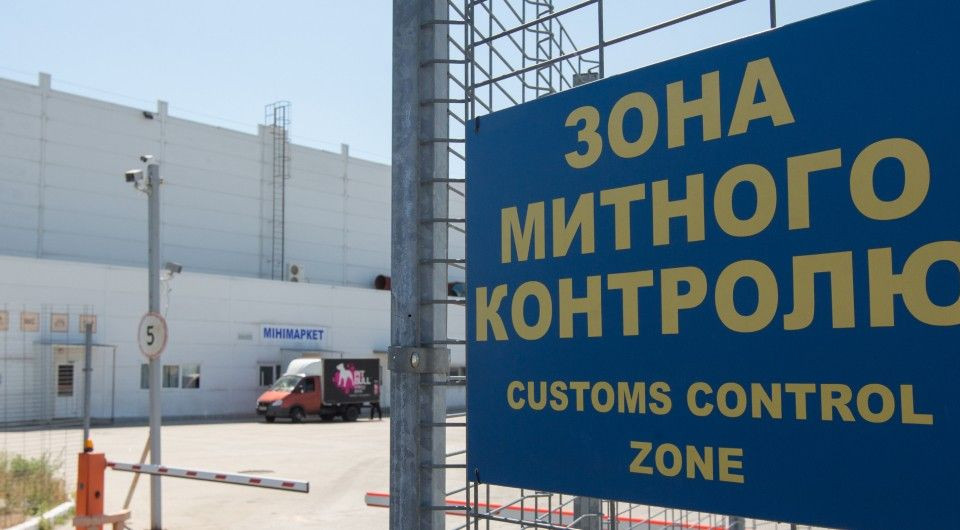










Ukraine is approaching the completion of a major customs reform. A draft of the new Customs Code No. 15295 has been registered in the Verkhovna Rada, which aims to align Ukrainian regulations with the norms of the European Union. This is not just about updating legislation but about changing the entire customs regulation system — so that it operates on the same principles as in EU countries.
The draft Customs Code establishes uniform, transparent, and modern rules for Ukrainian exporters and importers, opening new opportunities for trade with EU member states. The appearance of the new Customs Code draft is directly related to Ukraine's European integration commitments and preparation for accession to the European Union.
As noted by the Ministry of Finance, Ukraine must bring customs legislation into full compliance with EU law, in particular with the Union Customs Code and other acquis acts in the customs sphere. This is part of the negotiation process under Chapter 29 "Customs Union." The current system is already partially adapted to European standards but requires comprehensive updating and consolidation into a single code.
What the draft Customs Code provides
The draft Customs Code envisions a complete transition of customs affairs to electronic systems for data processing and exchange. All interconnected systems form a Unified Automated Information System of customs authorities.
Its creation and operation are ensured by the central authority implementing customs policy, including at the level of international cooperation. The implementation of electronic systems is carried out in accordance with legislation and with mandatory consultations with interested parties, observing cybersecurity and information protection requirements. The draft allows the use of both state and specially developed or purchased systems by customs authorities, which are assigned to the state. The development of individual solutions is carried out by a specialized unit of the customs authority.
For data exchange, the use of web services and integration with other state electronic resources, including the electronic services portal, is envisaged. All data confirmed by electronic systems are stored for at least 3 years unless otherwise provided by law.
It is also provided that before making an unfavorable decision, the customs authority is obliged to inform the applicant about its content, grounds, and provide a deadline for submitting explanations and evidence. The applicant may provide additional information, correct violations, or participate in the review. The customs authority considers the applicant's position within 30 days and, if justified, does not make an unfavorable decision.
At the same time, exceptions are provided when the right to be heard does not apply (certain control procedures, refusal to accept applications, special cases of customs authority decisions). The procedure will mostly be carried out electronically.
Oral declaration
The draft Customs Code stipulates that all goods placed under a customs procedure (except for the special free zone procedure) are subject to mandatory declaration by submitting a customs declaration. In certain cases, it may be submitted not only electronically but also by other means different from electronic data processing.
Ukrainian goods declared for export, transit, or external processing are under customs supervision from the moment the declaration is accepted until their export, forfeiture to the state, destruction, or invalidation of the declaration.
For certain categories of goods, simplification is provided — the possibility of submitting a customs declaration orally. This applies, in particular, to non-commercial goods, as well as goods in travelers' baggage provided their value does not exceed 1000 euros and 1000 kg.
Simplified declaration is provided for goods of insignificant value arriving in postal or express shipments. Such goods may be processed under a simplified declaration with a special or reduced data set if they are not excisable and are not subject to prohibitions or restrictions. For postal shipments, a limit on the total value is also set — up to the equivalent of 1000 euros within one dispatch per person.
In particular, foreign goods that were previously exported as Ukrainian and return to the customs territory of Ukraine within three years may be exempted from import duty upon the declarant's application. This exemption also applies when only part of the previously exported goods is returned.
If benefits or reduced duty rates were applied to goods at the time of initial export, exemption upon return is possible only if they are used for the same intended purpose. In case of a change in purpose, previously paid duty is taken into account, but overpayment is not refunded.
The benefit is granted only if the goods are returned in the same condition as when exported, without changing the HS code, except for consequences of force majeure. Exemption or reduction of duty is applied based on supporting information provided by the declarant to the customs authority when releasing goods for free circulation.
Export and re-export
According to the draft Customs Code, Ukrainian goods exported outside the customs territory of Ukraine are subject to mandatory placement under the export customs procedure. In some cases, this procedure may also apply to goods already outside the customs territory, provided they are under customs control and based on Ukraine's international agreements.
For foreign goods exported from Ukraine, the re-export procedure applies by submitting the appropriate declaration. It can be used even if only part of previously imported goods is exported, as well as by a person other than the importer or in batches.
The draft provides a number of exceptions to the general declaration rules, including for goods in transit, in free zones, or in temporary storage.
It is established that an export or re-export declaration may be declared invalid if the goods were not actually exported, if there is no confirmation of export within 150 days, or if discrepancies are found between declared and actually presented goods.
It also provides for the possibility of submitting an export or re-export declaration retroactively in cases where goods were exported without proper declaration or changed their customs status.
READ ALSO: «Ukraine changes rules for importing fire-fighting equipment despite violations of agreements with the IMF»
Exemption from import duty for persons relocating to Ukraine
Exemption from import duty for personal belongings of citizens who change their permanent residence from another country to Ukraine.
Personal belongings include, in particular, household items, furniture, vehicles for personal use, bicycles, domestic and riding animals, as well as certain professional tools for scientific or artistic activities. The property must not show signs of commercial use.
The exemption applies provided that the property was owned and used by the person abroad for at least six months before moving, and the person lived outside Ukraine for at least 12 months. The property must be imported within 12 months after obtaining the document granting permanent residence in Ukraine and may be imported in several batches.
At the same time, the benefit does not apply to alcoholic beverages, tobacco products, commercial vehicles, and goods for trade or professional activities (with some exceptions).
The draft also establishes a restriction: within 12 months after importing such property, it cannot be sold, transferred, or alienated without notifying the customs authority. In case of early alienation, import duty must be paid.
Additionally, it is possible to obtain exemption even before formalizing the right to permanent residence in Ukraine, provided appropriate guarantees are given and a commitment to submit supporting documents within six months.
The draft new Customs Code provides that most of its provisions will come into force on December 1, 2027. At the same time, certain provisions related to combating smuggling and the activities of a specialized law enforcement unit will take effect only after the relevant amendments to the Criminal Procedure Code and other laws come into force.
From the day the new code comes into force, the current Customs Code of Ukraine will become invalid.
Subscribe to our Telegram channel t.me/sudua and to Google News SUD.UA, as well as to our VIBER and WhatsApp pages on Facebook and Instagram to stay informed about the most important events.