The Supreme Court annulled the decisions awarding the family of a serviceman a payment of 15 million UAH


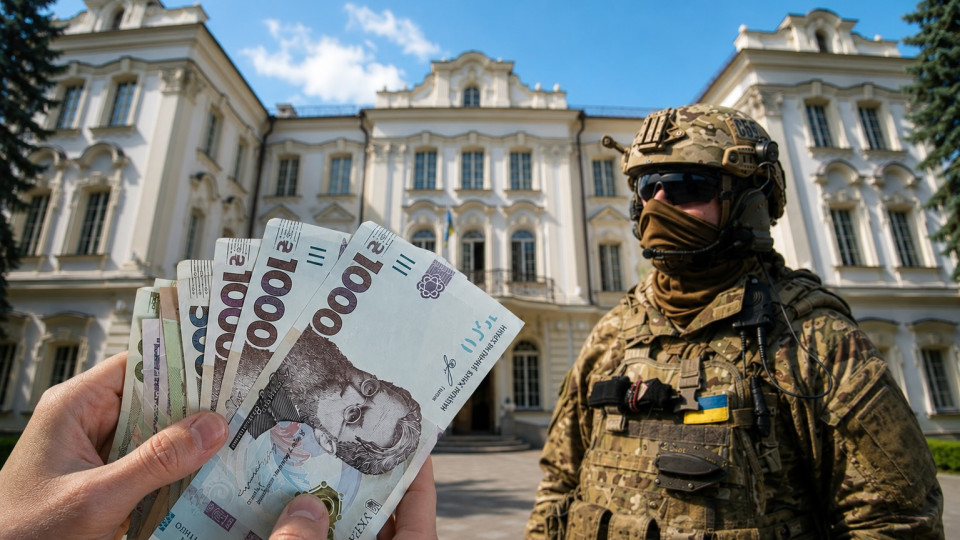










The right to a one-time financial aid (OFA) in the amount of 15 million UAH according to the Cabinet of Ministers Resolution No. 168 formally arises in the event of the death of a serviceman while defending the Fatherland. At the same time, the most controversial issue remains how to act when death did not result from a direct combat injury but from an illness that developed during the performance of military duty?
In practice, in such situations, the decisive factor is the wording in the conclusion of the post-mortem military medical commission: if the conclusion states that death is related to military service, the family of the deceased is entitled only to the payment under Cabinet Resolution No. 975 (in the amount of 750 times the subsistence minimum). If death is related to the defense of the Fatherland, a one-time financial aid of 15 million UAH is assigned under Resolution No. 168.
Case No. 620/10029/24 became one of the most complex cases of administrative justice in Ukraine under martial law. At its core is a crucial legal question: does the concept of "death," used in the Cabinet of Ministers of Ukraine Resolution No. 168, cover cases of natural death of a serviceman if such death occurred directly during the performance of duties to protect the independence and territorial integrity of Ukraine?
This dispute passed through all judicial instances: from satisfying the claims by courts of first and appellate instances to a fundamentally different legal conclusion by the Supreme Court. Particular attention is paid to separate opinions of the judges of the Grand Chamber, who disagreed with the final decision and proposed an alternative interpretation of Resolution No. 168 and the correlation of its provisions with the principles of social protection of servicemen.
Circumstances of the case: death during the performance of a combat mission
A major served in the military under martial law and participated in tasks to defend the independence and territorial integrity of Ukraine.
According to medical documents, the cause of death was acute hepatic-renal failure. At the same time, the official investigation established that at the time the illness occurred, the serviceman was performing a combat mission.
The military medical commission concluded that the illness that caused the major's death, as well as the death itself, were related to the defense of the Fatherland. This conclusion became the key basis for the family members—parents, wife, and minor son—to apply for the one-time financial aid of 15 million UAH provided by the Cabinet of Ministers of Ukraine Resolution No. 168.
Literal interpretation of Resolution No. 168
The Ministry of Defense of Ukraine refused the family the one-time financial aid of 15 million UAH, instead offering the payment provided by Cabinet Resolution No. 975 (in the amount of 750 times the subsistence minimum).
The defendant's position was based on a literal interpretation of Resolution No. 168 as in force at the time of the serviceman's death. According to the Ministry of Defense, this resolution did not apply to cases of death due to illness, even if such illness was directly related to the defense of the Fatherland. The right to increased one-time aid of 15 million UAH, according to the Ministry, arose only in the event of the death of a serviceman or his death due to wounds, concussion, injury, or disability received during the performance of military service duties.
Case progress
The Chernihiv District Administrative Court and the Sixth Administrative Court of Appeal disagreed with this approach and satisfied the family's claims.
The courts reasoned that the serviceman was directly performing a combat mission, and the military medical commission established a causal link between his death and the defense of the Fatherland. Under these circumstances, the courts applied a teleological interpretation of Resolution No. 168, concluding that after the start of full-scale aggression, the legislator intended to ensure an increased level of social protection for the families of all servicemen who gave their lives defending Ukraine, regardless of whether death resulted from combat injury or from illness directly related to the performance of combat missions.
At the same time, the authorized body refused to assign the payment, which became the basis for further judicial dispute regarding the interpretation of the concept of "death" under Resolution No. 168 and the limits of its application to cases of servicemen's deaths from illnesses related to military service.
Position of the Supreme Court
The Judicial Chamber for the consideration of cases on the protection of social rights of the Cassation Administrative Court within the Supreme Court on June 16, 2026, annulled the decisions of the lower courts and adopted a new ruling denying the claim.
The Supreme Court based its decision on a literal and systematic interpretation of the regulatory framework.
The Court emphasized the independent legal significance of the concepts of "death" and "death due to illness." In its opinion, the term "death," used in Resolution No. 168, does not cover any case of death of a serviceman during martial law or the performance of combat missions.
The Supreme Court also noted that Resolution No. 168 establishes an exhaustive list of grounds for assigning one-time financial aid in the increased amount of 15 million UAH. Death due to illness is not included in this list unless such illness is a consequence of wounds, concussion, injury, or disability received during the performance of military service duties.
Moreover, the Court stressed that the provisions of Resolution No. 168 cannot be interpreted in isolation but must be applied in connection with the Law of Ukraine "On Social and Legal Protection of Servicemen and Their Families" No. 2011-XII, which distinguishes the legal grounds for the payment of various types of one-time financial aid.
Separately, the Supreme Court drew attention to the financial and legal aspect of the dispute. According to the Court, an expanded interpretation of the provisions of Resolution No. 168 and extending its application to all cases of servicemen's deaths related to the defense of the Fatherland, regardless of the immediate cause of death, would effectively mean expanding the circle of budget payment recipients beyond the regulatory framework established by the Cabinet of Ministers of Ukraine.
Separate opinions of judges: between literal interpretation and the principle of social protection
The Supreme Court's ruling was not unanimous. Five judges of the panel disagreed with the majority's conclusions and proposed an alternative approach to interpreting Resolution No. 168.
Primarily, the authors of the separate opinions noted the absence in legislation of a clear distinction between the concepts of "death" and "death" for the purposes of assigning one-time financial aid. In their opinion, normative acts do not define these categories, and therefore the court should not, through interpretation, effectively establish new legal criteria not explicitly provided by the legislator.
Additionally, the judges emphasized the need to ensure equal social protection for the families of servicemen who lost their lives during the performance of the same combat mission. In their view, from the standpoint of the purpose of Resolution No. 168, there is no fundamental difference between a serviceman who died as a result of combat injury and one whose death occurred due to illness directly related to the performance of combat missions.
The separate opinions also refer to the further evolution of legislation. In particular, changes introduced by laws No. 3621-IX and No. 4546-IX, according to the authors, indicate the legislator's intention to ensure a uniform approach to the payment of one-time financial aid to the families of all servicemen who died or passed away while defending Ukraine.
Moreover, the judges addressed the constitutional dimension of the dispute. They proceeded from the fact that Article 17 of the Constitution of Ukraine imposes on the state the obligation to ensure special social protection for servicemen and their family members. In their opinion, this constitutional guarantee should be taken into account when interpreting the provisions of Resolution No. 168 in cases where the regulatory framework allows ambiguous understanding.
Impact on practice
The ruling in case No. 620/10029/24 is significant not only for the parties to the dispute but also for shaping further administrative practice regarding the application of Cabinet of Ministers of Ukraine Resolution No. 168. To date, the Supreme Court has formed an approach according to which the provisions of this resolution are subject to literal interpretation, and the list of grounds for payment of one-time financial aid in the amount of 15 million UAH is not subject to extended interpretation.
At the same time, the presence of several separate opinions of the Grand Chamber judges indicates that the issue does not have a definitive resolution even within the Supreme Court. This also demonstrates the existence of different approaches to the correlation between the literal interpretation of Resolution No. 168 and the constitutional principle of special social protection of servicemen and their families. Although the majority ruling is currently final, the presence of extensive separate opinions referring to new laws and constitutional principles creates a roadmap for future changes in practice in favor of the families of servicemen who died from illnesses while defending the Fatherland.
Subscribe to our Telegram channel t.me/sudua and to Google News SUD.UA, as well as to our VIBER and WhatsApp, Facebook page and Instagram account to stay informed about the most important events.