The Territorial Recruitment and Social Support Centers Cannot Ignore the Law on Military Duty: The Supreme Court Explained When the Status "Removed" Actually Means "Excluded" from the Register












The introduction of the Unified State Register of Conscripts, Military Liable Persons, and Reservists (AIAS "Oberih") and the Reserve+ application highlighted the problem of discrepancies between paper military registration documents and electronic data. One of the important issues revolves around the legal consequences of actions taken by the Territorial Recruitment and Social Support Centers (formerly military commissariats) in the early 2000s. Case No. 320/29761/25 sheds light on the problem of thousands of citizens trapped under the status "military liable," although they considered themselves excluded from the register.
A citizen appealed to the court due to the failure to enter information about his exclusion from military registration into the "Oberih" register.
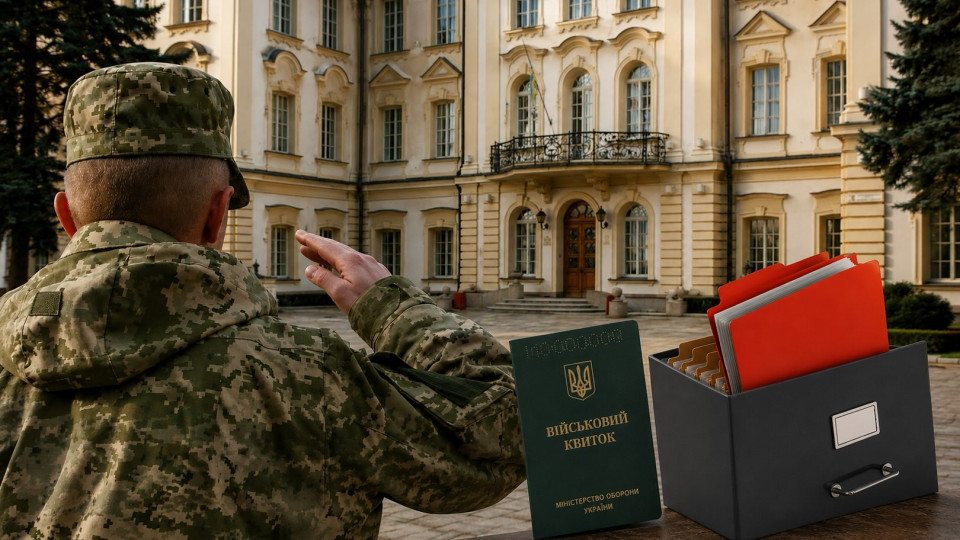
Despite the entry in the temporary certificate about removal from the register due to health reasons, he continued to be shown as military liable in the Reserve+ application. In 2001, the plaintiff was issued a temporary certificate containing the entry: Removed from military registration according to Article 37, paragraph 6.3 of the Law of Ukraine "On Military Duty and Military Service" dated 04.04.2006.
The plaintiff insisted that the entry actually confirmed his exclusion from military registration, while the Territorial Recruitment and Social Support Centers considered that "removal" and "exclusion" are different legal procedures with different consequences.
Reasons of the courts of first and appellate instances
The Kyiv District Administrative Court and the Sixth Administrative Court of Appeal denied the claim.
It was noted that Law No. 2232-XII clearly distinguishes "removal," which allows for the possibility of re-registration, and "exclusion," meaning a complete loss of military liable status.
Since the term "removed" was used in the certificate, the courts decided that there were no grounds for "exclusion," regardless of the cited articles of the law.
The courts relied on the Supreme Court ruling dated 21.05.2025 in case No. 280/2880/24, which also emphasized the difference between these concepts.
Additionally, the plaintiff tried to secure the claim by prohibiting the Territorial Recruitment and Social Support Centers from taking any mobilization actions against him until the case was resolved, but the appeal court refused, citing the measure as inappropriate to the subject of the dispute.
Substance vs Form: The Supreme Court's Position
The Supreme Court by its ruling dated June 9, 2026 overturned the decisions of the lower courts and sent the case for a new hearing. The court concluded that the lower courts prematurely denied the claim without examining all the circumstances of the case.
The ruling states that the entry in the military registration document contains an internal contradiction. On one hand, it uses the phrase "removed from military registration," but on the other hand, it refers to paragraph 3 of part six of Article 37 of the Law of Ukraine "On Military Duty and Military Service" as it was in force at that time. This provision regulated grounds for exclusion from military registration, including unfitness for military service due to health reasons.
The Supreme Court emphasized that Territorial Recruitment and Social Support Centers do not have the right to independently determine the type of registration action if the law directly links a specific legal basis with a particular legal consequence. Therefore, the mere presence of the word "removed" in the document is not sufficient grounds to conclude that the person was not excluded from military registration.
Moreover, the court noted that the lower courts mistakenly limited themselves to a literal interpretation of a single phrase in the record. Instead, they should have clarified what legal event actually occurred in 2001–2005, on what legal basis the corresponding entry was made, and whether it corresponded to the grounds for exclusion from military registration.
The Supreme Court also stressed that the principle of legal certainty requires the content of an individual act to correspond to its legal basis. Ignoring the courts of the reference to the specific legal norm indicated in the military registration document indicates incomplete investigation of the case circumstances and contradicts the requirements of the Code of Administrative Procedure of Ukraine for comprehensive and full examination of evidence.
The Supreme Court was guided by Articles 19 and 65 of the Constitution of Ukraine and analyzed Article 37 of Law No. 2232-XII in its various versions:
- Part 5 of Article 37 — regulates removal from registration (conscripts, military liable persons, reservists).
- Part 6 of Article 37 — defines grounds for exclusion (death, loss of citizenship, unfitness).
The Supreme Court emphasized that legal certainty requires that the wording in the military registration document correspond to the legal basis for its entry.
This decision demonstrates the legislatively defined essence of administrative justice — the review of not only the form but also the substance of government actions. It is an important step towards restoring trust in state registers by ensuring their compliance with the real legal status of a person. Errors or inaccuracies in the acts of the Territorial Recruitment and Social Support Centers should not lead to negative consequences for citizens.
Subscribe to our Telegram channel t.me/sudua and to Google News SUD.UA, as well as to our VIBER and WhatsApp, Facebook page Facebook and on Instagram to stay informed about the most important events.


Popular news