How to Check if Child Support is Used in the Child's Interest: When the Payer Can Request an Inspection


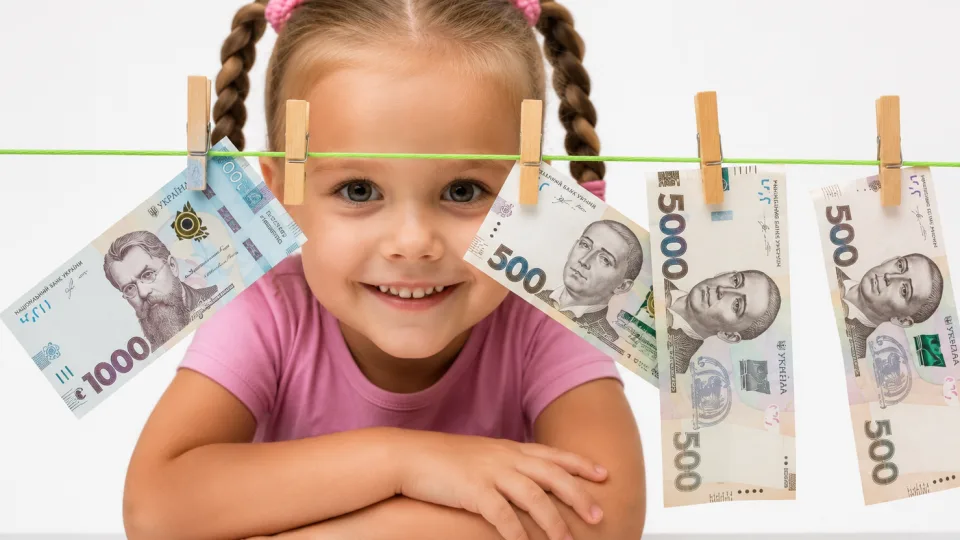










The Family Code of Ukraine stipulates the obligation of parents to support their child until they reach adulthood by paying child support. At the same time, the law establishes that these funds must be used exclusively to meet the child's needs. If the payer believes that the child support is being spent not for its intended purpose, they may apply to the guardianship and custody authority with a request for an inspection.
As previously reported by the Judicial and Legal Newspaper, the minimum guaranteed amount of child support for one child is at least 50% of the subsistence minimum for a child of the corresponding age. Currently, this is 1,408.50 UAH for a child under 6 years old and 1,756 UAH for a child aged 6 to 18 years.
Child support belongs to the child
According to part one of Article 179 of the Family Code of Ukraine, child support received for a child is the property of the child. One of the parents or another legal representative, in whose name the support is paid, manages it exclusively for its intended purpose — in the interests of the child.
However, the law does not contain an exhaustive list of expenses for which child support may be used. At the same time, it must ensure the proper maintenance of the child.
In particular, funds may be used for food, clothing and footwear, medical treatment, purchase of medicines, payment for education, clubs, sports sections, development of the child's abilities, as well as creating proper living conditions.
At the same time, the legislation does not require the recipient of child support to report to the payer on every purchase or keep all receipts. However, if there are grounds to believe that the funds are not being spent in the child's interest, the payer may apply to the guardianship and custody authority.
In particular, part one of Article 186 of the Family Code of Ukraine provides that control over the targeted use of child support is exercised by the guardianship and custody authority through inspection visits to the recipient of child support. Upon the payer's request, who has no arrears in child support payments, the guardianship and custody authority conducts an unscheduled inspection visit. At the same time, such inspections may be conducted no more than once every three months, and the procedure for their implementation is determined by the central executive authority responsible for state policy in the field of adoption and child rights protection.
How the inspection is conducted
The procedure for the guardianship and custody authorities to control the targeted spending of child support on a child, approved by the order of the Ministry of Social Policy of Ukraine dated November 15, 2018, No. 1713, regulates the conduct of inspection visits. During the inspection, living conditions, the provision of the child's needs are assessed, and information may be requested from educational and healthcare institutions, among others. Receipts, certificates, and other documents to confirm the targeted use of funds may be provided by the child support recipient solely at their own discretion and if available.
According to paragraph 3 of the Procedure, the application is submitted to the guardianship and custody authority at the place of residence of the child support recipient. Such authorities include district state administrations, executive bodies of village, settlement, and city councils, as well as child services that ensure the inspection.
In particular, the application must include a calculation of child support arrears for the last 12 months if collection is enforced. If child support is paid voluntarily, the payer must provide documents confirming the payments. Information about the place of residence of the child support recipient must also be indicated.
According to paragraph 5 of the Procedure, the inspection is conducted no more than once every three months.
Additionally, the guardianship and custody authority has the right to refuse the inspection if the payer has arrears in child support payments. This provision aims to prevent abuse of the right to inspection by persons who themselves do not fulfill their obligation to support the child.
According to paragraphs 8–10 of the Procedure, during the inspection, guardianship and custody authority employees may visit the child's place of residence, assess living conditions, provision of necessary items, as well as the child's physical and psychological state.
If necessary, specialists may talk with the child considering their age and level of development. Furthermore, the guardianship authority has the right to contact educational institutions, medical facilities, social protection bodies, social service centers, and other institutions to obtain information necessary for an objective assessment of the situation.
The subject of the inspection is not individual purchases or the presence of receipts, but whether the rights and needs of the child are met and whether the child support is used specifically in their interest.
The inspection must be completed within 30 calendar days from the date of receipt of the application.
If there is a need to obtain additional information or conduct additional measures, the period may be extended but not more than up to 45 calendar days.
The inspection visit is conducted by the child services at the place of residence of the child support recipient. If necessary, a psychologist, social pedagogue, social work specialist, and other officials working with families and children may be involved. At the same time, the inspection must be conducted by at least two officials.
After the inspection is completed, the guardianship and custody authority prepares the corresponding conclusion within 5 days, copies of which are sent to both the payer and the recipient of child support.
What happens if misuse of child support is confirmed
If during the inspection it is established that child support is used not for its intended purpose, the payer may file a lawsuit to reduce the amount of child support or to transfer part of it to the child's personal account. This right is provided by part two of Article 186 of the Family Code of Ukraine.
In such a case, the court, taking into account all circumstances of the case and primarily the best interests of the child, may decide to reduce the amount of child support or to transfer part of the funds to the child's personal bank account.
At the same time, the conclusion of the guardianship authority does not automatically change the procedure for paying child support. It is one of the pieces of evidence that may be used during court proceedings.
Thus, Ukrainian legislation grants the child support payer the right to control the targeted use of funds, but such control is exercised exclusively through the guardianship and custody authority and, if necessary, the court. The main purpose of this mechanism is to protect the rights of the child and ensure that funds intended for their maintenance are indeed used for their needs.
It was previously reported that lack of official employment does not exempt one of the parents from the obligation to support the child. If the child support payer is unemployed, registered at the employment center, or has no official income, this is not a reason to stop child support accrual. Restrictions may be applied to the debtor, including a ban on traveling abroad, restrictions on driving vehicles, seizure of property and funds, and even criminal liability.
Subscribe to our Telegram channel t.me/sudua and to Google News SUD.UA, as well as to our VIBER and WhatsApp pages on Facebook and Instagram to stay informed about the most important events.