13 years of living together do not guarantee inheritance rights: The Supreme Court clarified the rights of cohabitants













The Supreme Court confirmed that living together as a family without a state-registered marriage does not grant the right to inherit property as one of the spouses. If a person claims inheritance, they must act within the rules of the order of succession established by the Civil Code of Ukraine or file claims to change it. This conclusion was reached by the Cassation Civil Court within the Supreme Court in the ruling dated January 2, 2026, in case No. 308/4969/24.
According to the case, a man applied to the court claiming that he had lived with a woman as one family for over 13 years without registering their marriage. According to him, they shared a household, were married in a religious ceremony, jointly paid a mortgage loan for an apartment registered to the cohabitant, and he also financed her treatment during a serious illness.
After the full-scale war began, the man was mobilized into the Armed Forces of Ukraine. While he was serving, the woman died. Her brother applied to the notary within the established period to accept the inheritance, and after returning from service, the plaintiff found out he had no access to the apartment and filed a lawsuit demanding recognition of his ownership rights to the apartment by inheritance. The plaintiff noted that after the cohabitant's death, he took care of organizing the burial. He also referred to witness testimonies, a certificate of cohabitation, and believed that the apartment was their joint shared property since the mortgage was paid during their cohabitation.
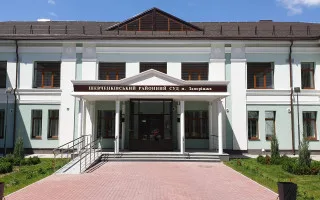
The Uzhhorod District Court denied the claim. The court reasoned that living as one family without marriage is not a basis for inheritance rights as a first-priority heir under Article 1261 of the Civil Code of Ukraine. The appellate court agreed with these conclusions.
Why the Supreme Court refused
The Supreme Court reminded that the inheritance includes all rights and obligations belonging to the decedent at the time of opening the inheritance and not terminated due to death according to Article 1218 of the Civil Code of Ukraine. Heirs by will or by law can be individuals alive at the time of inheritance opening, as well as conceived during the decedent's life and born after death, as provided by Articles 1222 and 1223 of the Civil Code of Ukraine.
The court noted that in the absence of a will, inheritance is carried out by law in order of priority. The first priority heirs are the decedent's children, the surviving spouse, and parents according to Article 1261 of the Civil Code of Ukraine. The second priority includes siblings, grandparents on both paternal and maternal sides according to Article 1262 of the Civil Code of Ukraine.
At the same time, an heir who permanently lived with the decedent at the time of inheritance opening is considered to have accepted the inheritance automatically if they did not renounce it within six months. This is provided by part three of Article 1268 of the Civil Code of Ukraine. The court also emphasized that Article 1258 of the Civil Code establishes the principle of sequential inheritance: each subsequent priority acquires inheritance rights only if there are no heirs of the previous priority, they are excluded, do not accept, or renounce the inheritance.
The Supreme Court pointed out that Article 74 of the Family Code of Ukraine regulates property rights of a man and woman living as one family without registered marriage. It provides that property acquired during such cohabitation may belong to them as joint shared property unless otherwise established by a written agreement. However, this norm applies only if neither party is in another registered marriage.
In particular, the Supreme Court has repeatedly stated that living as one family without marriage is a special basis for the emergence of property rights and obligations between them, including joint shared ownership of property acquired during such cohabitation. At the same time, to apply Article 74 of the Family Code, it must be established that stable family relations typical of spouses actually existed between the persons and that they were not in another marriage.
The Supreme Court emphasized that recognition of ownership rights to inherited property in court is an exceptional protection method used only when there are obstacles to formalizing inheritance through a notary. At the same time, a claim for recognition of rights may be an independent way to protect civil rights, including inheritance rights.
Meanwhile, the Court noted that when resolving inheritance disputes involving persons who lived with the decedent as one family for at least five years before inheritance opening, courts should consider Article 3 of the Family Code of Ukraine, according to which a family consists of persons who live together, share a household, and have mutual rights and obligations.
At the same time, the Supreme Court stressed that living as one family without registered marriage alone does not grant the status of a first-priority heir under Article 1261 of the Civil Code of Ukraine. Persons who lived with the decedent as one family for at least five years can inherit only in the fourth priority under Article 1264 of the Civil Code if there are no heirs of previous priorities or other legal grounds for inheritance acquisition exist.
Assessing the circumstances of this case, the Supreme Court noted that the plaintiff requested recognition of ownership rights to the apartment, claiming to be a first-priority heir as the deceased's husband since they lived as one family without registered marriage for a long time.
However, the Court concluded that living as one family without state-registered marriage alone does not create inheritance rights in the first priority. Even establishing the fact of living as one family for over five years would not have given the plaintiff inheritance rights in this case because within the legally established six-month period, a second-priority heir—the deceased's brother—applied to accept the inheritance.
Under these circumstances, the Supreme Court agreed with the conclusions of the lower courts, dismissed the cassation appeal, and left the decisions of the courts of first and appellate instances unchanged.
Subscribe to our Telegram channel t.me/sudua and to Google News SUD.UA, as well as to our VIBER and WhatsApp, our pages on Facebook and Instagram to stay updated on the most important events.