The Constitutional Court of Ukraine Published a Decision on Guarantees of Appellate Appeal for the Protection of Property Rights at the Pre-Trial Investigation Stage


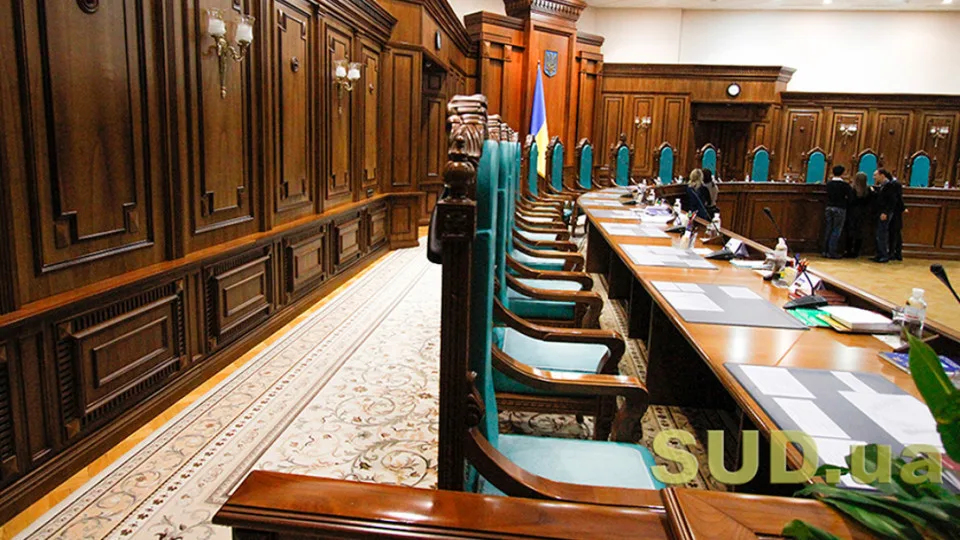










As previously reported by the Judicial-Legal Newspaper, on 21 July, the Second Senate of the Constitutional Court of Ukraine, at a plenary session, considered the case and adopted Decision No. 8-r(II)/2026. This decision concerned the constitutional complaint of Serhii Volodymyrovych Hudyrenko regarding the compliance of part three of article 307 and parts one and two of article 309 of the Criminal Procedure Code of Ukraine (hereinafter – the Code) with the Constitution of Ukraine.
The reporting judge for this case was Oleh Pervomaiskyi.
According to part three of article 307 of the Code, "the ruling of the investigating judge following the consideration of a complaint against a decision, action, or inaction of an investigator, inquirer, or prosecutor cannot be appealed, except for rulings refusing to satisfy a complaint against a decision to close criminal proceedings; complaints against the refusal of the investigator or prosecutor to satisfy a motion to close criminal proceedings on grounds specified in paragraph 91 of part one of article 284 of this Code; on cancellation of a suspicion notice; and refusal to satisfy a complaint against a suspicion notice."
Article 309 of the Code defines the rulings of the investigating judge that may be appealed during the pre-trial investigation. It establishes a list of such rulings (part one) and also states that "during the pre-trial investigation, rulings of the investigating judge refusing to satisfy a complaint against a decision to close criminal proceedings or a decision of the investigator or prosecutor refusing to satisfy a motion to close criminal proceedings on the grounds of paragraph 91 of part one of article 284 of this Code, on cancellation of a suspicion notice or refusal to satisfy a complaint against a suspicion notice, return of a complaint against a decision, action, or inaction of the investigator or prosecutor, or refusal to open proceedings on it may also be appealed in appellate order" (part two).
The Constitutional Court of Ukraine analysed the provisions of part three of article 307 and parts one and two of article 309 of the Code. This analysis focused on whether a lawful purpose was established for restricting the right to appeal, in appellate order, an investigating judge’s ruling during the pre-trial investigation. Specifically, the Court considered rulings refusing to satisfy a complaint about the inaction of an investigator or prosecutor in failing to return temporarily seized property in accordance with article 169 of the Code. The Court emphasised the following:
The state has discretion in regulating criminal procedural relations by law, particularly concerning the realisation of the right to appeal procedural judicial decisions that resolve specific issues in criminal proceedings. When regulating these relations, the Verkhovna Rada of Ukraine must adhere to the values, principles, and provisions of the Constitution of Ukraine.
The state, in fulfilling its primary duty — the affirmation and protection of human rights and freedoms — and in upholding the effectiveness of the rule of law, must not only refrain from applying excessive means of interference with property rights and other bona fide possession. It must also take appropriate measures to ensure that everyone under its jurisdiction can freely and at their own discretion exercise these rights, taking into account the limits established by law. Such legal provisions must comply with the principle of legal certainty, aim to achieve a lawful purpose, and be proportionate.
A person whose property has been temporarily seized, and for whom there is no investigating judge’s ruling on the arrest of the property under the Code, has the right to file a complaint with the investigating judge. This complaint addresses the decision, action, or inaction of the investigator or prosecutor consisting in the non-return of temporarily seized property in accordance with article 169 of this Code. If the investigating judge issues a ruling refusing to satisfy such a complaint, the person has the right to object to this ruling during the preparatory proceedings in court.
However, a person’s ability to exercise the right to object to an investigating judge’s ruling, which refuses to satisfy a complaint about the inaction of an investigator or prosecutor in failing to return temporarily seized property under article 169 of the Code, depends on the completion of the pre-trial investigation. It does not depend on the decisions and actions of the person concerned. According to the Code, a person whose property has been temporarily seized will only be able to file an objection against the investigating judge’s ruling after the pre-trial investigation is completed.
During this entire period, the person whose property has been temporarily seized under the provisions of the Code is also deprived of the powers of possession, use, and disposal, as guaranteed by article 41 of the Constitution of Ukraine.
Considering the above, the Constitutional Court of Ukraine believes that the components of the judicial control mechanism for the legality of interference with a person’s rights during the pre-trial investigation, established by paragraph 1 of part one of article 303 and part three of article 309 of the Code, where no person has been notified of suspicion, do not ensure effective and efficient protection of constitutional rights guaranteed by the Constitution of Ukraine.
The Constitutional Court of Ukraine concluded that part three of article 307 and parts one and two of article 309 of the Code contradict the provisions of part two of article 3, part one of article 8, parts one and three of article 41, parts one and two of article 55, and paragraph 8 of part two of article 129 of the Constitution of Ukraine.
Having examined the issues raised in the constitutional complaint, the Court found part three of article 307 and parts one and two of article 309 of the Criminal Procedure Code of Ukraine unconstitutional. This unconstitutionality applies to the extent that these provisions do not establish the right to appeal, during the pre-trial investigation, an investigating judge’s ruling refusing to satisfy a complaint about the inaction of an investigator or prosecutor in failing to return temporarily seized property in accordance with article 169 of this Code.
Part three of article 307 and parts one and two of article 309 of the Criminal Procedure Code of Ukraine, recognised as unconstitutional in this respect, shall cease to have effect from the day the Constitutional Court of Ukraine adopted this Decision.
Subscribe to our Telegram channel t.me/sudua, follow SUD.UA on Google News , and join us on VIBER, WhatsApp, Facebook and on Instagram to stay informed about the important events.


Popular news