A woman was not recognized as a family member of a deceased serviceman despite having a child together and cohabitation — the court considered the existing marriage


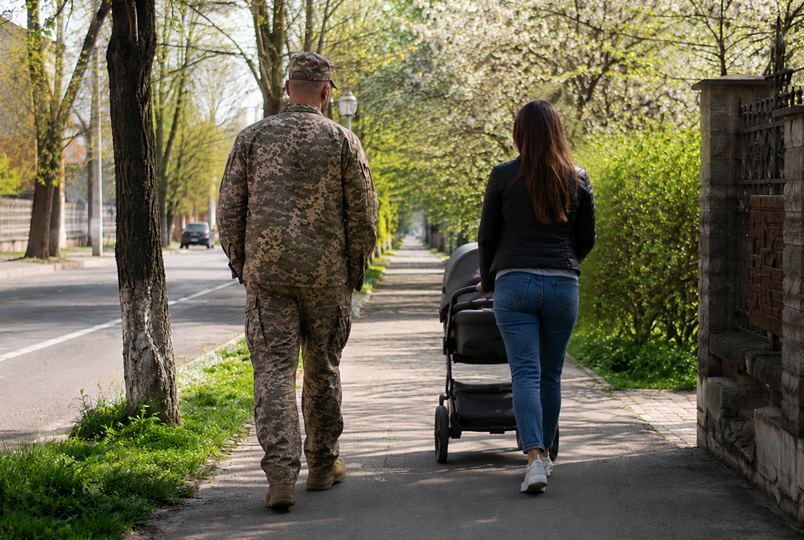










The Saksahanskyi District Court of Kryvyi Rih city, Dnipropetrovsk region, considered case No. 214/7675/24 filed by a woman seeking to establish the fact of living as one family without marriage registration with a deceased serviceman, to establish the fact of his separate residence from his official wife, and to recognize the plaintiff as a family member of the deceased. The court concluded there were no grounds to satisfy the claim and denied all the stated demands.
Essence of the case
The plaintiff stated that since September 2017 she had lived with the serviceman as husband and wife without registering the marriage, managed a joint household, and was effectively in a family relationship with him until his death during a combat mission in March 2022 near Sievierodonetsk. She indicated that at the beginning of their relationship, the serviceman was in a registered marriage but had effectively ended family relations with his wife and lived separately.
The plaintiff also referred to the fact that during their cohabitation they had a daughter, and the paternity of the deceased serviceman was established by a court decision. According to her, they could not register the marriage because the man was legally still married, and his wife did not agree to divorce. Therefore, the plaintiff asked to establish the fact of separate residence of the spouses since 2017, the fact of living as one family without marriage registration with the serviceman, and to recognize her as a family member of the deceased serviceman.
The case examined witness testimonies, documents regarding the parties' residence, materials about the birth of the common child, and the court decision establishing paternity. At the same time, it was established that on the day of the serviceman's death, his marriage with the official wife remained valid and had not been legally dissolved.
Position and conclusions of the court
The court noted that according to Articles 3 and 74 of the Family Code of Ukraine, to establish the fact of living as one family without marriage registration, it is necessary that the man and woman are not in any other registered marriage and that stable relations typical of spouses exist between them.
The court stated that legislation and the practice of the Supreme Court are based on the principle of monogamy. A woman and a man can simultaneously be in only one marriage, so the existence of a valid registered marriage excludes the possibility of establishing the fact of living as one family as husband and wife with another person. The court referred, in particular, to the legal conclusions of the Supreme Court in cases No. 691/1151/22 and No. 336/1978/23, according to which a necessary condition for establishing such a fact is the absence of persons being in any other marriage.
In the court's opinion, witness testimonies, photographs, and other provided evidence cannot be sufficient grounds to establish the fact of living as one family without marriage registration under circumstances where the deceased serviceman was in a valid registered marriage. The court emphasized that establishing such a fact would effectively create a situation of two simultaneous marriages, which contradicts the provisions of the Family Code of Ukraine.
Furthermore, the court pointed out that living as one family without marriage according to part two of Article 21 of the Family Code of Ukraine by itself is not a basis for the emergence of rights and obligations of spouses. The court also noted that at the time of the serviceman's death, the law defined an exhaustive list of persons entitled to a one-time monetary benefit in case of his death, which included parents, one of the spouses who had not remarried, minor children, and dependents of the deceased.
Separately, the court denied establishing the fact of separate residence of the serviceman and his official wife, noting that this circumstance alone does not create legal consequences for the parties to the dispute. The court also considered that the serviceman maintained contact with his wife and son, periodically visited them, provided financial support, and spent time with the child.
As a result of the case consideration, the court denied the claim in full.
Subscribe to our Telegram channel t.me/sudua and to Google News SUD.UA, as well as to our VIBER and WhatsApp, pages on Facebook and Instagram to stay informed about the most important events.