Remote interrogation without proper connection may be grounds for annulment of the decision: Supreme Court


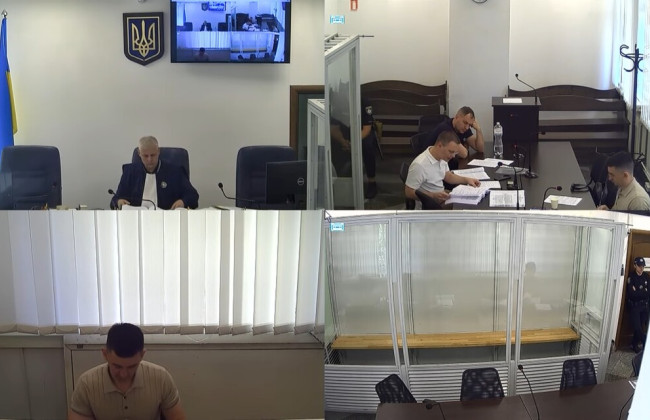










The issue of compliance with procedural guarantees during remote judicial proceedings becomes especially relevant in the context of active use of videoconferencing in criminal proceedings.
The panel of judges of the Second Judicial Chamber of the Cassation Criminal Court of the Supreme Court, in the ruling dated June 25, 2026, in case No. 758/7387/22, expressed a legal position regarding the legality of conducting a remote interrogation of the victim and the consequences of violating the defense's right to cross-examination.
Case circumstances
The Podilskyi District Court of Kyiv found a man guilty of committing a criminal offense under Part 1 of Article 121 of the Criminal Code of Ukraine and sentenced him to seven years of imprisonment.
The court established that on May 30, 2022, near a school building in Kyiv, the accused intentionally inflicted one stab wound to the victim's abdomen with a sharp object, causing a serious bodily injury dangerous to life at the moment of infliction.
The Kyiv Court of Appeal left the verdict unchanged.
In the cassation appeal, the defense lawyer stated that the appellate court significantly violated the requirements of the criminal procedural law.
In particular, during the repeated remote interrogation of the victim, the defense side could not hear his testimony and answers directly, and the presiding judge effectively paraphrased the content of the conversation heard via mobile phone. Additionally, the defense pointed out that the appellate court did not resolve contradictions in the local court's verdict regarding the nature of the victim's bodily injuries.
Position of the Supreme Court
The Supreme Court indicated that according to Part 4 of Article 336 of the Criminal Procedure Code of Ukraine, technical means and technologies used in remote judicial proceedings must ensure proper image and sound quality, adherence to the principles of publicity and openness of judicial proceedings, as well as information security.
Participants in criminal proceedings must be provided with the opportunity to hear and see the course of the trial, ask questions and receive answers, exercise other procedural rights granted to them, and fulfill procedural duties provided by this Code.
The court noted that from the examined video recording of the court session, it follows that the defense lawyer, who initiated the repeated interrogation of the victim, did not hear the testimony provided.
Similarly, the victim did not hear the defense's questions, and the defense lawyer, in turn, did not hear the answers. The presiding judge constantly repeated the defense lawyer's questions to the victim, and the victim's answers to the defense lawyer.
The Supreme Court emphasized that such interrogation of the victim did not provide the defense with the opportunity to conduct a full cross-examination, and the appellate court unjustifiably ignored this remark and continued the trial.
The court decided that in this proceeding, the remote interrogation of the victim under the given conditions did not allow the defense to exercise its right to cross-examination, which is a fundamental guarantee of a fair trial enshrined in Article 6 of the Convention for the Protection of Human Rights and Fundamental Freedoms and the Criminal Procedure Code of Ukraine.
Separately, the Supreme Court drew attention to another procedural violation.
The court noted that the defense emphasized that the local court, in the formulation of the charge recognized as proven, initially stated that as a result of the blow to the abdomen, the victim received a penetrating abdominal wound, but then concluded that the serious bodily injury the victim received was a "wound to the left chest," which was not charged against the accused.
The Supreme Court stated that in responding to these arguments, the panel of judges effectively agreed that the contested decision of the district court contains a contradiction, but as a result of the appellate review, did not eliminate it, although it had procedural authority to do so.
The court decided that considering the violations outlined, the contested ruling does not comply with the requirements of Article 370 of the Criminal Procedure Code. Since the appellate review was conducted with a significant violation of the criminal procedural law, the panel of judges does not review other arguments of the defense's cassation appeal.
The Supreme Court partially satisfied the defense's cassation appeal, annulled the ruling of the Kyiv Court of Appeal, and appointed a new appellate hearing.
The Court's legal position is that remote interrogation must provide the defense with a real opportunity to exercise the right to cross-examination. If due to technical conditions this right is effectively violated, it constitutes a significant violation of the requirements of the Criminal Procedure Code of Ukraine and grounds for annulment of the court decision.
Read additionally: when a violation of the procedure for examining evidence is significant: the Supreme Court's response.
Subscribe to our Telegram channel t.me/sudua and to Google News SUD.UA, as well as to our VIBER and WhatsApp, Facebook page Facebook and on Instagram to stay informed about the most important events.