Who Has the Right to Dismantle Illegally Installed Outdoor Advertising — Supreme Court Conclusion


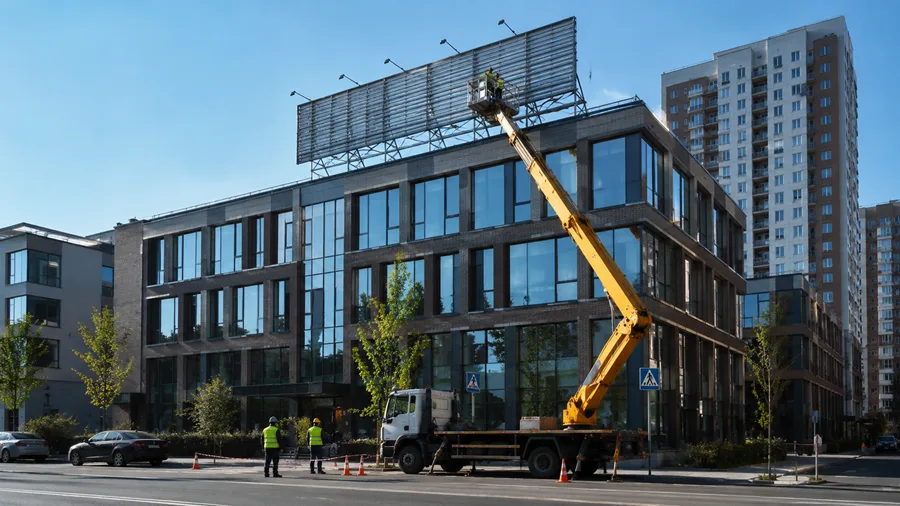










The placement of outdoor advertising in Ukraine is regulated by legislation, but in practice disputes often arise regarding the legality of installing advertising structures and the powers of the bodies that control this sphere. One of the key issues is who exactly has the right to demand the elimination of violations and the dismantling of advertising placed without proper permits or in violation of established rules. The legality of decisions made and the possibility of their further enforcement depend on the correct identification of the competent authority.
Such disputes have practical significance both for local self-government bodies and for business entities that place outdoor advertising.
The Supreme Court, in the course of considering one of the cases, expressed a legal position regarding the delimitation of powers in this area and the conditions under which measures for dismantling advertising structures may be taken.
Case Facts
A communal institution of the Odessa City Council filed a lawsuit with the administrative court demanding that a servicing cooperative dismantle a rooftop advertising structure with the inscription "KADORR" placed on a multi-apartment building in Odessa without a permit for outdoor advertising placement. The basis for the court claim was the failure to comply with the order of the Advertising Department of the Odessa City Council to eliminate the violation.
As established by the courts, in August 2022, employees of the communal institution, following a referral from the Advertising Department, recorded the placement of a rooftop advertising structure measuring 18×3×1 meters with the inscription "KADORR" without the appropriate permit. Based on the inspection results, a record was drawn up, after which the Advertising Department issued an order requiring the dismantling of the structure within five days. The order was received by the addressee but was not executed.
In response to the order, the cooperative stated that it was not the advertiser, manufacturer, or distributor of the advertisement, did not install the disputed structure, and did not engage in advertising activities. It also noted that it could not comply with the order because the record of the inspection was not attached, making it impossible to determine which structure was in question. Furthermore, the cooperative reported that another company was responsible for the comprehensive maintenance of the building, which was aware of the circumstances regarding access to the roof.
After the expiration of the period given for voluntary compliance with the order, the Advertising Department issued a directive to the communal institution to dismantle the structure. However, dismantling was not possible due to lack of access to the building's roof. A report on denial of access to the dismantling site was drawn up following the visit. These circumstances became the basis for the lawsuit demanding that the defendant be obliged to dismantle the illegally installed advertising structure.
Decisions of the Courts of First and Appeal Instances
The Odessa District Administrative Court denied the claim. The court concluded that the defendant did not take actions that would prevent the dismantling of the advertising structure. Additionally, the court noted that the communal institution did not prove it had the legal authority to file such claims against a legal entity that is not a subject of public authority.
The Fifth Administrative Court of Appeal amended the reasoning part of the decision but left the denial of the claim unchanged. The appellate court believed that the Advertising Department of the Odessa City Council exceeded its powers because, in its opinion, the issue of dismantling illegally installed advertising structures should be resolved by a specially authorized executive authority in the field of consumer rights protection — the Main Department of the State Consumer Service in the Odessa region. Therefore, the appeal to the court was considered premature.
Supreme Court Position
The Supreme Court noted that the subject of the dispute is the determination of the powers of the executive body of the city council regarding the dismantling of illegally installed advertising structures and the presence of delegated powers in the communal institution to file a lawsuit. The cassation court did not agree with the conclusions of the appellate court.
The Supreme Court emphasized that the Constitution of Ukraine guarantees local self-government, and local self-government bodies operate within the powers defined by law. The Law "On Local Self-Government in Ukraine" assigns to the executive bodies of city councils the organization of the improvement of settlements, control over its condition, as well as the issuance of permits for outdoor advertising placement. Means of outdoor advertising, according to the Law "On Improvement of Settlements," are elements of improvement; therefore, control over their placement also falls within the competence of local self-government bodies.
The court thoroughly analyzed the provisions of the Law "On Advertising," the Model Rules for the Placement of Outdoor Advertising approved by the Cabinet of Ministers Resolution No. 2067, as well as the Rules for the Placement of Outdoor Advertising in the City of Odessa. From the systemic analysis of these regulatory acts, the Supreme Court concluded that the executive body of the city council is the authority that issues permits for outdoor advertising placement, controls compliance with placement rules, issues orders to eliminate violations and directives for dismantling advertising structures, and the communal institution "ODESREKLAMA" organizes or carries out dismantling based on such directives.
The Supreme Court stressed that resolving the issue of dismantling illegally installed advertising structures does not fall within the powers of the State Consumer Service. The powers of this body relate to monitoring compliance with advertising legislation and applying liability measures, but the law does not grant it the right to decide on dismantling advertising structures. Therefore, the appellate court's conclusion about the exclusive competence of the State Consumer Service contradicts current legislation and the established practice of the Supreme Court.
The panel of judges also noted that these legal conclusions were already formulated by the Grand Chamber of the Supreme Court in the ruling dated November 2, 2021, in case No. 916/214/20 and have been repeatedly confirmed in subsequent Supreme Court decisions. There are no grounds to deviate from this practice, and therefore it should have been applied by the lower courts.
At the same time, the Supreme Court noted that during the case consideration, the courts did not establish a number of essential circumstances. In particular, they did not clarify who actually ensured the operation of the building and access to its roof, did not examine the legal relations between the cooperative and the company that provided comprehensive maintenance of the building, did not properly assess the status of this company, did not identify the person involved in installing the advertising structure, nor did they investigate the ownership of the inscription "KADORR." These circumstances directly affect the determination of the proper parties to the dispute, the content of the claims, and the correct application of the law.
Supreme Court Conclusions
The Supreme Court concluded that the appellate court mistakenly recognized the issue of dismantling illegally installed advertising as the exclusive competence of the State Consumer Service, whereas current legislation and the established practice of the Supreme Court indicate the presence of relevant powers in the executive bodies of local self-government and the communal institutions they create. At the same time, the cassation court noted that the lower courts did not fully and comprehensively investigate all factual circumstances of the case, which made it impossible to properly resolve the dispute. In view of this, the Supreme Court partially satisfied the cassation appeal, annulled the decisions of the courts of first and appellate instances, and sent the case back for a new trial to the court of first instance.
The Supreme Court emphasized that the legal regulation of outdoor advertising placement must be assessed comprehensively, taking into account the provisions of the Law "On Advertising," the Law "On Local Self-Government in Ukraine," the Law "On Improvement of Settlements," the Model Rules for the Placement of Outdoor Advertising, and local rules approved by the relevant local self-government body. It is precisely the combination of these regulatory acts that determines the procedure for issuing permits, controlling compliance with advertising placement rules, and the procedure for dismantling advertising structures installed in violation of the law.
The court noted that according to Article 16 of the Law "On Advertising," outdoor advertising placement in settlements is carried out exclusively on the basis of permits issued by the executive bodies of village, settlement, and city councils in the manner established by these bodies based on the Model Rules. Thus, the local self-government body is the entity that decides on granting or refusing a permit and also controls compliance with the legal requirements in this area.
The panel of judges pointed out that according to the Model Rules, the working body not only reviews applications for permits but also controls compliance with the procedure for placing outdoor advertising. If an advertising medium is installed without a permit or in violation of its conditions, the working body has the right to issue a requirement to eliminate violations within a specified period. In case of non-compliance, dismantling of the advertising medium is carried out according to the procedure established by the local self-government body.
The Supreme Court emphasized that these powers should not be equated with the control functions of the State Consumer Service. The territorial bodies of this agency exercise state control over compliance with advertising legislation, may apply sanctions provided by law, and hold offenders accountable, but are not authorized to decide on dismantling illegally installed advertising structures. For this reason, the Supreme Court recognized the appellate court's conclusion about the need to appeal to the State Consumer Service as erroneous.
Separately, the cassation court drew attention to its own established practice. In particular, it noted that a similar legal conclusion was already formulated by the Grand Chamber of the Supreme Court in the ruling dated November 2, 2021, in case No. 916/214/20. In that ruling, the Grand Chamber concluded that the issue of dismantling unauthorized advertising structures falls within the competence of local self-government bodies, which exercise relevant powers in the field of settlement improvement. The cassation court stated that there are no grounds to depart from this legal position.
At the same time, the Supreme Court concluded that the incorrect application of substantive law by the lower courts is not the only shortcoming in the case review. The court of first instance did not establish all the circumstances relevant to the correct resolution of the dispute, and the appellate court did not remedy these shortcomings. In particular, the courts did not investigate who actually had access to the building's roof, who maintained it, who installed the disputed advertising structure, and whether the defendant was connected with its operation. The relationship between the servicing cooperative and the company providing comprehensive maintenance of the building also remained unexplored. Without establishing these facts, it is impossible to identify the proper defendant and resolve the issue of imposing the obligation to dismantle the structure.
For these reasons, the Supreme Court partially satisfied the cassation appeal, annulled the decisions of the courts of first and appellate instances, and sent case No. 420/23606/24 for a new trial to the court of first instance, emphasizing the need for a full and comprehensive examination of all factual circumstances of the dispute and the application of the legal conclusions set out in the ruling of the Grand Chamber of the Supreme Court.
The cassation court ruling enters into legal force from the date of its adoption and cannot be appealed.
Subscribe to our Telegram channel t.me/sudua and to Google News SUD.UA, as well as to our VIBER and WhatsApp, pages on Facebook and Instagram to stay informed about the most important events.