Is it possible to cancel mobilization due to non-delivery of a summons: the court considered the dispute over the legality of conscription


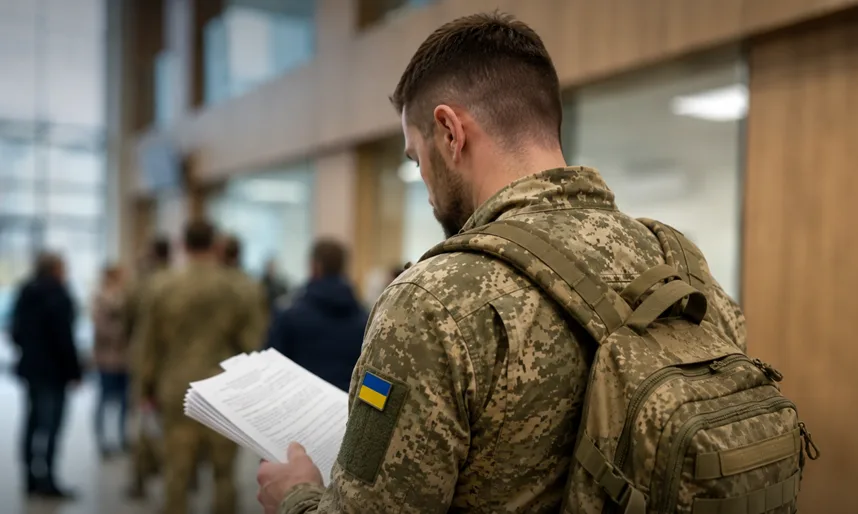










The Mykolaiv District Administrative Court considered administrative case No. 400/2265/26 filed by a serviceman against the Territorial Recruitment and Social Support Center, the Military Medical Commission, and the military unit regarding the recognition as unlawful and cancellation of the Military Medical Commission’s decision, actions related to conscription during mobilization, orders on conscription and enrollment in the personnel lists, as well as the obligation to release him from military service.
Essence of the case
The plaintiff asked the court to recognize as unlawful and cancel the Military Medical Commission’s decision on fitness for military service, recognize as unlawful the actions of the Territorial Recruitment and Social Support Center regarding his conscription during mobilization, cancel the order of the head of the TRSC on conscription and dispatch to the military unit, cancel the order of the military unit commander on enrollment in the personnel lists, and also oblige the military unit to release him from military service and exclude him from the personnel lists.
As grounds for the claim, the plaintiff stated that he was not summoned to the TRSC in the manner prescribed by law, did not receive a summons for verification of military registration data, and did not undergo a medical examination according to the procedure established by law. In his opinion, the legally prescribed sequence of mobilization measures was violated because instead of delivering a summons, appearing at the TRSC, checking documents, and being sent for a medical examination, he was actually detained and forcibly delivered to the Territorial Recruitment Center, after which documents regarding fitness for military service were processed and he was sent to the military unit. The plaintiff considered all these actions illegal, and the decision on fitness for military service was made without actually conducting a proper medical examination and in violation of legal requirements.
The plaintiff also claimed that the medical examination was purely formal, as the Military Medical Commission doctors did not conduct a full examination, did not study the existing medical documents, did not carry out necessary consultations with specialized experts, and made a conclusion about fitness for military service without proper medical justification. In his opinion, this contradicts the requirements of the Regulation on Military Medical Expertise approved by the Ministry of Defense Order No. 402, as well as the principles of completeness, objectivity, and individual approach when determining the health status of a conscript.
Furthermore, the plaintiff referred to the fact that he was not handed a summons for conscription and dispatch to the military unit, although paragraph 88 of the Procedure for Conscription during Mobilization, approved by the Cabinet of Ministers Resolution No. 560, provides for the delivery of such a summons by personal signature or sending it by registered mail. In his opinion, the absence of a summons indicates non-compliance with the mobilization procedure, deprived him of the opportunity to exercise the right to legal assistance and appeal the relevant decisions, and therefore all subsequent decisions regarding conscription and military service are illegal.
The defendant opposed the satisfaction of the claim. He stated that during the verification of military registration documents, it was established that the citizen was subject to delivery to the TRSC according to information from the National Police Information Portal and simultaneously committed an administrative offense under Article 210-1 of the Code of Administrative Offenses. After delivery to the Territorial Recruitment Center, it was established that he had no right to deferment or reservation from conscription. After being registered for military service, he was issued a referral for a military medical commission, and he did not refuse to undergo a medical examination. The defendant also noted that the plaintiff did not submit any documents confirming lawful grounds for deferment from mobilization, and claims of physical or psychological influence were not supported by proper evidence.
In his objections, the defendant also referred to the legal position of the Supreme Court, according to which the conscription procedure during mobilization is irreversible, and after its completion, the cancellation of the conscription order itself does not lead to the restoration of the previous legal status of the person.
What the court decided
The court established that during the verification of military registration documents, the citizen was delivered to the Territorial Recruitment and Social Support Center due to information about the necessity of his delivery and the commission of an administrative offense in the field of military registration. After that, he was issued a referral for a military medical commission, which, based on the medical examination results, recognized him fit for military service. Based on the relevant conclusion, orders on conscription during mobilization and enrollment in the personnel lists of the military unit were issued. At the same time, the court noted that the medical examination card was signed by the head and secretary of the Military Medical Commission, although signatures of other commission members were absent.
The court noted that according to part five of Article 22 of the Law "On Mobilization Preparation and Mobilization," conscription of citizens for military service during mobilization is ensured by local executive authorities and carried out by territorial recruitment and social support centers. The court also cited provisions of the Law "Fundamentals of Ukrainian Legislation on Health Care," Cabinet of Ministers Resolution No. 560, and the Regulation on Military Medical Expertise approved by Ministry of Defense Order No. 402, which define the procedure for medical examinations, competence of military medical commissions, and the procedure for appealing their decisions.
The court drew attention to the fact that the legislation provides a special administrative procedure for reviewing decisions of military medical commissions. In case of disagreement with the decision of the Military Medical Commission at the district (city) territorial recruitment center, a citizen has the right to apply for a re-examination to a higher-level Military Medical Commission. The court established that the plaintiff did indeed file a complaint to a higher-level Military Medical Commission but received a response stating there were no grounds for a repeated medical examination. At the same time, the court noted that in this case it does not assess the propriety of the medical examination or the correctness of the Military Medical Commission’s conclusions, since Order No. 402 does not provide the right to direct judicial appeal of the decision of the district TRSC Military Medical Commission. Moreover, the plaintiff did not follow the procedure for appealing the medical examination results prescribed by Cabinet of Ministers Resolution No. 560 and Regulation No. 402, which alone is a ground for refusal to satisfy the claim to cancel the Military Medical Commission’s decision. To confirm this conclusion, the court referred to the legal positions of the Supreme Court set out in rulings dated February 26, 2025, in cases No. 240/13173/22 and No. 600/3273/22.
Considering arguments regarding illegal delivery to the Territorial Recruitment Center without summons delivery, the court found that during the check, the plaintiff did not have military registration documents or identity documents with him. The representative of the Territorial Recruitment Center explained that due to the absence of documents and the inability to immediately establish the citizen’s identity, he was delivered to the district TRSC. In addition, according to the Unified State Register of Conscripts, Military Obliged Persons, and Reservists, the plaintiff did not register for military service at the place of registration as an internally displaced person, and the case materials contained no evidence of updated military registration data.
Analyzing the provisions of Cabinet of Ministers Resolution No. 560, the court noted that during mobilization, authorized representatives of territorial recruitment centers and police officers have the right to check military registration documents of male citizens aged 18 to 60. If violations of military registration rules are found or discrepancies between documents and the Unified State Register of Conscripts are detected, the citizen is offered to proceed to the TRSC for clarification of registration data, medical examination, and military registration. If the person refuses to proceed to the Territorial Recruitment Center, the police officer has the right to administratively detain and deliver him based on Articles 261 and 262 of the Code of Administrative Offenses.
Based on the above norms, the court concluded that police officers had lawful authority to deliver the plaintiff to the district Territorial Recruitment Center. At the same time, the court separately emphasized that it does not assess the plaintiff’s claims of illegal detention, use of physical force, or psychological pressure, as such circumstances can only be evaluated within criminal proceedings.
The court also recognized the referral of the plaintiff to the Military Medical Commission after establishing his identity as lawful, since there was no information in the Unified State Register about him undergoing military medical expertise, and Cabinet of Ministers Resolution No. 560 provides for mandatory referral of such persons to the Military Medical Commission.
Subscribe to our Telegram channel t.me/sudua and to Google News SUD.UA, as well as to our VIBER and WhatsApp, Facebook page and Instagram to stay informed about the most important events.