If an apartment has a separate entrance, yard, and utilities: will the court allow it to be registered as a house


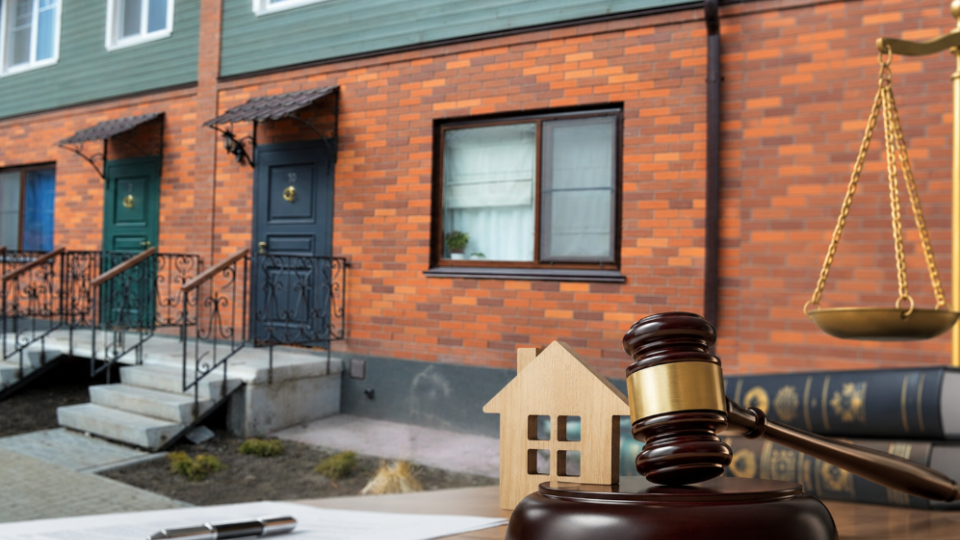










The Civil Cassation Court of the Supreme Court considered a dispute regarding the possibility of physically separating an apartment in a four-apartment building with a change of its legal status to an individual residential house. The plaintiffs argued that their apartment is completely autonomous, has a separate entrance and engineering communications, and therefore requested to recognize it as a separate real estate object, terminate joint partial ownership, and determine the procedure for using the land plot.
The Supreme Court upheld the decisions of the lower courts refusing to satisfy the claim. The court emphasized that the apartment is already an independent real estate object, and the common property of a multi-apartment building cannot be divided or physically separated according to the law. In addition, the courts reasonably refused to determine the procedure for using the land plot, since it is owned by the territorial community, and the plaintiffs did not file corresponding claims against the local government body.
Circumstances of the case
The plaintiffs owned apartment No. 4 in a four-apartment building in Cherkasy. They claimed to actually use an isolated part of the building: the apartment has a separate entrance, individual contracts for electricity and water supply, autonomous heating, and has long been disconnected from the general building heating system. A court expert also concluded that the apartment is technically autonomous and can be physically separated without remodeling or reconstruction.
On this basis, the plaintiffs requested to separate the apartment as a separate real estate object by changing the legal status from an apartment building to an individual residential house, terminate joint partial ownership, recognize their ownership rights to the separated object, and determine the procedure for using the land plot.
The Sosnivskyi District Court of Cherkasy denied the claim. The Cherkasy Court of Appeal agreed with this decision, after which one of the plaintiffs filed a cassation appeal to the Supreme Court.
Position of the Supreme Court
The Civil Cassation Court agreed with the conclusions of the lower courts.
The court noted that the building housing four apartments is a multi-apartment building. Each apartment is already a separate real estate object owned by the respective owners. At the same time, load-bearing structures, auxiliary premises, engineering networks, and other common property belong to all apartment owners as joint shared ownership. According to Article 5 of the Law of Ukraine "On the peculiarities of exercising ownership rights in a multi-apartment building," such common property cannot be divided among co-owners or physically separated.
The Supreme Court emphasized that the plaintiffs are already owners of an independent real estate object — the apartment. At the same time, regarding the common property of the building, they are co-owners with joint shared ownership rights. Therefore, there are no grounds for a repeated "separation" of the apartment as a separate real estate object.
Why the apartment's autonomy did not change the court's conclusions
The Supreme Court separately noted that the plaintiffs' arguments about the apartment's autonomy do not refute the correctness of the courts' conclusions.
In particular, the presence of a separate entrance, autonomous engineering networks, individual contracts for utilities, and disconnection from the general building heating system do not change the legal status of the building as a multi-apartment one. The court also stressed that the expert's conclusion about the technical possibility of separation is only one piece of evidence in the case and cannot be the sole basis for resolving the dispute contrary to legal requirements.
Regarding the land plot
The cassation court also agreed with the refusal to satisfy the claim regarding the determination of the procedure for using the land plot.
The courts established that the land plot is owned by the territorial community, and neither the plaintiffs nor the defendants are its owners or land users. Moreover, claims against the local government body, which is the proper subject in such legal relations, were not filed. This was an independent reason for refusing this part of the claim.
Legal conclusion of the Civil Cassation Court of the Supreme Court
The Civil Cassation Court in case No. 712/6765/23 confirmed that if a person is already the owner of an apartment in a multi-apartment building, they cannot, through a claim for separation of a share, effectively change its legal status to an individual residential house. Regardless of the fact that the apartment may have a separate entrance, autonomous utilities, and be technically separated from other premises, the common property of a multi-apartment building according to Article 5 of the Law of Ukraine "On the peculiarities of exercising ownership rights in a multi-apartment building" is not subject to division or physical separation.
The Supreme Court dismissed the cassation appeal and left the decision of the Sosnivskyi District Court of Cherkasy and the ruling of the Cherkasy Court of Appeal unchanged.
Subscribe to our Telegram channel t.me/sudua and to Google News SUD.UA, as well as to our VIBER and WhatsApp pages on Facebook and Instagram to stay informed about the most important events.