The US Supreme Court overturned the restriction that prevented people with guns from entering stores or restaurants


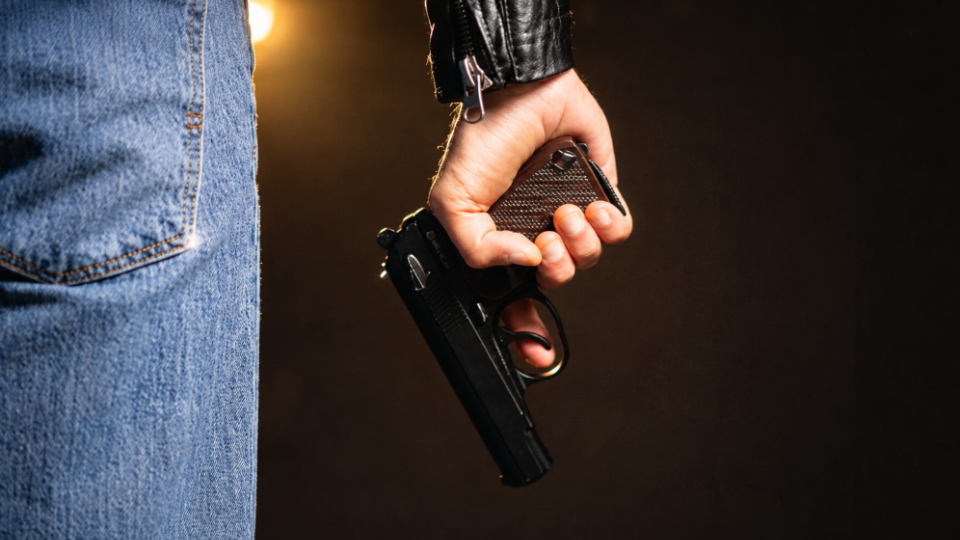










The US Supreme Court overturned Hawaii's state law that required legal gun owners to obtain permission before entering private property. The Court concluded that such a requirement violates the right to bear arms guaranteed by the US Constitution.
This applies to stores, restaurants, gas stations, shopping centers, and other private establishments open to visitors. Under the law, a gun owner could enter only when the property owner explicitly allowed it—either in writing, verbally, or by an appropriate sign.
Critics called this law the "vampire rule." This unofficial name came from the analogy to the myth about vampires who cannot enter a house without the owner's invitation.
The law was enacted following the US Supreme Court decision in New York State Rifle & Pistol Association v. Bruen in 2022. At that time, the Court significantly expanded the protection of Americans' right to carry firearms outside the home for self-defense and required states not to impose excessive restrictions.
The author of the decision, Justice Samuel Alito, noted that after this case, Hawaii effectively found another way to maintain strict restrictions.
According to him, the new rules seriously complicated the daily lives of people who legally obtained permits to carry firearms. They could not be sure they had the right to enter even an ordinary store, restaurant, or gas station if there was no special permission to be there with a weapon.
As an example, the judge cited a woman who carries a gun to protect herself from an aggressive ex-partner. Under Hawaii law, she could face criminal liability simply for entering a store without the clear permission of the owner to be there with a weapon.
Hawaii authorities insisted that the law protects not the right to bear arms but the right of private property. According to the state, the property owner should decide whether to allow visitors to enter with weapons.
However, the majority of justices disagreed with this, Courthouse News notes.
Moreover, the Supreme Court rejected the argument that similar rules existed in the 19th century. The justices noted that one of the laws Hawaii cited was passed in Louisiana after the Civil War as part of discriminatory policies aimed at disarming Black people. Therefore, it cannot serve as a historical example to justify modern restrictions.
At the same time, three justices expressed a separate opinion. They believe that Hawaii's law did not violate the Constitution but only protected the rights of store, restaurant, and other private property owners to independently set rules for visitors.
Subscribe to our Telegram channel t.me/sudua and to Google News SUD.UA, as well as to our VIBER and WhatsApp pages, and follow us on Facebook and Instagram to stay informed about the most important events.