Ukraine will screen foreign investors before entering strategic sectors: which areas are under control













Ukraine is approaching the introduction of a screening mechanism for foreign direct investments — a system for checking investors planning to invest in strategically important sectors of the economy. The authorities view this tool as a way to strengthen the country's economic and national security, protect critical infrastructure from potential risks, and at the same time fulfill one of the requirements on the path to European Union membership.
Currently, work is underway in the Verkhovna Rada on draft law No. 14062, which aims to define the rules for checking foreign capital and establish a balance between protecting state interests and maintaining Ukraine's investment attractiveness.
Work on the foreign investment screening draft law continues
The Verkhovna Rada Committee on Economic Development is working on draft law No. 14062 on screening foreign direct investments.
The document is considered one of the key elements in strengthening the country's economic security and fulfilling Ukraine's European integration commitments.
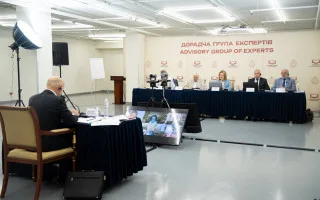
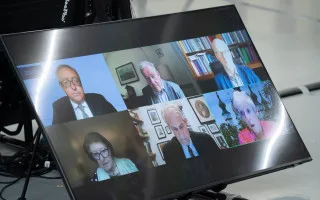
Current issues related to the implementation of the future investment control mechanism were discussed during the Antitrust Law Conference organized by the Ukrainian Bar Association.
During the discussion, it was emphasized that Ukraine needs a modern system for controlling investments in strategic sectors of the economy. Such a mechanism should allow the state to timely identify and minimize risks to national security and is also one of the obligations within the EU accession negotiations.
Which sectors may be subject to screening
At the same time, discussion participants noted that the future screening system should remain balanced and not create unnecessary obstacles for bona fide investors.
It is expected that the screening will apply only to critically important areas for the state, including:
- defense-industrial complex;
- critical infrastructure facilities;
- subsoil use;
- electronic communications;
- information protection sphere;
- media.
Which foreign investment screening models are being considered
During the discussion, three possible models for screening foreign investors in strategic sectors were presented.
Permissive model applies exclusively to the defense industry. In this case, investor entry into the sector will be possible only after obtaining approval from the relevant government commission.
Notification model requires the investor to officially notify the state of their intentions and disclose the origin of capital.
Retrospective model is primarily aimed at identifying ultimate beneficial owners subject to sanctions.
The parliamentary committee emphasizes that the state must have a clear and effective tool for controlling investments at the stage of capital entry into the country. According to the developers, prior investor screening will help avoid subsequent sanctions, confiscations, or forced nationalization of assets.
Why Ukraine needs FDI screening
As previously reported by the "Judicial and Legal Newspaper", Ukraine is preparing a foreign direct investment (FDI) screening system that will provide a comprehensive assessment of investors and transactions capable of affecting national security and the state's strategic interests.
The draft law, developed with the participation of experts from the Organisation for Economic Co-operation and Development (OECD), envisages defining sensitive sectors of the economy, risk criteria, application submission and review procedures, appeal mechanisms, and guarantees for investors.
The legislation is being prepared amid a full-scale war, increasing external threats, the need to protect critical infrastructure, and the adaptation of Ukrainian legislation to European Union standards.
It was previously reported that the Ministry of Economy, together with an interagency commission involving the Security Service of Ukraine (SBU), Foreign Intelligence Service, and Ministry of Foreign Affairs, is working on creating a mechanism to assess the integrity of foreign investors and their compliance with Ukraine's national interests.
Two draft laws propose different approaches
Currently, two draft laws are registered — No. 14062 and the alternative No. 14062-1, which propose different models for regulating foreign investment screening.
The basic draft law No. 14062 defines the general framework of control but contains broad evaluative concepts, including regarding risks to national security and sensitive sectors. In addition, a significant part of procedural issues is delegated to the Cabinet of Ministers.
Experts believe that such a structure may create risks of excessive discretion by state authorities, double regulation, and potential conflicts with foreign investment legislation and international investment protection agreements.
At the same time, the alternative draft law No. 14062-1 contains a more detailed procedure. It defines screening criteria, application review deadlines, requirements for decision justification, and the investor's right to appeal.
The document also provides for transferring key procedural norms directly into the law rather than subordinate acts, which corresponds to the principle of legal certainty and the requirements of Article 19 of the Constitution of Ukraine.
What risks and advantages do experts see
According to preliminary developments, the screening procedure should include clear deadlines for application review, grounds for approval or refusal, as well as the possibility of conditional approval of investment projects.
Among guarantees for investors are considered the right to appeal decisions, protection of confidential information, the possibility of conducting independent expertise, and safeguards against selective application of control procedures.
At the same time, experts draw attention to the risks of excessive discretion in case of unclear risk criteria or the list of sensitive sectors. This may lead to inconsistent decisions and delays in procedures.
In European Union law, the basic stage of investment review within the screening mechanism usually lasts from 15 to 45 days. Such time frames are considered a benchmark for ensuring procedural predictability and protecting investors' rights.
What impact might this have on Ukraine's economy
The introduction of FDI screening may have both positive and potentially restraining effects on the investment climate.
The main advantages include increased investment security, protection of critical infrastructure, attraction of reliable capital, and strengthening trust from Ukraine's partners in the EU and G7 countries.
At the same time, an overly complex or non-transparent procedure may increase business costs for legal support, slow down the launch of new production and infrastructure projects, and reduce interest among some potential investors.
Therefore, during the preparation of legislation, the key task remains finding a balance between national security needs and maintaining Ukraine's openness to foreign investments.
Subscribe to our Telegram channel t.me/sudua and to Google News SUD.UA, as well as to our VIBER and WhatsApp pages on Facebook and Instagram to stay updated on the most important events.