Military Suicide and a One-Time Assistance of 15 Million Hryvnias: When Courts Side with the Family


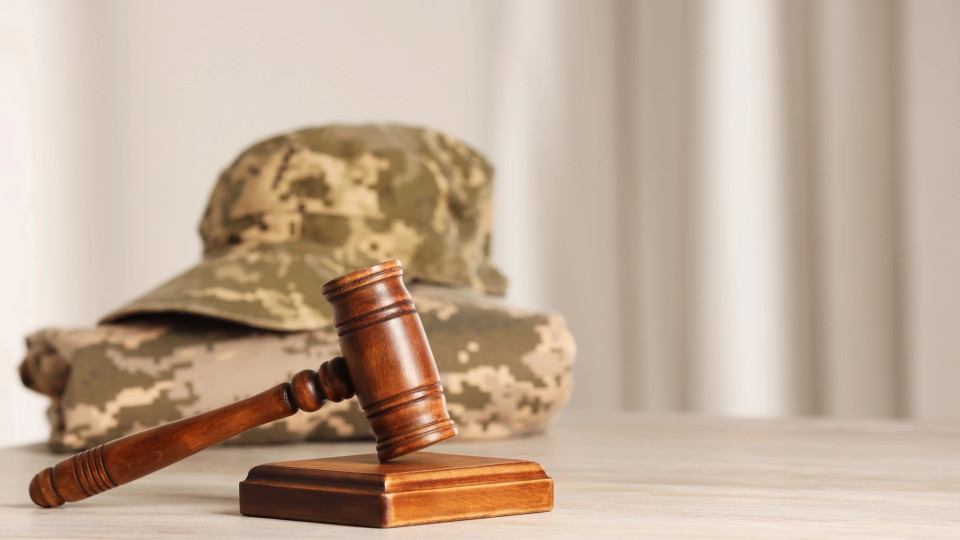










After the start of the full-scale war, the issue of social protection for the families of fallen servicemen has gained special significance. One of the key mechanisms of such protection is a one-time financial assistance paid to the family members of the deceased serviceman.
At the same time, in practice, difficult situations arise when the death of a serviceman is officially classified as a suicide. In such cases, relatives often face automatic refusal to grant assistance and are therefore forced to go to court to protect their rights.
The problem lies not only in the interpretation of the legislation but also in establishing the true causes of death, assessing the conclusions of official investigations, materials of criminal proceedings, and medical documents.
Legislative Regulation
The right to one-time financial assistance in the event of the death of a serviceman is provided by the Law of Ukraine "On Social and Legal Protection of Servicemen and Their Families."
At the same time, the law contains exceptions when such assistance is not granted. In particular, Article 16-4 of the Law establishes that payment is not made if the death resulted from intentional self-inflicted bodily injury, other harm to health, or suicide. The only exception explicitly provided by law is the case of proving that a person was driven to suicide, established by a court.
Thus, the classification of death as suicide itself creates a serious legal obstacle to receiving assistance. However, in practice, the key question is whether the conclusion of an official investigation or a commander's order about suicide is sufficient to deprive the family of the right to state support.
Cases Regarding Mental Disorders Related to Military Service
In recent years, courts have begun to see disputes where suicide is linked to mental and behavioral disorders caused by participation in combat operations.
An important case for this category of disputes remains case No. 813/2854/17, which, although considered by the Supreme Court back in 2021, still holds significant importance for resolving issues regarding the payment of one-time financial assistance to families of fallen servicemen.
The Supreme Court concluded that suicide does not exclude the right to assistance if it was the result of a mental illness related to the performance of military duty and defense of the Homeland. The Court emphasized that in such cases, death is a consequence of a pathological condition, not a conscious intentional self-harm, so the legal restrictions on payment of assistance do not apply.
Similar is the decision of the Kyiv District Administrative Court in case No. 320/15710/25, where the wife of a serviceman was denied a one-time financial assistance of 15 million UAH due to the established fact of suicide, although the Military Medical Commission (MMC) concluded that the serviceman's mental disorder that led to suicide was directly related to the defense of the Homeland.
The court noted that the serviceman had a diagnosed persistent anxiety-depressive disorder that arose as a result of service and participation in combat, and the suicide was a consequence of this illness.
Under these circumstances, the court concluded that the death did not result from conscious and voluntary intentional self-harm but from a pathological mental state related to the performance of military duty, therefore the formal prohibition provided by Article 16-4 of the Law cannot be applied automatically.
As a result, the court annulled the Ministry of Defense's decision to refuse payment of assistance and ordered a reconsideration of the family's application taking into account the established circumstances. It is known that the case is currently at the appeal stage.
Such cases demonstrate the conflict between the formal content of Article 16-4 of the Law and the realities of war, where suicide may be the result of severe mental trauma sustained during service.
That is, if a serviceman took his own life due to post-traumatic stress disorder, depression, or other mental consequences of combat, the formal prohibition on payment may contradict the very purpose of social protection for servicemen and their families.
The decisive factor is the causal link between death and military service, as well as proper documentary confirmation of the circumstances of the event.
Thus, in another important court case recently analyzed by the "Judicial and Legal Newspaper", the Supreme Court in case No. 300/1031/25 emphasized that the decisive factor is the causal link established by the MMC between the illness that led to death and the defense of the Homeland.
Problematic Aspects of Law Enforcement
Several problems remain most acute.
First, official investigations often become the main source of information about the causes of death, although their conclusions are not always flawless.
Second, the law effectively links the right to assistance only to proving that a person was driven to suicide, while modern military medicine increasingly records the connection between suicidal behavior and mental trauma sustained during the war.
Third, families often find themselves in a difficult evidentiary situation, where to protect their rights they need to challenge official investigation acts, expert conclusions, and criminal proceedings results.
Fourth, current legislation does not contain a clear answer to whether assistance should be paid if suicide resulted from a mental disorder established by the Military Medical Commission related to the defense of the Homeland.
What Families of Fallen Servicemen Should Do
In the event of a serviceman's death by suicide, it is important to preserve and collect medical documents, MMC conclusions, official investigation materials, and other evidence that may confirm the presence of a mental disorder and its connection with military service. Such documents often become key when deciding on the appointment of one-time financial assistance or further appealing a refusal in court.
Thus, the suicide of a serviceman remains one of the most complex grounds for resolving the issue of one-time financial assistance.
Although current legislation provides a general rule on the absence of the right to payment in the event of a serviceman's suicide, exceptions are cases where a person was driven to suicide and this fact is established by a court.
At the same time, Supreme Court practice shows that the family has the right to challenge the conclusions of official investigations and other documents if they became the basis for refusal to pay assistance.
Therefore, the further development of judicial practice will likely be aimed at finding a balance between the formal restrictions of the law and the need for fair social protection of families of servicemen who gave their lives due to psychological war trauma.
Also, you can familiarize yourself with the current problems faced by families of fallen servicemen when confirming the fact of living together as one family — in the material of the "Judicial and Legal Newspaper".
Subscribe to our Telegram channel t.me/sudua and to Google News SUD.UA, as well as to our VIBER and WhatsApp, Facebook page and Instagram to stay informed about the most important events.