Verkhovna Rada prepares new mechanism to protect single pensioners and military personnel from losing their only home due to debts or fraud


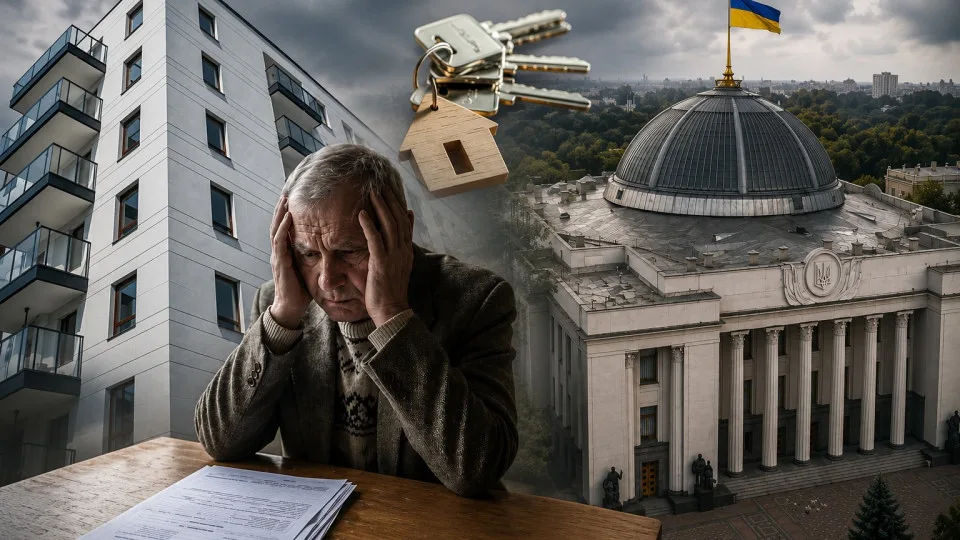










While Ukrainian soldiers defend the borders and elderly people struggle with loneliness and illnesses, the system often leaves them defenceless against losing their only roof over their heads. Amid war and economic instability, Ukraine faces an aggravated problem of "legalised homelessness." Thousands of vulnerable citizens — pensioners, persons with disabilities, and servicemen — risk losing their only housing due to debts, fraudulent schemes, or an inability to protect their rights in court.
The editorial office of the "Judicial-Legal Newspaper" received the draft Law of Ukraine, prepared for registration by the Chairwoman of the Parliamentary Committee on Social Policy and Veterans' Rights Protection, Halyna Tretiakova. This document proposes significant changes to the system of property rights protection and prevention of homelessness among the most vulnerable categories of citizens.
Existing legislation has proven too formal: bailiffs and notaries often act within procedural limits, disregarding that their actions result in turning a person into a homeless individual.
Commenting to the "Judicial-Legal Newspaper" on her new legislative initiative, Halyna Tretiakova stated that its goal is to protect the most vulnerable citizens, especially elderly people with cognitive impairments and servicemen, from fraudulent alienation of housing. According to her, the impetus for drafting the bill was real cases where, after returning from the front, servicemen found their housing already re-registered to other persons, and elderly people lost apartments due to dementia or social isolation as a result of fraudulent schemes.
Halyna Tretiakova emphasises that such situations create additional risks for the most socially unprotected population groups and require improvement of mechanisms to protect the right to housing.
The new draft law aims to correct this systemic failure. Although the draft text will still be refined, its foundation is clearly laid out in the comparative table: no vulnerable person can be deprived of their only housing without an individual assessment of their needs and provision of an alternative.
Who does the law protect?
The draft law proposes introducing new basic concepts into the Law of Ukraine "On the Basic Principles of Housing Policy." In particular, it introduces the definition of "vulnerable adult person", which is proposed to include not only elderly persons or people with disabilities but also persons in difficult life circumstances, persons with limited legal capacity, and lonely persons requiring external care.
Additionally, the draft law defines the concept of "sole housing" as a residential premises where a person is registered or actually resides in the absence of other suitable real estate for living. According to the author, this definition should provide additional guarantees to protect citizens who may lose their sole place of residence due to forced property seizure or other legal procedures.
Social verification before alienation
The central element of the changes is a prohibition on any deprivation of housing (eviction, seizure, sale at auction, registration of ownership transfer) without a prior conclusion from the authorised social protection body. This conclusion must confirm that the action will not lead to:
-
homelessness;
-
deterioration of living conditions;
-
loss of the ability to actually use the housing.
Exceptions are provided only when the person simultaneously acquires another housing, retains the right of lifelong residence (registered as an encumbrance), or enters into a lifelong maintenance agreement.
Changes to enforcement proceedings
The draft law introduces amendments to the Law "On Enforcement Proceedings." Currently, the bailiff simply searches for property. After the amendments, if the debtor is a vulnerable person, seizure of their sole housing is not allowed without a social conclusion.
If a risk of homelessness is identified, the bailiff is obliged to suspend actions and apply to the court to determine the procedure for further enforcement of the decision.
The sale of such housing at auction without compliance with these requirements is grounds for invalidating the auction results.
This directly affects the practice of selling apartments for small debts through the SETAM system. These changes aim to prevent situations where a person loses housing after its sale via electronic auctions within enforcement proceedings.
Notarial guarantees against illegal alienation of housing
The draft law also proposes strengthening the notary's role during transactions involving housing.
Amendments to the Law of Ukraine "On Notariat" provide that the notary must not only verify submitted documents but also determine whether the housing is the sole residence of a vulnerable person, explain the legal consequences of the transaction, and the right to refuse to perform it.
Moreover, the notary will be obliged to refuse to perform a notarial act if there are reasonable doubts that the person understands the significance of their actions or if signs of coercion, deception, or other serious circumstances are detected.
These changes aim to strengthen the protection of socially vulnerable citizens, including service personnel.
Social services as a preventive measure
The Law "On Social Services" is supplemented with the concept of "risk of losing the sole housing".
The assessment of a person's needs in such cases must be conducted within 10 days upon request from a notary, bailiff, or the person themselves. Thus, social protection becomes an active participant in legal relations rather than merely recording homelessness after the fact.
Restoring social justice
The draft law, currently in the final stage of development, establishes a conceptually new algorithm: no alienation of the sole housing of a vulnerable person can occur without an individual assessment by the social protection authority.
In other words, the essence of the decision is the introduction of a mandatory check by the social protection authority before any alienation, eviction, or sale of the sole housing of a vulnerable person. This means that a state bailiff, notary, or registrar will not be able to complete the ownership transfer procedure without obtaining the results of such verification.
As Halyna Tretiakova noted, the current enforcement system often acts formally: there is a debt, even if small or artificial — there is an arrest and sale of the apartment. The new solution introduces a social filter: if the person is vulnerable, enforcement actions regarding the sole housing are suspended until the social issue is resolved, such as providing shelter, care, or disproving the debt.
The draft law: a response to actual cases of housing loss
According to Halyna Tretiakova, the need for legislative changes arose from actual cases of citizens losing their sole housing due to gaps in current legislation.
One of the most widely reported cases involved a pensioner who lost his only flat due to years of utility debt. The 41 sq. m flat was sold for a pittance because of the debts, while he was effectively helpless and unable to protect his rights.
A significant portion of the debt stemmed from years of charging the pensioner for internal water losses in a multi-occupancy building. Most residents had individual water meters installed, while the pensioner had none. This was one reason for the accumulation of significant debt, which eventually led to the sale of his flat through enforcement proceedings.
Another case concerns a serviceman with many children who, after returning from the front, discovered his housing had been re-registered to other persons. When the serviceman returned home, strangers were already in the flat attempting to evict him.
Such cases indicate that fraudsters currently exploit legislative gaps to illegally transfer real estate belonging to individuals who, due to health conditions, service in the Armed Forces of Ukraine, or other circumstances, cannot timely protect their property rights. That is why the draft law aims to introduce additional safeguards to protect vulnerable categories of citizens from losing their sole housing.
From initiative to law
The draft law on protecting housing for vulnerable population groups is currently undergoing active refinement. Halyna Tretiakova noted that the document will be registered in the Verkhovna Rada within the next two to four weeks.
Main expected results of the reform:
- No person will end up on the street without alternative housing if their "only roof" becomes subject to seizure.
- Social protection authorities will become mandatory participants in the process of verifying transactions and enforcement actions regarding the property of vulnerable persons.
- Creation of safeguards that will prevent secret re-registration of soldiers' real estate while they fulfill their duty to the state.
- In cases where local governments or state bodies take care of a person, their property must not be alienated to third parties at undervalued prices.
The essence of solving the problem is already embedded in the current text: the priority of human dignity and the right to housing over formal alienation procedures. This initiative together creates a new architecture of social security in Ukraine.
It is expected that during committee discussions in the Verkhovna Rada, special attention will be paid to mechanisms for rapid verification of a person's status through state registers to ensure protection is not only reliable but also prompt. Society needs this law because every delay means a new lost apartment and a new broken fate.
Subscribe to our Telegram channel t.me/sudua, follow SUD.UA on Google News , and join us on VIBER, WhatsApp, Facebook and on Instagram to stay informed about the important events.