The Supreme Court obliged the bank to return 40,000 EUR to a woman whose deposit was terminated by fraudsters through “Privat24” while she was abroad


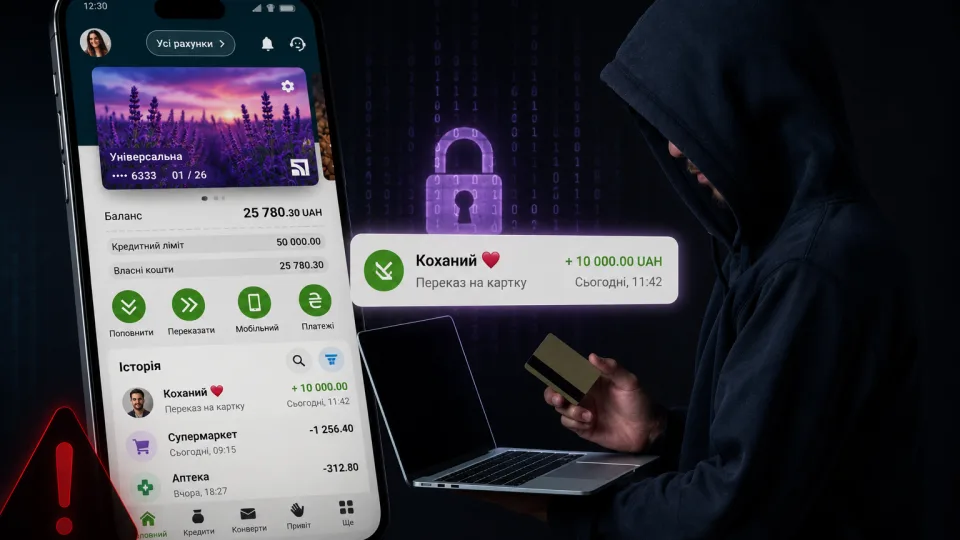










The development of remote banking services has significantly increased the number of cases where banks rely on successful authorization of operations as proof of the client's will.
In the ruling dated July 2, 2026, in case No. 727/48/24, the Third Judicial Panel of the Cassation Civil Court within the Supreme Court considered a dispute regarding the recovery of a deposit after unauthorized withdrawal of funds from the account through the remote banking system and determined under what conditions responsibility for such operations can be attributed to the client.
Case circumstances
In 2011, a deposit agreement for the amount of 40,000 euros was concluded between the plaintiff and JSC CB “PrivatBank”, which was subsequently automatically renewed. She received interest on the deposit at the bank branch with her passport and did not use the “Privat24” application.
After the full-scale war began, the plaintiff went abroad and was outside Ukraine from September 2022 until mid-March 2023. According to her, she did not give any instructions regarding early termination of the deposit or transfer of funds.
Upon returning to Ukraine in March 2023, the plaintiff contacted the bank to receive the deposit and found out that the funds were missing. The bank informed her that the deposit was prematurely terminated through the “Privat24” system, after which the funds were transferred to card accounts and withdrawn at ATMs.
The plaintiff reported to law enforcement agencies, and a criminal case was opened on possible fraud. At the same time, the bank refused to return the deposit, citing that all operations were authorized using the client’s financial phone number.
The courts of first and appellate instances satisfied the claim, recovered the deposit amount from the bank, and terminated the deposit agreement. The bank appealed these decisions to the Supreme Court.
Position of the Supreme Court
The Supreme Court indicated that the bank is responsible for the security of electronic payments. Unauthorized withdrawal of funds against the client’s will indicates unauthorized interference in the banking payment system, which belongs to the bank, by third parties.
The court noted that the user is not liable for payment operations if there is no evidence of their contribution to the loss, use of the PIN, or other information enabling the initiation of payment operations.
The Supreme Court emphasized that only the presence of circumstances that indisputably prove that the user’s actions or inaction contributed to the loss, illegal use of the PIN code, or other information enabling payment operations is a basis for holding them civilly liable.
Assessing the evidence in the case, the Court noted that the lower courts reasonably concluded that the materials provided by the defendant do not confirm that the registration in Privat24 Internet Banking, card openings, transfers from the deposit account to card accounts, and subsequent cash withdrawals were performed by the plaintiff, or that she disclosed confidential card data.
The Supreme Court also stressed that the plaintiff provided evidence confirming measures taken to prevent consequences and timely notification of the defendant about fraudulent actions, which indicate the plaintiff’s lack of guilt.
The defendant did not prove that the plaintiff’s conscious or negligent actions or inaction led to the loss of the payment instrument or individual account information, or other information enabling payment operations using the payment instrument. In other words, the bank did not prove that the plaintiff’s actions or inaction contributed to the loss or illegal use by third parties of login and password information in the online banking system.
Separately, the Supreme Court agreed with the conclusions of the lower courts regarding the termination of the deposit agreement.
Considering that the transfer of deposit funds was made by the bank without the client’s instruction to transfer money from her account, without presenting a passport, savings agreement, deposit receipt, or electronic savings book, the first instance court, with which the appellate court agreed, correctly satisfied the claim to terminate the savings agreement due to a material breach of the agreement terms.
Thus, the Supreme Court upheld the decisions of the lower courts that ordered the bank to return the 40,000 EUR deposit and terminate the deposit agreement.
The court confirmed that client liability for unauthorized payment operations is possible only when the bank proves that the client’s actions or inaction caused the loss or disclosure of information that enabled such operations.
The mere fact of authorization through the remote banking system or use of the financial phone number is not sufficient proof of the depositor’s guilt. This legal position is important for disputes regarding fraudulent withdrawals from bank accounts and defines the limits of responsibility for banks and payment service users.
Read more — The Supreme Court obliged a bank client to return over 7,400 EUR mistakenly credited due to a system failure.
Subscribe to our Telegram channel t.me/sudua and to Google News SUD.UA, as well as to our VIBER and WhatsApp, Facebook page and Instagram to stay updated on the most important events.